Random Country Generator 🌎
Africa Facts and Complete Continental Overview
Africa is the second-largest continent in the world by both land area and population.
It is renowned for its incredible diversity of cultures, languages, ecosystems, and natural resources.
Africa has played a pivotal role in human history as the cradle of humankind, with evidence of early human civilizations and cultures originating here.
The continent includes vast deserts, dense rainforests, savannas, mountains, and coastal regions.
Africa’s economies are varied, with some of the fastest-growing countries in the world, rich natural resources, and vibrant trade networks.
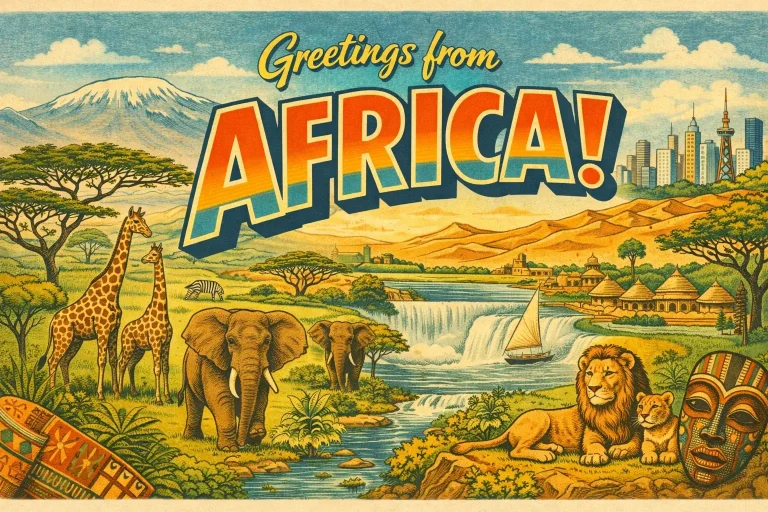
Its wildlife is globally iconic, featuring elephants, lions, giraffes, and many other species.
Africa continues to influence global culture, politics, and environmental discussions due to its size, population, and resources.
Geographical Location of Africa
- Africa is primarily located in the Eastern Hemisphere and mostly in the Northern Hemisphere.
- The Mediterranean Sea lies to the north, separating Africa from Europe.
- The Red Sea and the Suez Canal separate it from Asia in the northeast.
- The Atlantic Ocean borders Africa to the west.
- The Indian Ocean lies to the southeast of Africa.
- Africa is connected to Asia by the Isthmus of Suez.
Size and Area of Africa
- Africa covers approximately 30.37 million square kilometers.
- It is the second-largest continent by land area.
- The continent contains deserts, mountains, savannas, forests, and river systems.
- Africa’s geographical diversity supports unique ecosystems and wildlife.
- The Sahara is the largest hot desert in the world, covering much of North Africa.
Population of Africa
- Africa is home to over 1.4 billion people.
- It has the youngest population of all continents, with a median age under 20.
- Population density varies widely between urban centers and deserts.
- Sub-Saharan Africa is experiencing rapid population growth.
- Migration, urbanization, and cultural diversity shape the continent.
Countries of Africa
- Africa consists of 54 recognized sovereign countries.
- It includes large nations such as Algeria, Sudan, and the Democratic Republic of Congo.
- Small island nations include Seychelles, Comoros, and Mauritius.
- Egypt is a transcontinental country, connecting Africa with Asia.
- South Africa is known for its economic and cultural diversity.
Major Regions of Africa
- North Africa includes Egypt, Libya, Morocco, and Algeria.
- West Africa includes Nigeria, Ghana, Senegal, and Ivory Coast.
- East Africa includes Kenya, Tanzania, Ethiopia, and Uganda.
- Central Africa includes the Democratic Republic of Congo, Gabon, and Cameroon.
- Southern Africa includes South Africa, Botswana, Namibia, and Zimbabwe.
Mountain Ranges of Africa
- The Atlas Mountains stretch across North Africa.
- The Ethiopian Highlands are a significant mountainous region in East Africa.
- Mount Kilimanjaro is the highest peak on the continent.
- The Drakensberg Mountains dominate Southern Africa.
- Mountain ranges influence rainfall patterns and river systems.
Rivers and Water Bodies
- The Nile is the longest river in the world, flowing through northeastern Africa.
- The Congo River is the deepest river and vital for Central Africa.
- The Niger River supports West African agriculture and trade.
- Lake Victoria is the largest lake in Africa by area.
- Other major water bodies include Lake Tanganyika, Lake Malawi, and the Mediterranean Sea.
Climate of Africa
- Africa experiences diverse climate zones.
- The Sahara Desert has arid and extremely hot conditions.
- Central Africa contains tropical rainforests with high rainfall.
- Southern Africa has temperate and semi-arid regions.
- Monsoons influence coastal climates in parts of East Africa.
Languages Spoken in Africa
- Africa is home to over 2,000 languages.
- Major language families include Afro-Asiatic, Niger-Congo, Nilo-Saharan, and Khoisan.
- Arabic, Swahili, Hausa, and French are widely spoken.
- Multilingualism is common in many countries.
- Indigenous languages preserve rich cultural heritage.
Religion and Belief Systems
- Islam is predominant in North Africa and parts of East Africa.
- Christianity is widely practiced in Sub-Saharan Africa.
- Traditional African religions and beliefs continue to influence communities.
- Judaism has historical roots in North Africa.
- Religious diversity contributes to cultural richness.
Culture and Traditions
- Africa has a rich cultural and artistic heritage.
- Music, dance, and oral storytelling are integral to society.
- Traditional clothing and crafts vary by region.
- Festivals often celebrate harvests, religion, and historical events.
- Modern African culture blends indigenous traditions with global influences.
Education and Academic Influence
- Africa has a growing educational sector.
- Countries like South Africa, Egypt, and Nigeria host reputable universities.
- Primary and secondary education faces challenges in some regions.
- International partnerships enhance research and development.
- Education is key to economic growth and social development.
Wildlife and Natural Environment
- Africa is home to iconic wildlife species.
- Animals include elephants, lions, giraffes, zebras, and rhinoceroses.
- Protected national parks exist across the continent.
- Deserts, savannas, forests, and wetlands provide diverse habitats.
- Conservation efforts aim to protect endangered species and ecosystems.
Natural Resources of Africa
- Africa is rich in minerals and natural resources.
- It contains significant reserves of gold, diamonds, copper, and uranium.
- Oil and natural gas are found in North and West Africa.
- Fertile land supports agriculture across the continent.
- Water resources include major rivers and lakes for irrigation and energy.
Economic Importance of Africa
- Africa is an important player in the global economy.
- It exports minerals, oil, and agricultural products worldwide.
- Emerging markets drive rapid economic growth.
- Tourism in safaris, historical sites, and beaches contributes significantly.
- Infrastructure development is accelerating across many countries.
Historical Significance of Africa
- Africa is the birthplace of humankind.
- Ancient civilizations include Egypt, Carthage, Nubia, and Great Zimbabwe.
- The trans-Saharan trade connected Africa with Europe and Asia.
- Colonial history has profoundly shaped modern African nations.
- Independence movements reshaped political and social landscapes in the 20th century.
Modern Africa Today
- Africa is a continent of growth and opportunity.
- Urbanization and technology are rapidly transforming societies.
- Political systems vary widely, from stable democracies to emerging governments.
- Regional organizations, such as the African Union, promote unity and development.
- Africa balances traditional cultures with modernization and globalization.
Explore Other Continents
Africa is a continent celebrated for its rich heritage, diverse ecosystems, and ancient civilizations. To explore more regions around the world, you can also visit North America, South America, Europe, Asia, and Oceania.
Sources
- Encyclopaedia Britannica – Africa
- United Nations Population Division
- World Bank Open Data
- National Geographic – Africa
- CIA World Factbook