
Random Country Generator 🌎
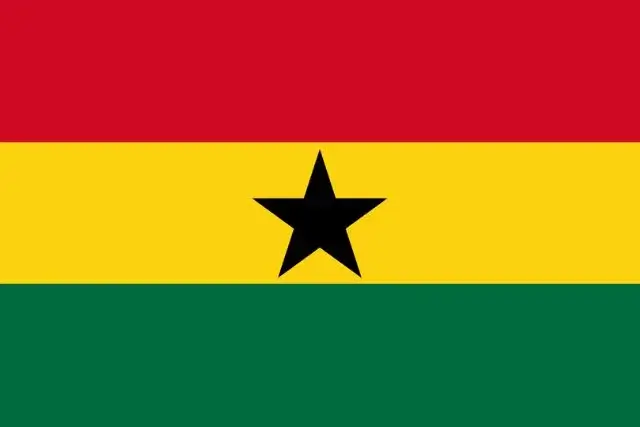
Ghana
🏙️ Capital city:
Accra
📈 Country population:
35 million
🗺️ Country area:
238,533 km²
Core Facts / Infobox
Present this as a clean two-column table containing accurate and verified national facts. Include only fields with real data.
| Official Name | Republic of Ghana |
| Common Name | Ghana |
| Political Status | Sovereign unitary presidential republic |
| ISO Codes | GH, GHA, 288 |
| Internet TLD | .gh |
| Calling Code | +233 |
| Capital City | Accra |
| Largest City | Accra |
| Coordinates | 7.95° N, 1.03° W |
| Time Zone | UTC+0 (Greenwich Mean Time) |
| Population (2025 est.) | ~35 million |
| Area | 238,533 km² |
| Population Density | ~147 per km² |
| Languages | English (official); Akan, Ewe, Ga, Dagbani and others |
| Currency | Ghanaian Cedi (GHS) |
| Driving Side | Right |
| GDP (Nominal) | ~USD 80 billion |
| GDP Per Capita | ~USD 2,300 |
| HDI | Medium |
| Life Expectancy | ~65 years |
| Continent & Subregion | Africa — West Africa |
| National Day | Independence Day (6 March) |
| National Anthem | God Bless Our Homeland Ghana |
Geography & Environment
- Located along the Gulf of Guinea in West Africa.
- Borders Côte d’Ivoire, Burkina Faso, and Togo.
- Features coastal plains, forest zones, and savanna in the north.
- Home to Lake Volta, one of the world’s largest artificial lakes.
- Climate: tropical with wet and dry seasons.
Demographics
- Population: ~35 million.
- Ethnically diverse, with Akan being the largest group.
- Major cities: Accra, Kumasi, Tamale, Sekondi-Takoradi.
- Religions: Christianity (majority), Islam, traditional beliefs.
History
- Home to powerful pre-colonial states including the Ashanti Empire.
- First sub-Saharan African country to gain independence (1957).
- Formerly known as the Gold Coast under British rule.
- Experienced periods of military rule before democratic stability.
- Known for peaceful political transitions since the 1990s.
Government & Politics
- Political system: Presidential republic.
- Head of State & Government: President.
- Legislature: unicameral Parliament.
- Administrative divisions: regions.
Economy
- Lower-middle-income economy.
- Key sectors: services, agriculture, industry.
- Main exports: gold, cocoa, oil.
- Strengths: political stability, natural resources.
- Weaknesses: inflation, public debt, currency volatility.
Culture & Society
- Rich traditions in music, dance, and festivals.
- Strong chieftaincy and traditional governance systems.
- Well-known for hospitality and national unity.
Food & Cuisine
- Staple foods: maize, cassava, yam, plantain.
- Traditional dishes: jollof rice, fufu, banku.
- Meals often accompanied by soups and stews.
Education & Institutions
- Expanding access to basic and secondary education.
- Major institutions: University of Ghana, KNUST.
Tourism
- Growing cultural and heritage tourism.
- Top attractions: Cape Coast Castle, Elmina Castle, Mole National Park.
- Known for historical sites linked to the transatlantic slave trade.
Practical Information
- Emergency number: 112.
- Plug type: D/G; Voltage: 230V.
- Developing transport and digital infrastructure.
Sports, Entertainment & Notable People
- Popular sports: football, athletics, boxing.
- Strong football tradition (Black Stars).
- Notable figures: Kwame Nkrumah, Kofi Annan.
Neighboring Countries of Ghana
Ghana is located in West Africa and borders three countries: Burkina Faso to the north, Côte d’Ivoire to the west, and Togo to the east. To the south, it is bordered by the Gulf of Guinea.
Famous For
- Cocoa production.
- Gold resources.
- Stable democracy in West Africa.
- Rich cultural festivals and history.
Sources
- World Bank
- United Nations (UN Data)
- IMF
- CIA World Factbook
- Ghana Statistical Service