
Random Country Generator 🌎
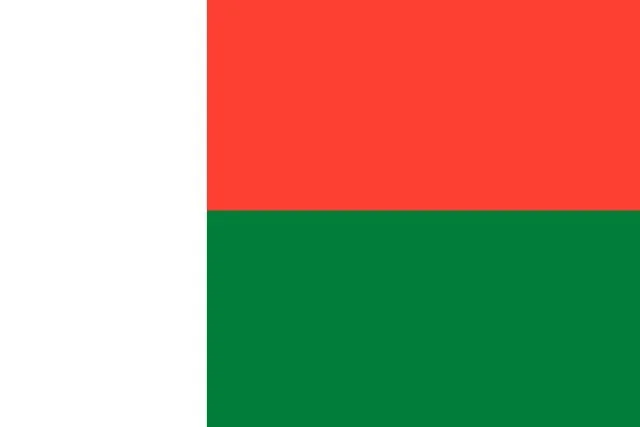
Madagascar
🏙️ Capital city:
Antananarivo
📈 Country population:
31 million
🗺️ Country area:
587,041 km²
Core Facts / Infobox
Present this as a clean two-column table containing accurate and verified national facts. Include only fields with real data.
| Official Name | Republic of Madagascar |
| Common Name | Madagascar |
| Political Status | Sovereign unitary semi-presidential republic |
| ISO Codes | MG, MDG, 450 |
| Internet TLD | .mg |
| Calling Code | +261 |
| Capital City | Antananarivo |
| Largest City | Antananarivo |
| Coordinates | 18.77° S, 46.87° E |
| Time Zone | UTC+3 (East Africa Time) |
| Population (2025 est.) | ~31 million |
| Area | 587,041 km² |
| Population Density | ~53 per km² |
| Languages | Malagasy, French (official) |
| Currency | Malagasy Ariary (MGA) |
| Driving Side | Right |
| GDP (Nominal) | ~USD 16 billion |
| GDP Per Capita | ~USD 520 |
| HDI | Low |
| Life Expectancy | ~66 years |
| Continent & Subregion | Africa — Indian Ocean (East Africa) |
| National Day | Independence Day (26 June) |
| National Anthem | Ry Tanindrazanay malala ô |
Geography & Environment
- Island nation off the southeastern coast of Africa in the Indian Ocean.
- Fourth-largest island in the world.
- Features rainforests, highlands, deserts, and coral reefs.
- Exceptional biodiversity with many endemic species.
- Climate ranges from tropical along the coast to temperate inland.
Demographics
- Population: ~31 million.
- Ethnically Malagasy, with Austronesian and African ancestry.
- Major cities: Antananarivo, Toamasina, Antsirabe, Mahajanga.
- Religions: Christianity, traditional beliefs, Islam.
History
- Settled by Austronesian seafarers around the first millennium.
- Later influenced by African, Arab, and European traders.
- Colonized by France in 1896.
- Gained independence in 1960.
- History marked by political instability and coups.
Government & Politics
- Political system: Semi-presidential republic.
- Head of State: President.
- Head of Government: Prime Minister.
- Legislature: bicameral Parliament.
- Administrative divisions: regions.
Economy
- Low-income developing economy.
- Key sectors: agriculture, mining, textiles, services.
- Main exports: vanilla, cloves, nickel, coffee.
- Strengths: biodiversity, agricultural exports.
- Weaknesses: poverty, infrastructure gaps, climate vulnerability.
Culture & Society
- Strong traditions centered on ancestors and family.
- Unique music, dance, and oral storytelling.
- Blend of Asian and African cultural influences.
Food & Cuisine
- Staple foods: rice, cassava.
- Traditional dishes: romazava, ravitoto, vary amin’anana.
- Cuisine often includes leafy greens and zebu meat.
Education & Institutions
- Primary education widely available but quality varies.
- Major institutions: University of Antananarivo.
Tourism
- Known for eco-tourism and wildlife.
- Top attractions: Avenue of the Baobabs, Tsingy de Bemaraha, lemur reserves.
- UNESCO World Heritage Sites.
Practical Information
- Emergency number: 124.
- Plug type: C/E; Voltage: 220V.
- Transport infrastructure limited outside major cities.
Sports, Entertainment & Notable People
- Popular sports: football, rugby.
- Strong local music and arts scene.
- Notable figures: Marc Ravalomanana, Didier Ratsiraka.
Neighboring Countries of Madagascar
Madagascar is an island nation located off the southeastern coast of Africa and does not share any land borders. Its closest maritime neighbors include Mozambique to the west across the Mozambique Channel, Comoros to the northwest, Réunion to the east, and Mauritius to the east.
Famous For
- Lemurs and endemic wildlife.
- Vanilla production.
- Baobab trees.
- Unique island biodiversity.
Sources
- World Bank
- United Nations (UN Data)
- IMF
- CIA World Factbook
- National Institute of Statistics (Madagascar)