
Random Country Generator 🌎
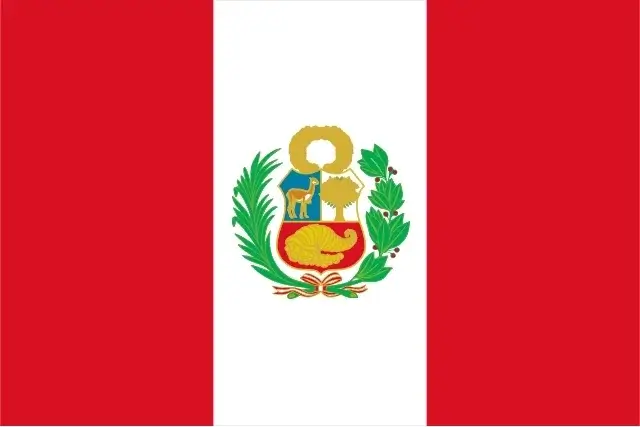
Peru
🏙️ Capital city:
Lima
📈 Country population:
34 million
🗺️ Country area:
1,285,216 km²
Core Facts / Infobox
Present this as a clean two-column table containing accurate and verified national facts. Include only fields with real data.
| Official Name | Republic of Peru |
| Common Name | Peru |
| ISO Codes | PE, PER, 604 |
| Internet TLD | .pe |
| Calling Code | +51 |
| Capital City | Lima |
| Largest City | Lima |
| Coordinates | 9° S, 75° W |
| Time Zone | UTC−5 |
| Population (2025 est.) | ~34 million |
| Area | 1,285,216 km² |
| Population Density | ~27 per km² |
| Languages | Spanish (official), Quechua, Aymara |
| Currency | Peruvian Sol (PEN) |
| Driving Side | Right |
| GDP (Nominal) | ~USD 250+ billion |
| GDP (PPP) | ~USD 500+ billion |
| GDP Per Capita | ~USD 7,000+ |
| GDP Growth | ~2–3% |
| HDI | 0.762 (High) |
| Literacy Rate | ~95% |
| Life Expectancy | ~77 years |
| Unemployment | ~6–7% |
| Inflation | ~3–4% |
| Leaders | President & Ministers (names omitted for longevity) |
| Continent & Subregion | South America — Andes & Amazon regions |
| National Day | 28 July |
| National Sport | Peruvian Paso Horse Riding |
| National Dish | Ceviche |
| National Anthem | Himno Nacional del Perú |
Geography & Environment
- Peru is located on the western coast of South America, bordered by Ecuador, Colombia, Brazil, Bolivia, Chile, and the Pacific Ocean.
- It features three main geographical regions: the arid coast, rugged Andes Mountains, and vast Amazon rainforest.
- Major natural features include the Andes, Lake Titicaca, Amazon Basin, and the Nazca Desert.
- Climate ranges from desert coastal weather to cold high-altitude climates and tropical rainforest humidity.
- Best time to visit: May–October (dry season in highlands and rainforest).
- National parks and reserves: Manu National Park, Huascarán National Park, Tambopata Reserve.
- Peru is extremely biodiverse, with thousands of unique wildlife species and ecosystems.
- Environmental challenges: deforestation, mining pollution, climate change, glacier melt.
- Unique features: Rainbow Mountain, Colca Canyon, Amazon headwaters.
Demographics
- Population: ~34 million.
- Median age: ~31 years.
- Urban population: ~80%.
- Ethnic composition: Mestizo majority, Indigenous (Quechua, Aymara), European, Afro-Peruvian, Asian.
- Religions: Christianity (Catholic and Protestant), Indigenous beliefs.
- Literacy rate: ~95%.
- Major cities: Lima, Arequipa, Trujillo, Chiclayo, Cusco.
History
- Peru was home to ancient civilizations including the Norte Chico, Nazca, Moche, and later the powerful Inca Empire.
- The Inca Empire, centered in Cusco, was the largest empire in pre-Columbian America.
- Spain conquered the region in the 16th century.
- Peru declared independence on 28 July 1821, achieved under José de San Martín and Simón Bolívar.
- 19th–20th centuries saw economic growth, conflicts, and modernization.
- Recent history includes political reforms, economic stabilization, and cultural revival.
Government & Politics
- Government type: Unitary presidential republic.
- Executive: President as head of state and government.
- Legislature: unicameral Congress.
- Judiciary: Supreme Court and Constitutional Tribunal.
- Administrative divisions: 25 regions.
- Political themes include social inequality, Indigenous rights, mining regulations.
Economy
- Peru has one of the fastest-growing economies in Latin America.
- Major industries: mining, agriculture, fishing, tourism, textiles, gastronomy.
- Main exports: copper, gold, zinc, natural gas, fishmeal, coffee, fruits.
- Main imports: machinery, chemicals, vehicles, fuel.
- Strengths: rich mineral resources, booming tourism, strong agriculture.
- Weaknesses: dependence on commodities, inequality, rural poverty.
- GDP sectors: Services (~57%), Industry (~32%), Agriculture (~11%).
- Peru is a leading global copper and gold producer.
Culture & Society
- Peruvian culture blends Indigenous, Spanish, African, and Asian influences.
- Strong traditions in music, dance, and textiles.
- Major festivals: Inti Raymi, Virgen de la Candelaria, Fiesta de San Juan, Peruvian Independence Day.
- Traditional clothing includes colorful Andean fabrics and ponchos.
- Arts: Andean music, Afro-Peruvian rhythms, pottery, weaving, literature.
- Languages: Spanish widely used; Quechua and Aymara spoken in highlands.
Food & Cuisine
- National dish: Ceviche — raw fish marinated in lime juice, onions, and chili.
- Popular dishes: Lomo Saltado, Aji de Gallina, Pachamanca, Pollo a la Brasa.
- Superfoods: quinoa, maca, purple corn.
- Street foods: anticuchos, picarones, tamales.
- Beverages: pisco sour, chicha morada, Inca Kola.
- Peru is considered one of the world’s greatest gastronomic nations.
Education & Institutions
- Education expanding with reforms in public schooling.
- Medium of instruction: Spanish; Indigenous languages used in rural schools.
- Literacy rate: ~95%.
- Top universities: Pontifical Catholic University of Peru, National University of San Marcos, University of Engineering and Technology (UTEC).
- Key fields: engineering, mining, agriculture, tourism, medicine.
Tourism
- Machu Picchu, one of the New Seven Wonders of the World.
- UNESCO Sites: Cusco, Arequipa, Nazca Lines, Chan Chan, Huascarán National Park.
- Natural attractions: Amazon River, Colca Canyon, Rainbow Mountain, Paracas.
- Historical sites: Sacred Valley, Sacsayhuamán, Caral.
- Adventure tourism: trekking, sandboarding, rafting, Amazon expeditions.
- Visa: visa-free for many countries.
- Transportation: buses, domestic flights, trains to Cusco & Machu Picchu.
Practical Information
- Safety: moderate; caution needed in busy urban areas.
- Healthcare: good in Lima; limited in rural regions.
- Emergency numbers: Police 105, Ambulance 106, Fire 116.
- Plug type: A & C; Voltage: 220V.
- Internet: widely available; fast in major cities.
- Best time to visit: May–October.
- Budget: affordable to mid-range depending on destination.
Sports, Entertainment & Notable People
- Most popular sport: football.
- Notable athletes: Teófilo Cubillas, Paolo Guerrero, Claudio Pizarro.
- Famous writers: Mario Vargas Llosa (Nobel Prize), César Vallejo.
- Musical heritage: Andean panpipes, Afro-Peruvian rhythms.
- Entertainment: cinema, festivals, folk dances.
Neighboring Countries of Peru
Peru shares land borders with the following countries:
Famous For
- Machu Picchu.
- Inca Empire and Andean culture.
- World-class cuisine.
- Nazca Lines.
- Amazon rainforest.
- Lake Titicaca.
- Alpaca wool and handicrafts.
Sources
- World Bank
- United Nations (UN Data)
- IMF
- CIA World Factbook
- Peru National Institute of Statistics and Informatics (INEI)
- Official Government Publications