
Random Country Generator 🌎
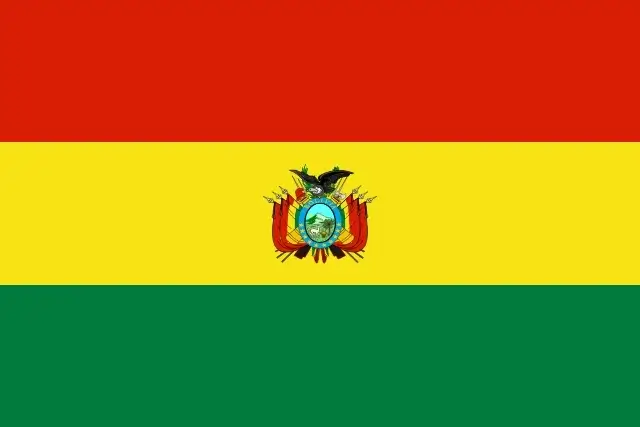
Bolivia
🏙️ Capital city:
Sucre, the constitutional and judicial capital, and La Paz
📈 Country population:
12 million
🗺️ Country area:
1,098,581 km²
Core Facts / Infobox
Present this as a clean two-column table containing accurate and verified national facts. Include only fields with real data.
| Official Name | Plurinational State of Bolivia |
| Common Name | Bolivia |
| ISO Codes | BO, BOL, 068 |
| Internet TLD | .bo |
| Calling Code | +591 |
| Capital Cities | Sucre (constitutional), La Paz (administrative & government seat) |
| Largest City | Santa Cruz de la Sierra |
| Coordinates | 16.5° S, 68.1° W |
| Time Zone | UTC−4 |
| Population (2025 est.) | ~12 million |
| Area | 1,098,581 km² |
| Population Density | ~11 per km² |
| Languages | Spanish, Quechua, Aymara, plus several Indigenous languages |
| Currency | Boliviano (BOB) |
| Driving Side | Right |
| GDP (Nominal) | ~USD 45+ billion |
| GDP (PPP) | ~USD 120+ billion |
| GDP Per Capita | ~USD 3,500+ |
| GDP Growth | ~2–3% |
| HDI | 0.718 (High) |
| Literacy Rate | ~94% |
| Life Expectancy | ~72 years |
| Unemployment | ~5% |
| Inflation | ~3–4% |
| Leaders | President & Cabinet (names omitted for longevity) |
| Continent & Subregion | South America — Andes & Amazon regions |
| National Day | 6 August |
| National Sport | Football (soccer) |
| National Dish | Salteñas |
| National Anthem | Himno Nacional de Bolivia |
Geography & Environment
- Bolivia is a landlocked country in central South America, bordered by Brazil, Paraguay, Argentina, Chile, and Peru.
- Geographical regions include the Andes Mountains, Altiplano plateau, Amazon rainforest, and Chaco lowlands.
- Major features: Lake Titicaca (world’s highest navigable lake), Uyuni Salt Flats (largest salt flat on Earth).
- Climate ranges from tropical in the Amazon to cold high-altitude climates in the Andes.
- Best time to visit: May–October (dry season).
- National parks: Madidi National Park, Sajama, Torotoro, Amboró.
- Wildlife includes jaguars, llamas, vicuñas, capybaras, spectacled bears, and pink river dolphins.
- Environmental challenges: deforestation, mining pollution, water scarcity in dry regions.
- Bolivia is one of the most biodiverse countries in the world, spanning multiple ecosystems.
Demographics
- Population: ~12 million.
- Median age: ~26 years.
- Urban vs rural: ~70% urban; major migration to cities.
- Ethnic groups: Indigenous (Quechua, Aymara), mestizo, European, and smaller groups.
- Religions: Christianity (mainly Catholic), Andean spiritual traditions.
- Literacy rate: ~94%.
- Major cities: Santa Cruz, La Paz, El Alto, Cochabamba, Sucre.
History
- Home to ancient Andean civilizations including Tiwanaku and Inca influence.
- Colonized by Spain in the 16th century, known for silver mining in Potosí.
- Independence declared on 6 August 1825 under Simón Bolívar’s influence.
- 19th–20th centuries marked by territorial conflicts, including loss of coastline to Chile during the War of the Pacific.
- Recent history includes political reforms, Indigenous empowerment, and economic shifts.
Government & Politics
- Government type: Unitary presidential republic.
- Executive: President as head of state and government.
- Legislature: Plurinational Legislative Assembly (bicameral).
- Judiciary: Supreme Court, Constitutional Court.
- Administrative divisions: 9 departments.
- Political themes: Indigenous rights, natural resource control, decentralization.
Economy
- Bolivia’s economy relies on natural gas, mining, agriculture, and manufacturing.
- Major resources: lithium (large reserves in Salar de Uyuni), silver, tin, natural gas.
- Main exports: natural gas, minerals, soybeans, quinoa.
- Main imports: machinery, vehicles, fuel, textiles.
- Strengths: mineral wealth, agricultural potential, tourism growth.
- Weaknesses: landlocked geography, income inequality, dependency on commodities.
- GDP sectors: Services (~55%), Industry (~30%), Agriculture (~15%).
- Recent reforms focus on industrialization and economic diversification.
Culture & Society
- Bolivia has one of the highest Indigenous population percentages in the Americas.
- Cultural values emphasize community, tradition, and respect for Pachamama (Mother Earth).
- Major festivals: Carnaval de Oruro (UNESCO), Alasitas, Inti Raymi.
- Traditional dress: pollera skirts, bowler hats (Aymara), ponchos (Andean regions).
- Arts: Andean music (charango, panpipes), weaving, pottery, dance.
- Languages: Spanish, Quechua, Aymara, and 30+ recognized Indigenous languages.
Food & Cuisine
- National dish: Salteñas — baked empanadas filled with meat, vegetables, and sweet-spicy broth.
- Popular dishes: Silpancho, Pique Macho, Sopa de Mani, Anticuchos.
- Staple ingredients: potatoes, quinoa, corn, beef, chicken.
- Street foods: tucumanas, empanadas, api morado (purple corn drink).
- Beverages: mate de coca, chicha, mocochinchi (peach drink).
Education & Institutions
- Education system expanding with improved access in rural areas.
- Medium of instruction: Spanish; bilingual education in Indigenous regions.
- Literacy rate: ~94%.
- Top universities: Universidad Mayor de San Andrés, Universidad de San Simón, Universidad Autónoma Gabriel René Moreno.
- Important academic fields: agriculture, engineering, environmental sciences, mining.
Tourism
- Top destinations: Salar de Uyuni, Lake Titicaca, La Paz, Sucre, Santa Cruz, Potosí mines.
- UNESCO World Heritage Sites: Tiwanaku, Potosí, Sucre, Noel Kempff Mercado National Park.
- Natural attractions: Andes mountains, Amazon rainforest, Uyuni Salt Flats.
- Historical landmarks: ancient ruins, colonial buildings, mining museums.
- Adventure tourism: hiking, mountain climbing, Amazon tours, biking the “Death Road.”
- Visa: many countries visa-free; others require pre-arrival visas.
- Transportation: buses, taxis, cable cars (Mi Teleférico in La Paz), domestic flights.
Practical Information
- Safety: varies; caution advised in major cities and tourist areas.
- Healthcare: good in cities; limited in rural highlands and Amazon areas.
- Emergency numbers: Police 110, Ambulance 118, Fire 119.
- Plug types: A & C; Voltage: 230V.
- Internet: available in cities; slower in rural areas.
- Best time to visit: May–October (dry season).
- Budget: affordable for travelers; mid-range options in major cities.
Sports, Entertainment & Notable People
- National sport: football.
- Popular sports: cycling, volleyball, basketball.
- Notable athletes include Marco Etcheverry and Erwin Sánchez.
- Famous cultural figures: writer Edmundo Paz Soldán, musician Los Kjarkas.
- Bolivia has not yet had a Nobel Prize winner.
Neighboring Countries of Bolivia
Bolivia shares land borders with the following countries:
Famous For
- Salar de Uyuni (world’s largest salt flat).
- Lake Titicaca.
- Andean culture and Indigenous heritage.
- Carnaval de Oruro (UNESCO).
- Amazon rainforest biodiversity.
- Colorful traditional clothing.
- Historic city of Potosí and silver mines.
Sources
- World Bank
- United Nations (UN Data)
- IMF
- CIA World Factbook
- Bolivia National Institute of Statistics (INE)
- Official Government Publications