
Random Country Generator 🌎
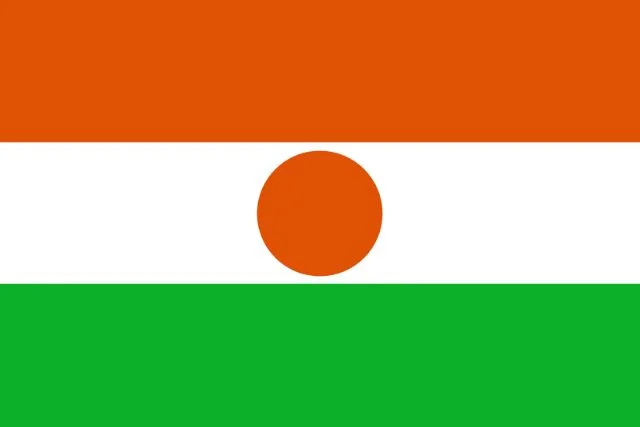
Niger
🏙️ Capital city:
Niamey
📈 Country population:
27 million
🗺️ Country area:
1,267,000 km²
Core Facts / Infobox
Present this as a clean two-column table containing accurate and verified national facts. Include only fields with real data.
| Official Name | Republic of the Niger |
| Common Name | Niger |
| Political Status | Sovereign republic (transitional / military-led government) |
| ISO Codes | NE, NER, 562 |
| Internet TLD | .ne |
| Calling Code | +227 |
| Capital City | Niamey |
| Largest City | Niamey |
| Coordinates | 17.61° N, 8.08° E |
| Time Zone | UTC+1 (West Africa Time) |
| Population (2025 est.) | ~27 million |
| Area | 1,267,000 km² |
| Population Density | ~21 per km² |
| Languages | French (official); Hausa, Zarma, Tuareg and others |
| Currency | West African CFA Franc (XOF) |
| Driving Side | Right |
| GDP (Nominal) | ~USD 17 billion |
| GDP Per Capita | ~USD 600 |
| HDI | Low |
| Life Expectancy | ~62 years |
| Continent & Subregion | Africa — West Africa (Sahel) |
| National Day | Independence Day (3 August) |
| National Anthem | La Nigérienne |
Geography & Environment
- Landlocked country in the Sahel region of West Africa.
- Borders Algeria, Libya, Chad, Nigeria, Benin, Burkina Faso, and Mali.
- Over two-thirds of the territory lies within the Sahara Desert.
- The Niger River flows through the southwest, supporting agriculture.
- Climate: arid to semi-arid, with frequent droughts.
Demographics
- Population: ~27 million.
- One of the youngest populations in the world.
- Major ethnic groups: Hausa, Zarma-Songhai, Tuareg, Fulani.
- Religions: Islam (overwhelming majority).
History
- Historic Sahelian trade routes and empires.
- Colonized by France in the late 19th century.
- Gained independence in 1960.
- History marked by coups and political instability.
- Recent period shaped by security and governance challenges.
Government & Politics
- Political system: Republic under transitional authority.
- Head of State: Transitional leadership.
- Legislature: transitional governing bodies.
- Administrative divisions: regions.
Economy
- Low-income developing economy.
- Key sectors: agriculture, livestock, mining.
- Main exports: uranium, gold, livestock.
- Strengths: mineral resources.
- Weaknesses: food insecurity, climate vulnerability, poverty.
Culture & Society
- Strong oral traditions and community life.
- Music and storytelling central to cultural identity.
- Nomadic and settled lifestyles coexist.
Food & Cuisine
- Staple foods: millet, sorghum, rice.
- Traditional dishes: tuwo, dambou, millet porridge.
- Cuisine adapted to arid conditions.
Education & Institutions
- Education access improving but remains limited.
- Major institution: Abdou Moumouni University.
Tourism
- Limited tourism sector.
- Attractions include Sahara landscapes and Agadez region.
- Tourism constrained by security concerns.
Practical Information
- Emergency services availability varies.
- Plug type: C/D/E; Voltage: 220V.
- Infrastructure limited outside major cities.
Sports, Entertainment & Notable People
- Popular sports: football, wrestling.
- Traditional sports and festivals remain important.
- Notable figures: Hamani Diori.
Neighboring Countries of Niger
Niger is located in West Africa and borders seven countries: Algeria to the northwest, Benin to the southwest, Burkina Faso to the southwest, Chad to the east, Libya to the northeast, Mali to the west, and Nigeria to the south.
Famous For
- Sahel and Sahara landscapes.
- Uranium resources.
- Tuareg culture.
- Rapid population growth.
Sources
- World Bank
- United Nations (UN Data)
- IMF
- CIA World Factbook
- National Institute of Statistics (Niger)