
Random Country Generator 🌎
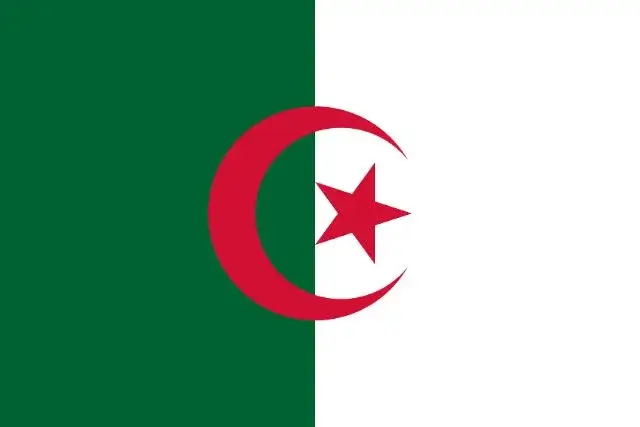
Algeria
🏙️ Capital city:
Algiers
📈 Country population:
46 million
🗺️ Country area:
2,381,741 km²
Core Facts / Infobox
Present this as a clean two-column table containing accurate and verified national facts. Include only fields with real data.
| Official Name | People’s Democratic Republic of Algeria |
| Common Name | Algeria |
| Political Status | Sovereign unitary semi-presidential republic |
| ISO Codes | DZ, DZA, 012 |
| Internet TLD | .dz |
| Calling Code | +213 |
| Capital City | Algiers |
| Largest City | Algiers |
| Coordinates | 28.03° N, 1.66° E |
| Time Zone | UTC+1 (Central European Time) |
| Population (2025 est.) | ~46 million |
| Area | 2,381,741 km² |
| Population Density | ~19 per km² |
| Languages | Arabic (official), Tamazight (official), French widely used |
| Currency | Algerian Dinar (DZD) |
| Driving Side | Right |
| GDP (Nominal) | ~USD 260 billion |
| GDP Per Capita | ~USD 5,600 |
| HDI | High |
| Life Expectancy | ~76 years |
| Continent & Subregion | Africa — North Africa |
| National Day | Independence Day (5 July) |
| National Anthem | Kassaman |
Geography & Environment
- Largest country in Africa by land area.
- Located in North Africa with a Mediterranean coastline.
- Over 80% of the country covered by the Sahara Desert.
- Includes the Atlas Mountains and Saharan plateaus.
- Climate ranges from Mediterranean in the north to arid desert in the south.
Demographics
- Population: ~46 million.
- Majority Arab-Berber population.
- Highly urbanized along the northern coast.
- Religions: Islam (Sunni majority).
History
- Ancient Berber civilizations and Roman provinces.
- Arab-Islamic expansion in the 7th century.
- French colonization from 1830 to 1962.
- Gained independence after a prolonged war.
- Experienced political unrest in the late 20th century.
Government & Politics
- Political system: Semi-presidential republic.
- Head of State: President.
- Head of Government: Prime Minister.
- Legislature: bicameral Parliament.
- Administrative divisions: provinces (wilayas).
Economy
- Upper-middle-income economy.
- Heavily dependent on hydrocarbons.
- Main exports: oil, natural gas.
- Key sectors: energy, services, agriculture.
- Strengths: large energy reserves.
- Weaknesses: limited diversification, unemployment.
Culture & Society
- Blend of Arab, Berber, and Mediterranean influences.
- Rich traditions in music, poetry, and cuisine.
- Strong national identity shaped by independence struggle.
Food & Cuisine
- Traditional dishes: couscous, chorba, rechta.
- Cuisine influenced by Berber, Arab, and Mediterranean traditions.
Education & Institutions
- Free public education system.
- High literacy compared to regional averages.
- Major institutions: University of Algiers.
Tourism
- Rich archaeological and natural tourism potential.
- Top attractions: Casbah of Algiers, Tassili n’Ajjer, Roman ruins.
- Tourism limited but growing.
Practical Information
- Emergency number: 1548 (police), 14 (ambulance).
- Plug type: C/F; Voltage: 230V.
- Transport infrastructure concentrated in the north.
Sports, Entertainment & Notable People
- Popular sports: football, athletics.
- Strong national football tradition.
- Notable figures: Albert Camus, Zinedine Zidane.
Neighboring Countries of Algeria
Algeria is located in North Africa and borders seven countries: Libya to the east, Mali to the south, Mauritania to the southwest, Morocco to the northwest, Niger to the southeast, Tunisia to the northeast, and Western Sahara to the west. To the north, it is bordered by the Mediterranean Sea.
Famous For
- Sahara Desert landscapes.
- Oil and natural gas reserves.
- War of Independence.
- Berber and Arab cultural heritage.
Sources
- World Bank
- United Nations (UN Data)
- IMF
- CIA World Factbook
- National Office of Statistics (Algeria)