
Random Country Generator 🌎
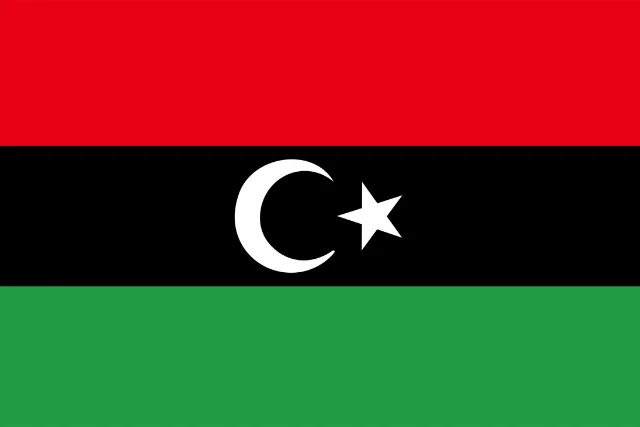
Libya
🏙️ Capital city:
Tripoli
📈 Country population:
7.1 million
🗺️ Country area:
1,759,541 km²
Core Facts / Infobox
Present this as a clean two-column table containing accurate and verified national facts. Include only fields with real data.
| Official Name | State of Libya |
| Common Name | Libya |
| Political Status | Sovereign state under rival administrations / transitional governance |
| ISO Codes | LY, LBY, 434 |
| Internet TLD | .ly |
| Calling Code | +218 |
| Capital City | Tripoli |
| Largest City | Tripoli |
| Coordinates | 26.33° N, 17.23° E |
| Time Zone | UTC+2 (Eastern European Time) |
| Population (2025 est.) | ~7.1 million |
| Area | 1,759,541 km² |
| Population Density | ~4 per km² |
| Languages | Arabic (official); Berber languages also spoken |
| Currency | Libyan Dinar (LYD) |
| Driving Side | Right |
| GDP (Nominal) | ~USD 45 billion |
| GDP Per Capita | ~USD 6,300 |
| HDI | Medium |
| Life Expectancy | ~72 years |
| Continent & Subregion | Africa — North Africa |
| National Day | Liberation Day (23 October) |
| National Anthem | Libya, Libya, Libya |
Geography & Environment
- Located in North Africa along the Mediterranean Sea.
- Borders Tunisia, Algeria, Niger, Chad, Sudan, and Egypt.
- Mostly desert country; over 90% lies within the Sahara.
- Major geographic features include the Fezzan region and coastal plains.
- Climate: Mediterranean along the coast, arid desert inland.
Demographics
- Population: ~7.1 million.
- Highly urbanized along the Mediterranean coast.
- Major cities: Tripoli, Benghazi, Misrata, Sabha.
- Religion: Islam (Sunni majority).
History
- Ancient civilizations included Phoenicians, Greeks, and Romans.
- Part of the Ottoman Empire, later colonized by Italy.
- Gained independence in 1951.
- Ruled by Muammar Gaddafi from 1969 to 2011.
- Post-2011 period marked by political fragmentation and conflict.
Government & Politics
- Political system: Fragmented governance with competing authorities.
- Rival administrations based in Tripoli and eastern Libya.
- Legislative bodies include the House of Representatives and High Council of State.
- Administrative divisions: districts and municipalities.
Economy
- Upper-middle-income economy heavily dependent on hydrocarbons.
- Holds Africa’s largest proven oil reserves.
- Main exports: crude oil, refined petroleum products.
- Strengths: energy resources, low population.
- Weaknesses: political instability, infrastructure disruption.
Culture & Society
- Arab and Amazigh (Berber) cultural influences.
- Strong tribal and family structures.
- Islamic traditions shape social norms.
Food & Cuisine
- Staple foods: bread, couscous, rice.
- Traditional dishes: bazeen, couscous, shorba.
- Use of lamb, olive oil, and spices common.
Education & Institutions
- Education system disrupted by conflict.
- Major institutions: University of Tripoli, University of Benghazi.
Tourism
- Tourism currently very limited.
- Notable heritage sites include Leptis Magna and Sabratha (UNESCO).
- Significant long-term tourism potential.
Practical Information
- Emergency services availability inconsistent.
- Plug type: C/L; Voltage: 230V.
- Cash-based economy common.
Sports, Entertainment & Notable People
- Popular sport: football.
- Strong interest in regional and international football.
- Notable figures: Muammar Gaddafi, Ahmed Ben Bella (born in Libya).
Neighboring Countries of Libya
Libya is located in North Africa and borders six countries: Algeria to the west, Chad to the south, Egypt to the east, Niger to the southwest, Sudan to the southeast, and Tunisia to the northwest. To the north, it is bordered by the Mediterranean Sea.
Famous For
- Large oil reserves.
- Roman archaeological sites.
- Sahara Desert landscapes.
- Mediterranean coastline.
Sources
- World Bank
- United Nations (UN Data)
- IMF
- CIA World Factbook
- Libyan Bureau of Statistics and Census