
Random Country Generator 🌎
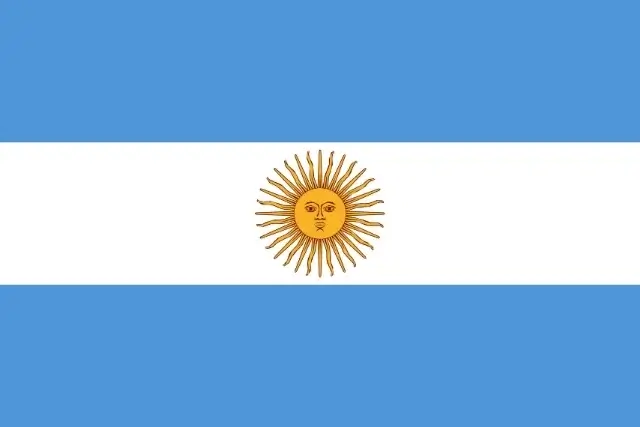
Argentina
🏙️ Capital city:
Buenos Aires
📈 Country population:
46 million
🗺️ Country area:
2,780,400 km²
Core Facts / Infobox
Present this as a clean two-column table containing accurate and verified national facts. Include only fields with real data.
| Official Name | Argentine Republic |
| Common Name | Argentina |
| ISO Codes | AR, ARG, 032 |
| Internet TLD | .ar |
| Calling Code | +54 |
| Capital City | Buenos Aires |
| Largest City | Buenos Aires |
| Coordinates | 34.6° S, 58.4° W |
| Time Zones | UTC−3 |
| Population (2025 est.) | ~46 million |
| Area | 2,780,400 km² |
| Population Density | ~16 per km² |
| Languages | Spanish (official), regional Indigenous languages |
| Currency | Argentine Peso (ARS) |
| Driving Side | Right |
| GDP (Nominal) | ~USD 620+ billion |
| GDP (PPP) | ~USD 1.3+ trillion |
| GDP Per Capita | ~USD 13,000+ |
| GDP Growth | ~2–3% |
| HDI | 0.842 (Very High) |
| Literacy Rate | ~99% |
| Life Expectancy | ~77 years |
| Unemployment | ~8–9% |
| Inflation | High; often above 100% annually |
| Leaders | President & Ministers (names omitted for longevity) |
| Continent & Subregion | South America — Southern Cone |
| National Day | 25 May (Revolution Day), 9 July (Independence Day) |
| National Sport | Pato |
| National Dish | Asado |
| National Anthem | Himno Nacional Argentino |
Geography & Environment
- Argentina is located in southern South America, sharing borders with Chile, Bolivia, Paraguay, Brazil, and Uruguay.
- Geographical regions include Patagonia, Pampas plains, Andes Mountains, Mesopotamia wetlands, and subtropical forests.
- Major natural features: Aconcagua (highest peak in the Americas), Iguazu Falls, Perito Moreno Glacier, Pampas grasslands.
- Climate ranges from subtropical in the north to polar in the far south.
- Best time to visit: October–April, depending on region.
- National parks: Iguazú, Nahuel Huapi, Los Glaciares, Talampaya.
- Wildlife includes pumas, guanacos, condors, penguins, and diverse marine life.
- Environmental challenges: deforestation, desertification, glacial retreat.
- Unique features: Patagonia’s dramatic landscapes; one of the world’s longest countries north to south.
Demographics
- Population: ~46 million.
- Median age: ~32 years.
- Urban population: ~92%.
- Ethnic groups: European descent (majority), Mestizo, Indigenous, Afro-descendant, Middle Eastern communities.
- Religions: Christianity (mainly Catholic), Protestant, Jewish, secular population.
- Literacy rate: ~99%.
- Major cities: Buenos Aires, Córdoba, Rosario, Mendoza, La Plata.
History
- Originally inhabited by Indigenous groups such as Mapuche, Guaraní, and Diaguita.
- Colonized by Spain in the 16th century.
- Declared independence on 9 July 1816.
- 19th century saw civil wars and consolidation of national identity.
- 20th century marked by economic booms, political instability, and military rule (notably 1976–1983).
- Returned to democracy in 1983 and strengthened institutions.
Government & Politics
- Government type: Federal presidential republic.
- Executive: President as head of state and government.
- Legislature: bicameral National Congress (Senate & Chamber of Deputies).
- Judiciary: Supreme Court and federal courts.
- Administrative divisions: 23 provinces + Autonomous City of Buenos Aires.
- Political focus: economic reform, inflation control, human rights, social welfare.
Economy
- Argentina has a diversified economy with strong agriculture, manufacturing, services, and energy sectors.
- Main exports: soybeans, beef, corn, wheat, wine, lithium, automobiles.
- Main imports: machinery, vehicles, fuel, chemicals.
- Strengths: fertile Pampas plains, vast natural resources, skilled workforce.
- Weaknesses: inflation, currency instability, debt challenges.
- GDP sectors: Services (~55%), Industry (~30%), Agriculture (~15%).
- Argentina is a major global producer of beef and wine.
Culture & Society
- Culture influenced by European, Indigenous, and Latin American traditions.
- Famous for tango, literature, and passionate football culture.
- Major festivals: Tango Festival, Fiesta Nacional de la Vendimia (wine harvest), Gaucho Day.
- Traditional dress includes gaucho attire in rural areas.
- Arts: tango, folk music, cinema, theater, and vibrant street culture.
- Languages: Spanish (Rioplatense), Indigenous languages in northern and southern regions.
Food & Cuisine
- National dish: Asado — traditional Argentine barbecue with beef cuts grilled over open fire.
- Popular foods: Empanadas, Milanesas, Locro, Provoleta, Choripán.
- World-famous beverages: Yerba Mate and Malbec wine.
- Desserts: alfajores, dulce de leche pastries.
- Street foods: choripán, pizza al molde, fainá.
Education & Institutions
- Argentina has one of Latin America’s strongest education systems.
- Medium of instruction: Spanish.
- Literacy rate: ~99%.
- Top universities: University of Buenos Aires (UBA), National University of La Plata, National University of Córdoba.
- Key fields: medicine, engineering, agriculture, social sciences, arts.
Tourism
- Top destinations: Buenos Aires, Patagonia, Mendoza wine region, Iguazu Falls, Bariloche.
- UNESCO sites: Iguazu National Park, Los Glaciares, Quebrada de Humahuaca, Cueva de las Manos.
- Natural attractions: Andes, glaciers, lakes, deserts, pampas.
- Adventure tourism: trekking, skiing, ice hiking, whale watching, horseback riding.
- Visa: visa-free for many countries.
- Transportation: domestic flights, buses, trains, metro in Buenos Aires.
Practical Information
- Safety: varies by city; caution needed in crowded urban areas.
- Healthcare: high-quality in major cities; public hospitals widely available.
- Emergency numbers: Police 911, Ambulance 107, Fire 100.
- Plug type: C & I; Voltage: 220V.
- Internet: widely available; high-speed in urban centers.
- Best time to visit: October–April, depending on region.
- Budget: moderate to high, varies by city and season.
Sports, Entertainment & Notable People
- Most popular sport: football.
- Legendary athletes: Diego Maradona, Lionel Messi, Manu Ginóbili.
- Entertainment icons: Ricardo Darín, Mercedes Sosa, Gustavo Cerati.
- Writers: Jorge Luis Borges, Julio Cortázar, Adolfo Bioy Casares.
- Nobel Prize winners: César Milstein (Medicine), Bernardo Houssay (Medicine), Luis Leloir (Chemistry).
Neighboring Countries of Argentina
Argentina shares land borders with the following countries:
- 832 km with Bolivia
- 1,224 km with Brazil
- 5,300 km with Chile
- 1,880 km with Paraguay
- 579 km with Uruguay
Famous For
- Tango music and dance.
- Patagonia’s landscapes.
- Iguazu Falls.
- World-class beef and wine.
- Football legends Messi and Maradona.
- Andes Mountains and Aconcagua.
- Rich literary heritage.
Sources
- World Bank
- United Nations (UN Data)
- IMF
- CIA World Factbook
- Argentina National Institute of Statistics and Census (INDEC)
- Official Government Publication