
Random Country Generator 🌎
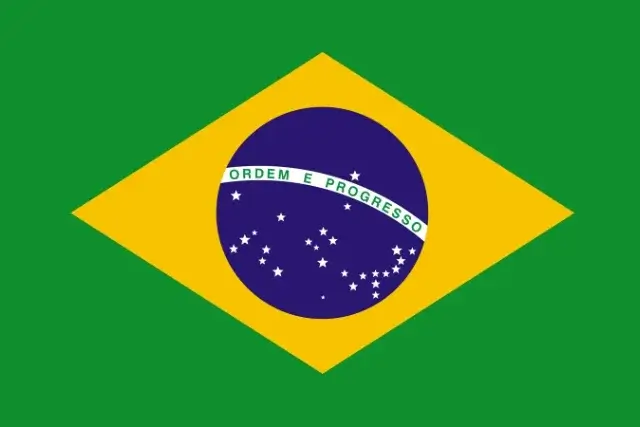
Brazil
🏙️ Capital city:
Brasília
📈 Country population:
204 million
🗺️ Country area:
8,515,767 km²
Core Facts / Infobox
Present this as a clean two-column table containing accurate and verified national facts. Include only fields with real data.
| Official Name | Federative Republic of Brazil |
| Common Name | Brazil |
| ISO Codes | BR, BRA, 076 |
| Internet TLD | .br |
| Calling Code | +55 |
| Capital City | Brasília |
| Largest City | São Paulo |
| Coordinates | 14.2° S, 51.9° W |
| Time Zones | UTC−5, UTC−4, UTC−3 (main), UTC−2 |
| Population (2025 est.) | ~204 million |
| Area | 8,515,767 km² |
| Population Density | ~24 per km² |
| Languages | Portuguese (official) |
| Currencies | Brazilian Real (BRL) |
| Driving Side | Right |
| GDP (Nominal) | ~USD 2 trillion+ |
| GDP (PPP) | ~USD 4 trillion+ |
| GDP Per Capita | ~USD 10,000+ |
| GDP Growth | ~2–3% |
| HDI | 0.760 (High) |
| Literacy Rate | ~95% |
| Life Expectancy | ~76 years |
| Unemployment | ~7–8% |
| Inflation | ~4–5% |
| Leaders | President & Ministers (names omitted for longevity) |
| Continent & Subregion | South America |
| National Day | 7 September |
| National Sport | Football (soccer) |
| National Dish | Feijoada |
| National Anthem | Hino Nacional Brasileiro |
Geography & Environment
- Brazil is the largest random South American country, bordering every country except Chile and Ecuador.
- Geographical regions include the Amazon Basin, Brazilian Highlands, Pantanal wetlands, Atlantic Forest, and long Atlantic coastlines.
- The Amazon River is one of the longest in the world and hosts the largest rainforest on Earth.
- Climate ranges from equatorial in the north to temperate in the south.
- Best time to visit: May–September (dry season).
- Important national parks: Iguazu National Park, Chapada Diamantina, Tijuca National Park, Amazon National Park.
- Wildlife includes jaguars, sloths, macaws, anacondas, pink dolphins, and vast insect biodiversity.
- Environmental challenges: deforestation, fires, water pollution, habitat loss.
- Unique features: Iguazu Falls, one of the world’s most spectacular waterfalls; Pantanal, the world’s largest tropical wetland.
Demographics
- Population: ~204 million.
- Median age: ~34 years.
- Urban vs rural: ~87% urban population.
- Ethnic groups: mixed (pardo), white, black, indigenous, and Asian communities.
- Religions: Christianity (majority Catholic), Protestantism, Afro-Brazilian traditions.
- Literacy rate: ~95%.
- Major cities: São Paulo, Rio de Janeiro, Brasília, Salvador, Fortaleza, Belo Horizonte.
History
- Originally inhabited by hundreds of indigenous tribes.
- Colonized by Portugal in 1500.
- Became the center of the Portuguese Empire temporarily in the 19th century.
- Declared independence on 7 September 1822 under Emperor Pedro I.
- Became a republic in 1889.
- Modern history includes industrialization, democratization, and economic development.
Government & Politics
- Government type: Federal presidential republic.
- Executive: President as head of state and government.
- Legislature: bicameral National Congress (Senate & Chamber of Deputies).
- Judiciary: Supreme Federal Court and lower courts.
- Divisions: 26 states + Federal District.
- Political issues include social inequality, environmental policy, and economic reform.
Economy
- Brazil is the largest economy in Latin America.
- Major industries: agriculture, mining, manufacturing, energy, aerospace, technology, and services.
- Top exports: soybeans, iron ore, crude oil, coffee, beef, sugar.
- Main imports: machinery, electronics, fertilizers, chemicals.
- Strengths: abundant resources, large workforce, strong agriculture.
- Weaknesses: inequality, bureaucracy, infrastructure challenges.
- GDP sectors: Services (~70%), Industry (~20%), Agriculture (~10%).
- Ongoing economic reforms target tax simplification, infrastructure, and sustainability.
Culture & Society
- Brazilian culture blends Indigenous, African, and Portuguese influences.
- Core values include family, joy, music, and community festivities.
- Major festivals: Carnival, Festa Junina, New Year at Copacabana.
- Traditional dress varies across regions, often colorful and festive during celebrations.
- Arts: samba, bossa nova, capoeira, modern film, and visual arts.
- Languages: Portuguese (official), with regional dialects and indigenous languages.
Food & Cuisine
- National dish: Feijoada — black bean stew with pork, served with rice and farofa.
- Popular dishes: Churrasco (Brazilian BBQ), Moqueca, Coxinha, Acarajé.
- Street foods: pastel, pão de queijo, brigadeiros.
- Beverages: açaí smoothies, Guaraná soda, Brazilian coffee, caipirinha (with lime and cachaça).
- Cuisine varies greatly by region: Amazonian, Afro-Brazilian, southern European influences.
Education & Institutions
- Education system includes public and private schools with growing university attendance.
- Medium of instruction: Portuguese.
- Literacy rate: ~95%.
- Top universities: University of São Paulo (USP), Federal University of Rio de Janeiro (UFRJ), UNICAMP.
- Key fields: engineering, agriculture, medicine, business, environmental sciences.
Tourism
- Top destinations: Rio de Janeiro, São Paulo, Salvador, Amazon Rainforest, Pantanal, Florianópolis.
- UNESCO World Heritage Sites: Iguazu National Park, Historic Salvador, Brasília, Serra da Capivara.
- Natural attractions: beaches, mountains, rainforests, waterfalls.
- Historical landmarks: Christ the Redeemer, Sugarloaf Mountain, Pelourinho, Ouro Preto.
- Adventure tourism: hiking, surfing, wildlife tours, Amazon expeditions.
- Visa: visa-free for many countries; e-visa for others.
- Transportation: domestic flights, buses, metro in major cities, taxis, ride apps.
Practical Information
- Safety: varies by region; major cities require caution.
- Healthcare: modern in urban areas; rural regions limited.
- Emergency numbers: Police 190, Ambulance 192, Fire 193.
- Plug type: N (and C in some regions); Voltage: 127V or 220V depending on state.
- Internet: widely available, fast in cities.
- Best time to visit: May–September.
- Budget: moderate to high depending on city and activities.
Sports, Entertainment & Notable People
- National sport: football.
- Brazil is home to legendary footballers: Pelé, Ronaldo, Ronaldinho, Neymar.
- Major achievements: five-time FIFA World Cup champion.
- Cultural icons: musicians (Gilberto Gil, Tom Jobim), writers (Paulo Coelho, Jorge Amado), supermodels, actors.
- Nobel Prize: Brazil has had nominees but no laureates to date.
Neighboring Countries of Brazil
Brazil shares land borders with the following countries:
- 1,224 km with Argentina
- 3,400 km with Bolivia
- 1,643 km with Colombia
- 673 km with French Guiana
- 1,119 km with Guyana
- 1,290 km with Paraguay
- 2,995 km with Peru
- 597 km with Suriname
- 985 km with Uruguay
- 2,200 km with Venezuela
Famous For
- Amazon Rainforest.
- Carnival and samba.
- Football greatness.
- Christ the Redeemer statue.
- Iguazu Falls.
- Beautiful beaches and coastline.
- Rich wildlife and biodiversity.
- Vibrant music and cultural expression.
Sources
- World Bank
- United Nations (UN Data)
- IMF
- CIA World Factbook
- Brazilian Institute of Geography and Statistics (IBGE)
- Official Government Portals