
Random Country Generator 🌎
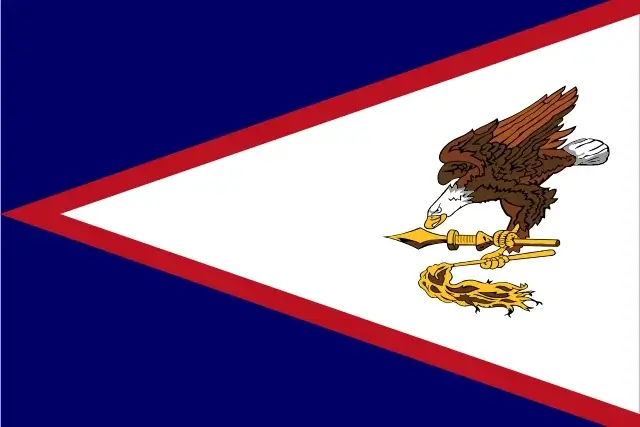
American Samoa
🏙️ Capital city:
Pago Pago
📈 Country population:
45,000
🗺️ Country area:
199 km²
Core Facts / Infobox
Present this as a clean two-column table containing accurate and verified national facts. Include only fields with real data.
| Official Name | American Samoa (Unincorporated Territory of the United States) |
| Common Name | American Samoa |
| ISO Codes | AS, ASM, 016 |
| Internet TLD | .as |
| Calling Code | +1-684 |
| Capital City | Pago Pago |
| Largest City | Tafuna |
| Coordinates | 14.3° S, 170.7° W |
| Time Zone | UTC−11 |
| Population (2025 est.) | ~45,000 |
| Area | 199 km² |
| Population Density | ~225 per km² |
| Languages | Samoan, English |
| Currency | US Dollar (USD) |
| Driving Side | Right |
| GDP (PPP) | ~USD 700 million |
| GDP Per Capita | ~USD 14,000 |
| HDI | Data aligned with U.S. territories (medium-high development) |
| Literacy Rate | ~97% |
| Life Expectancy | ~75 years |
| Continent & Subregion | Oceania — Polynesia |
| National Day | 17 April (Flag Day) |
| National Sport | American Football & Rugby |
| National Dish | Palusami |
| National Anthem | The Banner of Freedom |
Geography & Environment
- American Samoa is located in the South Pacific Ocean, southeast of independent Samoa.
- It consists of five volcanic islands (Tutuila, Aunu‘u, Ofu, Olosega, Ta‘ū) and two coral atolls (Swains Island and Rose Atoll).
- Geography includes dramatic volcanic peaks, tropical rainforests, pristine beaches, and coral reefs.
- Climate: tropical and humid; rainy season November–April.
- Best time to visit: May–October.
- Key natural attractions: National Park of American Samoa, Ofu Beach, Pago Pago Harbor.
- Diverse wildlife: fruit bats, reef fish, sea turtles, dolphins, and rare bird species.
- Environmental challenges: cyclones, rising sea levels, coral bleaching, coastal erosion.
Demographics
- Total population: ~45,000.
- Median age: ~28 years.
- Urban population: ~90% concentrated on Tutuila Island.
- Ethnic groups: predominantly Samoan (Polynesian), with smaller Tongan, Filipino, and American communities.
- Religions: Christianity (majority), Latter-day Saints, Congregational, Catholic.
- Literacy rate: ~97%.
- Major towns: Tafuna, Pago Pago, Leone, Fagatogo.
History
- Settled by Polynesians over 3,000 years ago.
- Became a strategic stop for Western explorers in the 18th–19th centuries.
- Germany, Britain, and the U.S. competed over Samoa, leading to its partition in 1899.
- American Samoa was formally placed under U.S. administration in 1900.
- Served as an important U.S. naval base in WWII.
- In 1967, American Samoa established its own constitution.
- Today, it remains a self-governing U.S. territory with strong cultural traditions.
Government & Politics
- Political status: Unincorporated, unorganized territory of the United States.
- Executive: Governor of American Samoa.
- Legislature: bicameral (Senate & House of Representatives).
- Judiciary: High Court of American Samoa.
- Representation: one non-voting delegate to the U.S. House of Representatives.
- Local government is strongly influenced by Samoan matai (chiefly) traditions.
- Key issues: economic development, land ownership laws, cultural preservation, disaster resilience.
Economy
- The economy relies on tuna canning, U.S. federal funding, remittances, and small-scale tourism.
- Major industries: tuna processing, fishing, government services, retail.
- Main exports: canned tuna, fish products.
- Main imports: food, fuel, manufactured goods, machinery.
- Strengths: U.S. financial support, strategic location, strong fishing industry.
- Weaknesses: geographic isolation, limited resources, vulnerability to hurricanes.
- GDP sectors: Services (~70%), Industry (~20%), Agriculture (~10%).
Culture & Society
- Culture is deeply rooted in Fa‘a Samoa (the Samoan way), emphasizing respect, family, and community.
- Traditional arts: tattooing (tatau), weaving, woodcarving, singing, dancing.
- Festivals: Flag Day, Tisa’s Tattoo Festival, island village celebrations.
- Traditional dress: lava-lava wraps, puletasi for women, ceremonial fine mats.
- Languages: Samoan widely spoken; English used in government and education.
Food & Cuisine
- National dish: Palusami — taro leaves cooked in coconut cream.
- Popular foods: oka (raw fish in coconut milk), taro, breadfruit, roast pig, banana dishes.
- Street foods: barbecue plates, coconut buns, grilled fish.
- Beverages: coconut water, koko Samoa, fruit drinks.
Education & Institutions
- Medium of instruction: Samoan and English.
- Literacy rate: ~97%.
- Top institutions: American Samoa Community College, vocational centers.
- Key fields: marine studies, hospitality, education, business.
Tourism
- Top destinations: National Park of American Samoa, Ofu Beach, Aunu‘u Island, Fagatele Marine Sanctuary.
- Natural attractions: coral reefs, rainforests, volcanic mountains, beaches.
- Adventure tourism: snorkeling, diving, hiking, boating, wildlife viewing.
- Cultural sites: traditional villages, churches, fale (open-air Samoan homes).
- Visa: U.S. visa requirements apply.
- Transportation: taxis, buses, rental cars, inter-island flights.
Practical Information
- Safety: generally safe with low crime rates.
- Healthcare: hospitals in Pago Pago; limited facilities on outer islands.
- Emergency numbers: 911 (all services).
- Plug type: A & B (U.S. standard); Voltage: 120V.
- Internet: improving; good near main towns.
- Best time to visit: May–October.
- Budget: moderate; prices similar to U.S. island territories.
Sports, Entertainment & Notable People
- Popular sports: American football, rugby, volleyball, baseball.
- Notable athletes: Troy Polamalu (NFL star of Samoan heritage), Jonathan Fanene, Mosi Tatupu.
- Entertainment: traditional dances, church choirs, kava ceremonies.
- Notable figures: Fatu Feu’u (artist), Tulsi Gabbard (U.S. politician, born in American Samoa).
Neighboring Countries of American Samoa
American Samoa does not share any land borders. Its maritime neighbours include Samoa, Tonga, Cook Islands, Niue, and Tokelau.
Famous For
- National Park of American Samoa.
- Rich Polynesian culture (Fa‘a Samoa).
- Beautiful beaches and coral reefs.
- Strong presence in American football.
- Volcanic landscapes and lush rainforests.
- Friendly communities and island hospitality.
Sources
- World Bank
- United Nations (UN Data)
- IMF
- CIA World Factbook
- American Samoa Department of Commerce
- Government of American Samoa