
Random Country Generator 🌎
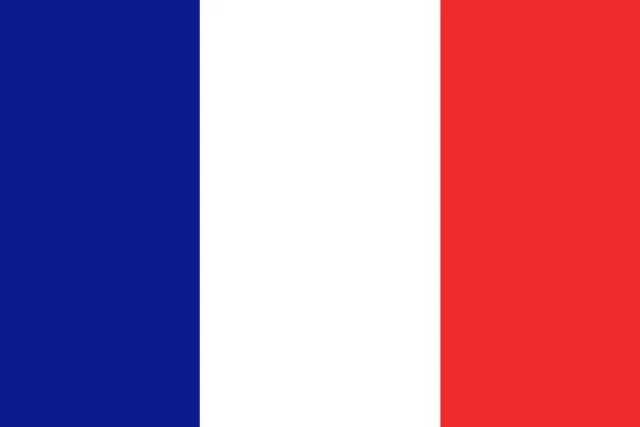
France
🏙️ Capital city:
Paris
📈 Country population:
68 million
🗺️ Country area:
551,695 km²
Core Facts / Infobox
Present this as a clean two-column table containing accurate and verified national facts. Include only fields with real data.
| Official Name | French Republic |
| Common Name | France |
| Political Status | Sovereign unitary semi-presidential republic |
| ISO Codes | FR, FRA, 250 |
| Internet TLD | .fr |
| Calling Code | +33 |
| Capital City | Paris |
| Largest City | Paris |
| Coordinates | 48.86° N, 2.35° E |
| Time Zone | UTC+1 (CET), UTC+2 (CEST) |
| Population (2025 est.) | ~68 million |
| Area | 551,695 km² (metropolitan France) |
| Population Density | ~123 per km² |
| Languages | French (official) |
| Currency | Euro (EUR) |
| Driving Side | Right |
| GDP (Nominal) | ~USD 3.1 trillion |
| GDP Per Capita | ~USD 46,000 |
| HDI | Very High |
| Life Expectancy | ~82 years |
| Continent & Subregion | Europe — Western Europe |
| National Day | Bastille Day (14 July) |
| National Anthem | La Marseillaise |
Geography & Environment
- Located in Western Europe and famous country on europe wheel with coastlines on the Atlantic Ocean and Mediterranean Sea.
- Borders eight countries including Germany, Spain, and Italy.
- Diverse landscapes: plains, mountains, coastlines, and river valleys.
- Major rivers: Seine, Loire, Rhône, Garonne.
- Mountain ranges: Alps (Mont Blanc), Pyrenees, Massif Central.
- Climate varies from oceanic to Mediterranean and alpine.
Demographics
- Population: ~68 million.
- Highly urbanized with strong regional identities.
- Major cities: Paris, Marseille, Lyon, Toulouse, Nice.
- Ethnically diverse population with significant immigrant communities.
- Religions: Christianity, Islam, Judaism, unaffiliated, others.
History
- Origins in ancient Gaul under Roman rule.
- Medieval Kingdom of France emerged in the Middle Ages.
- French Revolution (1789) reshaped modern democracy and citizenship.
- Major global power during the 19th and early 20th centuries.
- Founding member of the European Union.
Government & Politics
- Political system: Unitary semi-presidential republic.
- Head of State: President of the Republic.
- Head of Government: Prime Minister.
- Legislature: bicameral Parliament (National Assembly and Senate).
- Administrative divisions: regions, departments, communes.
Economy
- One of the world’s largest advanced economies.
- Major sectors: services, manufacturing, aerospace, luxury goods.
- Global leader in tourism and agriculture within the EU.
- Main exports: aircraft, vehicles, pharmaceuticals, wine.
- Strengths: diversified economy, strong social system.
- Weaknesses: public debt, labor market rigidity.
Culture & Society
- Global influence in art, fashion, philosophy, and cuisine.
- Famous figures: Voltaire, Victor Hugo, Claude Monet.
- Strong emphasis on secularism (laïcité).
- Rich tradition of museums, literature, and cinema.
Food & Cuisine
- Renowned global culinary tradition.
- Iconic foods: baguette, cheese, croissants.
- Regional specialties: bouillabaisse, coq au vin, cassoulet.
- Wine culture recognized worldwide.
Education & Institutions
- Highly centralized national education system.
- Prestigious institutions: Sorbonne, Grandes Écoles.
- Strong public funding for education and research.
Tourism
- Most visited country in the world.
- Top attractions: Eiffel Tower, Louvre, Palace of Versailles.
- Tourism spans culture, food, wine, beaches, and skiing.
- Excellent transport infrastructure.
Practical Information
- Emergency number: 112.
- Plug type: C/E; Voltage: 230V.
- Extensive rail network including high-speed TGV.
Sports, Entertainment & Notable People
- Popular sports: football, rugby, cycling.
- Tour de France is the world’s premier cycling race.
- Notable figures: Napoleon Bonaparte, Charles de Gaulle, Zinedine Zidane.
Neighboring Countries of France
France shares land borders with eight countries in Europe:
Belgium,
Luxembourg,
Germany,
Switzerland,
Italy,
Monaco,
Spain, and
Andorra.
Including overseas territories, France also shares land borders with
Brazil and
Suriname via French Guiana.
Famous For
- Global cultural and diplomatic influence.
- World-class cuisine and wine.
- Historic landmarks and museums.
- Key role in European and global affairs.
Sources
- World Bank
- United Nations (UN Data)
- IMF
- CIA World Factbook
- INSEE (France)