
Random Country Generator 🌎
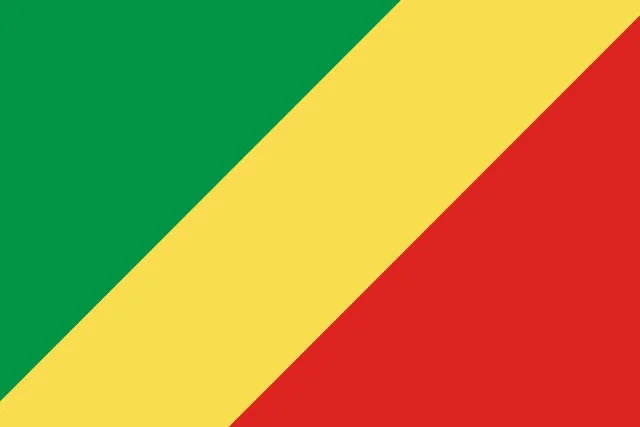
Republic of the Congo
🏙️ Capital city:
Brazzaville
📈 Country population:
6.2 million
🗺️ Country area:
342,000 km²
Core Facts / Infobox
Present this as a clean two-column table containing accurate and verified national facts. Include only fields with real data.
| Official Name | Republic of the Congo |
| Common Name | Republic of the Congo |
| Political Status | Sovereign presidential republic |
| ISO Codes | CG, COG, 178 |
| Internet TLD | .cg |
| Calling Code | +242 |
| Capital City | Brazzaville |
| Largest City | Brazzaville |
| Coordinates | 0.23° S, 15.83° E |
| Time Zone | UTC+1 (West Africa Time) |
| Population (2025 est.) | ~6.2 million |
| Area | 342,000 km² |
| Population Density | ~18 per km² |
| Languages | French (official); Lingala, Kituba widely spoken |
| Currency | Central African CFA Franc (XAF) |
| Driving Side | Right |
| GDP (Nominal) | ~USD 15 billion |
| GDP Per Capita | ~USD 2,400 |
| HDI | Medium |
| Life Expectancy | ~64 years |
| Continent & Subregion | Africa — Central Africa |
| National Day | Independence Day (15 August) |
| National Anthem | La Congolaise |
Geography & Environment
- Located in Central Africa with a short Atlantic coastline.
- Borders Gabon, Cameroon, Central African Republic, DR Congo, and Angola (Cabinda).
- Large portions covered by tropical rainforest.
- Major river: Congo River, forming the border with DR Congo.
- Climate: tropical with wet and dry seasons.
Demographics
- Population: ~6.2 million.
- Highly urbanized; majority live in Brazzaville and Pointe-Noire.
- Major ethnic groups: Kongo, Teke, Mbochi.
- Religions: Christianity (majority), traditional beliefs.
History
- Home to Bantu-speaking kingdoms and societies.
- Colonized by France in the late 19th century.
- Part of French Equatorial Africa.
- Gained independence in 1960.
- Post-independence history includes periods of conflict and political continuity.
Government & Politics
- Political system: Presidential republic.
- Head of State & Government: President.
- Legislature: bicameral Parliament.
- Administrative divisions: departments and districts.
Economy
- Upper-middle-income, resource-dependent economy.
- Oil dominates government revenue and exports.
- Main exports: crude oil, timber.
- Strengths: petroleum resources, port of Pointe-Noire.
- Weaknesses: oil dependence, inequality.
Culture & Society
- Strong musical and dance traditions.
- La Sape fashion culture internationally known.
- French language widely used in public life.
Food & Cuisine
- Staple foods: cassava, plantains, rice.
- Traditional dishes: saka-saka, foufou, grilled fish.
- Use of palm oil and leafy greens common.
Education & Institutions
- Education system based on French model.
- Major institution: Marien Ngouabi University.
Tourism
- Tourism sector limited but developing.
- Natural attractions include rainforests and national parks.
- Potential for eco-tourism.
Practical Information
- Emergency number: 117 (police).
- Plug type: C/E; Voltage: 220V.
- Infrastructure strongest in major cities.
Sports, Entertainment & Notable People
- Popular sports: football.
- Strong music and fashion scenes.
- Notable figures: Denis Sassou Nguesso, Papa Wemba.
Neighboring Countries of the Republic of the Congo
The Republic of the Congo (Congo-Brazzaville) is located in Central Africa and shares land borders with five countries:
Gabon to the west,
Cameroon to the northwest,
Central African Republic to the northeast,
Democratic Republic of the Congo (DRC) to the east and south, and
Angola (via the Cabinda exclave) to the southwest.
It also has a short coastline along the Atlantic Ocean to the west.
Famous For
- Congo River.
- Oil production.
- La Sape fashion culture.
- Tropical rainforests.
Sources
- World Bank
- United Nations (UN Data)
- IMF
- CIA World Factbook
- National Institute of Statistics (Republic of the Congo)