Random Country Generator 🌎

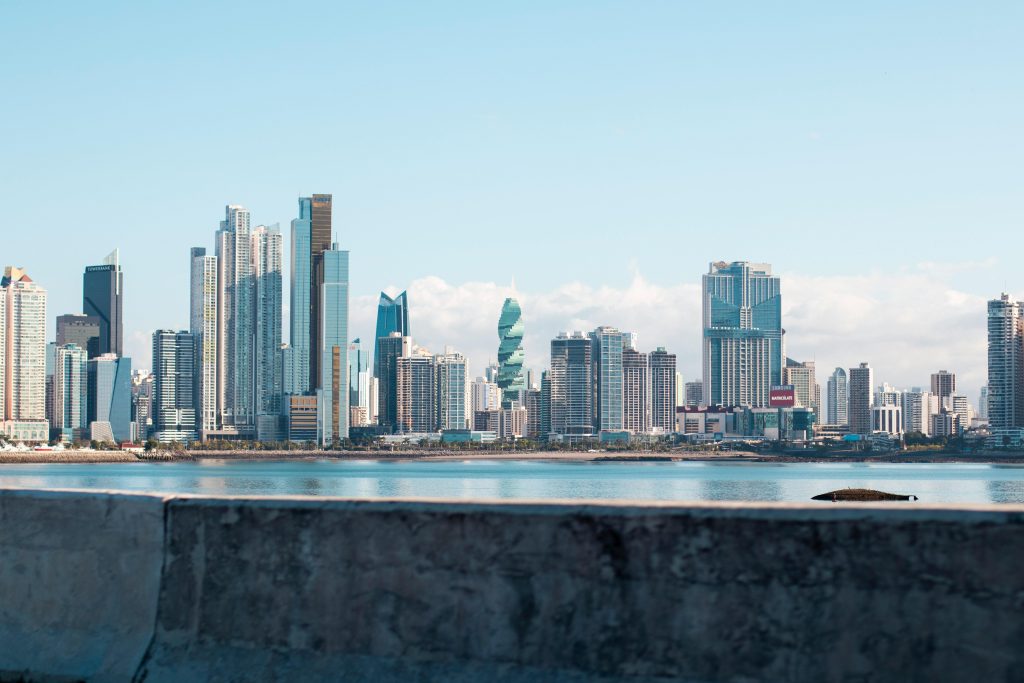
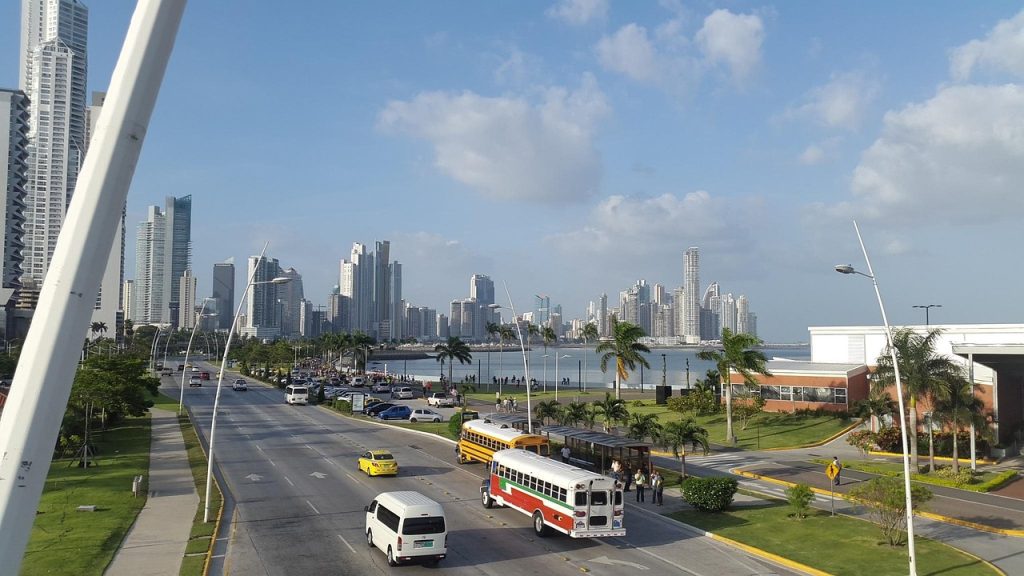
Panama
🏙️ Capital city:
Panama City
📈 Country population:
4.5 million
🗺️ Country area:
75,417 km²
Core Facts / Infobox
Present this as a clean two-column table containing accurate and verified national facts. Include only fields with real data.
| Official Name | Republic of Panama |
| Common Name | Panama |
| ISO Codes | PA, PAN, 591 |
| Internet TLD | .pa |
| Calling Code | +507 |
| Capital City | Panama City |
| Largest City | Panama City |
| Coordinates | 8.9° N, 79.5° W |
| Time Zone | UTC−5 |
| Population (2025 est.) | ~4.5 million |
| Area | 75,417 km² |
| Population Density | ~59 per km² |
| Languages | Spanish (official); English widely used in business |
| Currency | Panamanian Balboa (PAB) & US Dollar (USD) |
| Driving Side | Right |
| GDP (Nominal) | ~USD 75 billion |
| GDP (PPP) | ~USD 150 billion |
| GDP Per Capita | ~USD 17,000 (PPP ~34,000) |
| HDI | 0.815 (Very High) |
| Literacy Rate | ~95% |
| Life Expectancy | ~78 years |
| Unemployment | ~8–9% |
| Inflation | ~2–3% |
| Leaders | President; Vice President |
| Continent & Subregion | North America — Central America |
| National Day | November 3 (Independence from Colombia) |
| National Sport | Baseball |
| National Dish | Sancocho |
| National Anthem | Himno Nacional de Panamá |
Geography & Environment
- Located on the Isthmus of Panama, connecting North and South America.
- Bordered by Costa Rica to the west, Colombia to the east, and has coastlines on the Pacific Ocean and Caribbean Sea.
- Geography includes mountains, rainforests, lowlands, islands, and the iconic Panama Canal.
- Climate: tropical, hot and humid with a long rainy season.
- Best time to visit: December–April.
- National parks: Darién National Park, Coiba National Park, Soberanía National Park.
- Biodiversity: home to jaguars, harpy eagles, monkeys, turtles, and hundreds of bird species.
- Environmental issues: deforestation, pollution, coastal erosion, climate change.
Demographics
- Population ~4.5 million.
- Median age ~31 years.
- Ethnic groups: Mestizo majority; Afro-Panamanian, Indigenous, and European minorities.
- Religion: mainly Roman Catholic and Protestant Christian.
- Urban population ~68%.
- Major cities: Panama City, Colón, David, Santiago.
History
- Originally inhabited by Indigenous groups including the Ngäbe, Guna, and Emberá.
- Colonized by Spain in the early 1500s.
- Became part of Colombia after independence from Spain.
- Separated from Colombia on November 3, 1903 with U.S. support.
- Panama Canal opened in 1914, transforming global trade.
- U.S. invasion in 1989 removed military dictator Manuel Noriega.
- Panama gained full control of the Panama Canal in 1999.
Government & Politics
- Government type: Presidential democratic republic.
- Executive: President.
- Legislature: unicameral National Assembly.
- Judiciary: Supreme Court of Justice.
- Administrative divisions: 10 provinces and 3 Indigenous regions (comarcas).
- Key political topics: economic development, infrastructure, anti-corruption reforms.
Economy
- One of the fastest-growing economies in Latin America.
- Major industries: banking, logistics, shipping, commerce, tourism.
- Panama Canal is a major source of revenue, enabling global maritime trade.
- Main exports: bananas, shrimp, sugar, coffee, refined petroleum.
- Main imports: machinery, vehicles, fuel, food products.
- Strengths: strong financial sector, strategic global trade location.
- Weaknesses: inequality, corruption, dependence on external trade.
- GDP sectors: Services (~76%), Industry (~17%), Agriculture (~7%).
Culture & Society
- Blend of Indigenous, African, Spanish, and Caribbean influences.
- Major celebrations: Independence Day, Carnaval, Black Christ Festival in Portobelo.
- Traditional clothing: Pollera (women) and Montuno (men).
- Music styles: típico, reggaetón, salsa, calypso (in Caribbean areas).
- Languages: Spanish dominant; Guna, Ngäbere, and English spoken in some regions.
Food & Cuisine
- National dish: Sancocho — chicken and root vegetable soup.
- Other iconic dishes: Ropa Vieja, Arroz con Pollo, Patacones, Ceviche.
- Street foods: empanadas, carimañolas, hojaldres.
- Beverages: chicha, seco (local spirit), coffee, raspados (shaved ice drinks).
Education & Institutions
- Medium of instruction: Spanish.
- Literacy rate: ~95%.
- Leading universities: University of Panama, Technological University of Panama.
- Strong academic fields: engineering, maritime studies, business.
Tourism
- Top destinations: Panama Canal, Casco Viejo, Bocas del Toro, Boquete, San Blas Islands.
- UNESCO sites: Fortifications of Portobelo and San Lorenzo, Coiba National Park.
- Natural attractions: rainforests, coral reefs, volcanoes, waterfalls.
- Adventure tourism: hiking, scuba diving, surfing, white-water rafting.
- Visa: visa-free for many nationalities.
- Transportation: modern metro (Panama City), buses, domestic flights, ferries.
Practical Information
- One of the safer countries in Central America.
- Healthcare: good private hospitals; public hospitals available nationwide.
- Emergency numbers: 911 (general emergencies).
- Plug type: A/B; Voltage: 120V.
- Internet: excellent in urban areas; moderate in rural regions.
- Best time to visit: December–April.
- Budget: moderate to high depending on area.
Sports, Entertainment & Notable People
- National sport: baseball.
- Other popular sports: football, boxing, basketball.
- Notable athletes: Mariano Rivera (baseball legend), Roberto Durán (boxing icon).
- Artists: Rubén Blades (musician), Danilo Pérez (jazz pianist).
Neighboring Countries of Panama
Panama shares land borders with the following countries:
- 225 km with Colombia
- 330 km with Costa Rica
Famous For
- Panama Canal.
- San Blas Islands.
- Casco Viejo colonial district.
- One of the most biodiverse countries in the Americas.
- Banking and logistics hub.
- Beautiful beaches and rainforests.
Sources
- World Bank
- United Nations (UN Data)
- IMF
- CIA World Factbook
- Panama National Institute of Statistics and Census
- Government of Panama