Random Country Generator 🌎
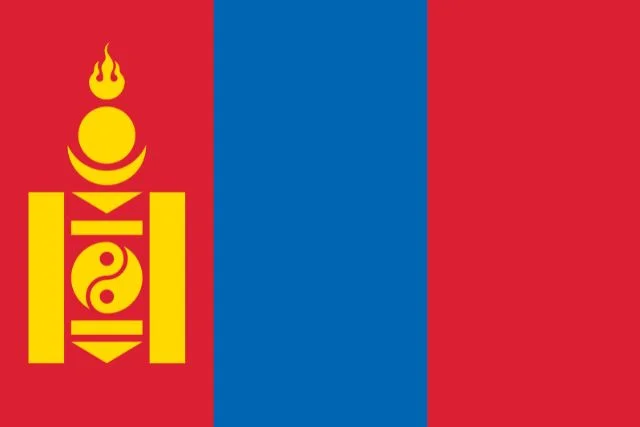
Mongolia
🏙️ Capital city:
Ulaanbaatar
📈 Country population:
3.5 million
🗺️ Country area:
1,564,116 km²
Core Facts / Infobox
Present this as a clean two-column table containing accurate and verified national facts. Include only fields with real data.
| Official Name | State of Mongolia |
| Common Name | Mongolia |
| ISO Codes | MN, MNG, 496 |
| Internet TLD | .mn |
| Calling Code | +976 |
| Capital City | Ulaanbaatar |
| Largest City | Ulaanbaatar |
| Coordinates | 47.9° N, 106.9° E |
| Time Zones | UTC+7 to UTC+8 |
| Population (2025 est.) | ~3.5 million |
| Area | 1,564,116 km² |
| Population Density | ~2.2 per km² (one of the lowest in the world) |
| Languages | Mongolian (official) |
| Currency | Mongolian Tögrög (MNT) |
| Driving Side | Right |
| GDP (Nominal) | ~USD 18+ billion |
| GDP (PPP) | ~USD 60+ billion |
| GDP Per Capita | ~USD 5,000+ |
| GDP Growth | ~5–6% |
| HDI | 0.739 (High) |
| Literacy Rate | ~98% |
| Life Expectancy | ~71 years |
| Unemployment | ~7–8% |
| Inflation | ~7–10% |
| Leaders | President & Prime Minister (names omitted for longevity) |
| Continent & Subregion | Asia — East & Central Asia |
| National Day | 11 July (Naadam Festival) |
| National Sport | Wrestling |
| National Dish | Buuz |
| National Anthem | Mongol Ulsyn Töriin Duulal |
Geography & Environment
- Mongolia is a landlocked country between Russia to the north and China to the south.
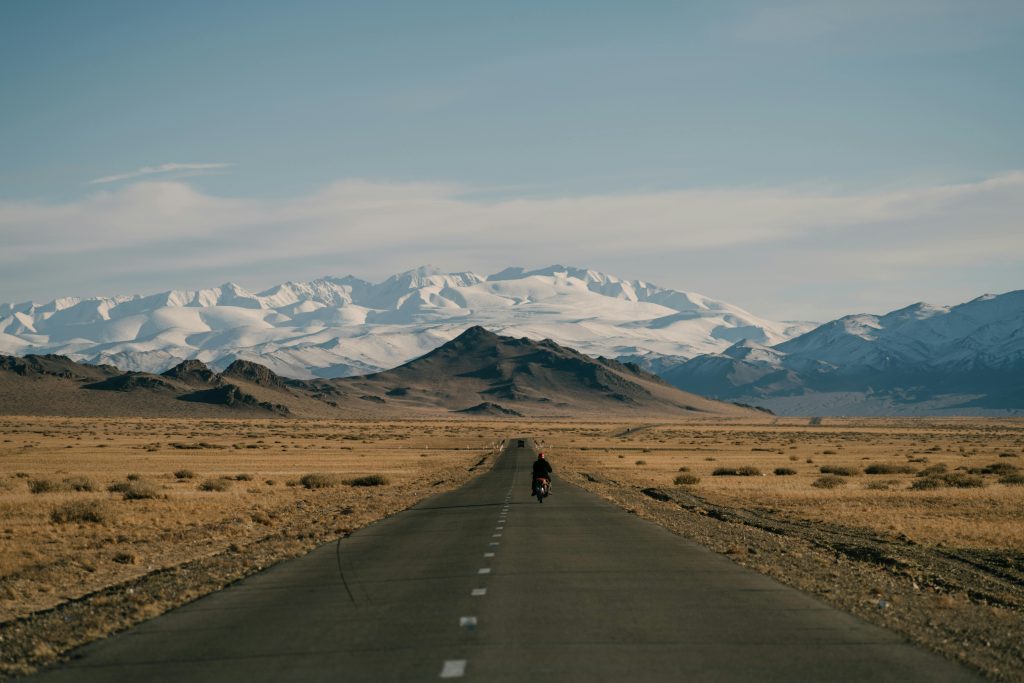
- It has diverse geography including the Gobi Desert, the Altai Mountains, vast steppes, high plateaus, and forest regions.
- The Gobi is one of the world’s largest cold deserts, known for dinosaur fossils and unique wildlife.
- Climate: extreme continental climate with very cold winters and warm summers.
- Best time to visit: June–September.
- Major national parks: Gorkhi-Terelj, Khustain Nuruu, Altai Tavan Bogd, Khuvsgul Lake National Park.
- Biodiversity includes snow leopards, wild horses (Przewalski’s horse), camels, wolves, and rare birds.
- Environmental challenges: desertification, air pollution in Ulaanbaatar, and harsh climatic conditions.
- Unique natural features: Khuvsgul Lake (the “Blue Pearl”), Orkhon Valley, and massive steppe landscapes.
Demographics
- Total population: ~3.5 million.
- Median age: ~29 years.
- Urban vs rural: ~70% urban, with nearly half the population living in Ulaanbaatar.
- Ethnic groups: Khalkha Mongols (majority), Kazakhs, Buryats, and other minorities.
- Religions: Buddhism (majority), Shamanism, Islam (Kazakh minority), Christianity.
- Literacy rate: ~98%.
- Major cities: Ulaanbaatar, Erdenet, Darkhan, Choibalsan.
History
- Mongolia’s history is deeply tied to the Mongol Empire founded by Genghis Khan in the 13th century — one of the largest empires in world history.
- After the empire’s decline, Mongolia was ruled by various khanates and later came under Qing dynasty rule.
- Declared independence in 1911, briefly restored Qing control, then ultimately became a republic in 1921.
- From 1924 to 1990, Mongolia was a socialist state aligned with the Soviet Union.
- The democratic revolution of 1990 introduced political pluralism and economic reforms.
- Today, Mongolia is a democratic and rapidly developing nation with growing global engagement.
Government & Politics
- Government type: Unitary parliamentary republic.
- Executive: President (head of state) and Prime Minister (head of government).
- Legislature: unicameral State Great Khural.
- Judiciary: Supreme Court, Constitutional Court, lower courts.
- Administrative divisions: 21 provinces (aimags) and the capital Ulaanbaatar.
- Political priorities include economic diversification, mining governance, and rural development.
Economy
- Mongolia’s economy relies heavily on mining — especially copper, coal, and gold.
- Major industries: mining, agriculture (livestock), cashmere production, construction, tourism.
- Main exports: copper, coal, gold, cashmere, livestock products.
- Main imports: machinery, fuel, vehicles, food products, electronics.
- Strengths: vast mineral resources, young workforce, strategic location.
- Weaknesses: dependence on commodity prices, landlocked geography, extreme climate.
- GDP sectors: Services (~45%), Industry (~40%), Agriculture (~15%).
- Tourism is growing, centered on nomadic culture and natural attractions.
Culture & Society
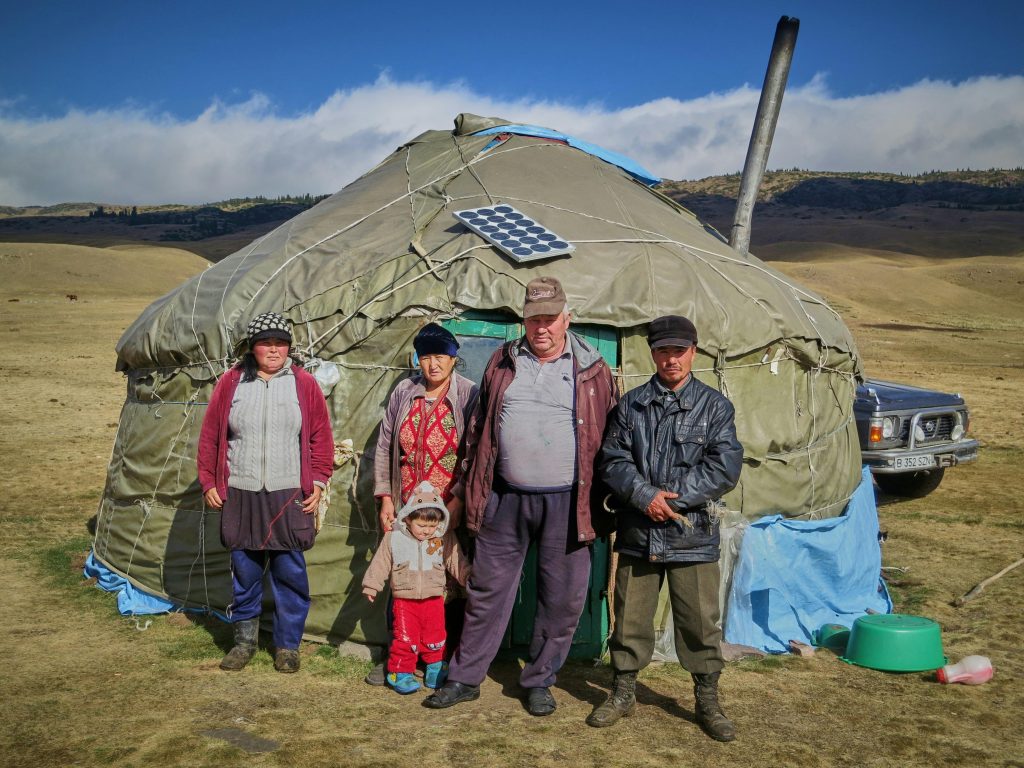
- Mongolia has a rich nomadic culture dating back thousands of years.
- Hospitality, horsemanship, and pastoral traditions are central to daily life.
- Major festivals: Naadam (wrestling, horse racing, archery), Tsagaan Sar (Lunar New Year).
- Traditional dress includes the del, a long colorful robe.
- Arts: throat singing (khöömei), morin khuur (horsehead fiddle), epic storytelling.
- Languages: Mongolian, with Russian and English increasingly common.
Food & Cuisine
- National dish: Buuz — steamed meat dumplings.
- Popular dishes: Khuushuur (fried dumplings), Boodog, Khorkhog (stone-cooked meat), Tsuivan (noodles).
- Street foods: steamed buns, meat skewers, fried pastries.
- Desserts: boortsog (fried dough), dairy sweets.
- Beverages: airag (fermented mare’s milk), suutei tsai (milk tea), vodka.
- Mongolian cuisine is meat-heavy due to nomadic traditions.
Education & Institutions
- Mongolia has a well-developed education system with strong literacy rates.
- Medium of instruction: Mongolian; English is widely taught.
- Literacy rate: ~98%.
- Top universities: National University of Mongolia, Mongolian University of Science & Technology, Health Sciences University.
- Key fields: engineering, mining, medicine, IT, environmental sciences.
Tourism
- Top attractions: Gobi Desert, Ulaanbaatar, Terelj National Park, Karakorum, Khuvsgul Lake.
- UNESCO sites: Orkhon Valley Cultural Landscape, Petroglyphic Complexes of the Mongolian Altai.
- Natural attractions: sand dunes, mountain peaks, steppe landscapes, lakes.
- Historical landmarks: monasteries, ancient cities, monuments to Genghis Khan.
- Adventure tourism: horseback riding, trekking, camel tours, eagle hunting festivals.
- Visa: eVisa available for many nationalities.
- Transportation: domestic flights, buses, 4×4 travel across rural areas.
Practical Information
- Safety: generally safe; take caution in rural travel.
- Healthcare: good in major cities; limited in remote areas.
- Emergency numbers: Police 102, Ambulance 103, Fire 101.
- Plug type: C & E; Voltage: 220V.
- Internet: good in cities; limited in remote regions.
- Best time to visit: June–September.
- Budget: moderate; rural tours may be more expensive.
Sports, Entertainment & Notable People
- National sport: wrestling.
- Popular sports: horse racing, archery, judo, boxing.
- Mongolia has produced Olympic champions, especially in boxing and judo.
- Cultural icons include Genghis Khan, Damdin Sükhbaatar, and modern athletes.
Neighboring Countries of Mongolia
Mongolia shares land borders with the following countries:
Famous For
- Genghis Khan and the Mongol Empire.
- Nomadic culture.
- Gobi Desert.
- Khuvsgul Lake.
- Throat singing.
- Naadam Festival.
- Vast steppes and natural beauty.
Sources
- World Bank
- United Nations (UN Data)
- IMF
- CIA World Factbook
- National Statistics Office of Mongolia
- Official Government Publications