Random Country Generator 🌎
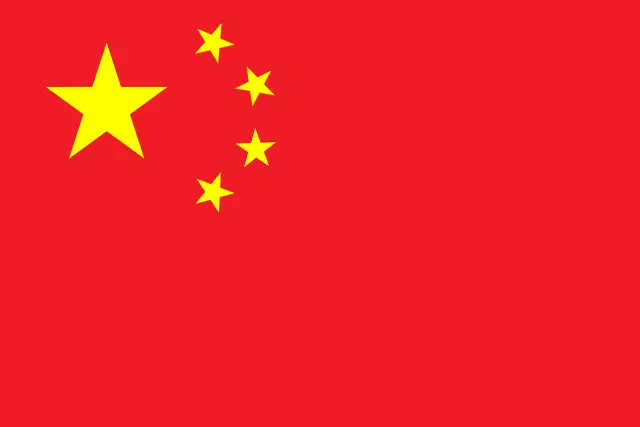
China
🏙️ Capital city:
Beijing
📈 Country population:
1.41 billion, ranks second globally.
🗺️ Country area:
9,596,961 km²
Core Facts / Infobox
Present this as a clean two-column table containing accurate and verified national facts. Include only fields with real data.
| Official Name | People’s Republic of China |
| Common Name | China |
| ISO Codes | CN, CHN, 156 |
| Internet TLD | .cn |
| Calling Code | +86 |
| Capital City | Beijing |
| Largest City | Shanghai |
| Coordinates | 35° N, 103° E |
| Time Zone | UTC+8 (China Standard Time) |
| Population (2025 est.) | ≈ 1.41 billion |
| Area | 9,596,961 km² |
| Population Density | ~146 per km² |
| Languages | Mandarin Chinese (Standard Chinese), plus regional languages |
| Currency | Renminbi (Yuan) — CNY |
| Driving Side | Right |
| GDP (Nominal) | ~ USD 18.3 trillion |
| GDP (PPP) | ~ USD 34+ trillion |
| GDP Per Capita | ~ USD 12,700 |
| GDP Growth | ~4.7% |
| HDI | 0.788 (High) |
| Literacy Rate | ~97% |
| Life Expectancy | ~78.2 years |
| Unemployment | ~5.1% |
| Inflation | ~0.4% |
| Leaders | President, Premier (names omitted due to frequent political updates) |
| Continent & Subregion | Asia — East Asia |
| National Day | 1 October |
| National Sport | Table Tennis |
| National Dish | Peking Duck |
| National Anthem | “March of the Volunteers” |
Geography & Environment
- China is located in East Asia, and most favourite country pick in the list sharing borders with 14 countries including Russia, India, Mongolia, Pakistan, Nepal, Vietnam, and Kazakhstan.
- Its terrain includes mountain ranges (Himalayas), the Tibetan Plateau, Gobi Desert, Yangtze & Yellow River basins, and long coastlines along the Pacific Ocean.
- The climate ranges from subarctic in the north to tropical in the south, with varied seasons across regions.
- Best time to visit: April–June and September–October.
- Major national parks: Jiuzhaigou, Zhangjiajie, Huangshan, and the vast nature reserves of Tibet and Xinjiang.
- China has significant biodiversity: pandas, tigers, snow leopards, golden monkeys, and thousands of endemic species.
- Environmental challenges: air pollution in cities, water scarcity, desertification, industrial waste, and climate change effects.
- Globally recognized natural features include the Himalayas, Yangtze River, Gobi Desert, and Yellow Mountains.
Demographics
- Population: ~1.41 billion, the world’s second-largest.
- Median age: ~40 years (rapidly aging population).
- Urban vs rural: ~64% urban, ~36% rural.
- Main ethnic groups: Han Chinese (91%), plus 55 recognized minority groups like Zhuang, Hui, Uyghur, Tibetan, and Mongol.
- Main religions: Buddhism, Taoism, Islam, Christianity, and folk religions.
- Literacy rate: ~97%.
- Major cities: Shanghai, Beijing, Shenzhen, Guangzhou, Chengdu, Chongqing.
History
- China is one of the world’s oldest civilizations, emerging along the Yellow River over 4,000 years ago.
- Historic dynasties include the Xia, Shang, Zhou, Qin, Han, Tang, Song, Yuan, Ming, and Qing.
- China was ruled by emperors until 1912 when the Republic of China was founded.
- The People’s Republic of China was established on 1 October 1949.
- Major modern events include economic reforms in 1978, rapid industrialization, Belt & Road Initiative, and global economic rise.
Government & Politics
- Government type: Socialist one-party state.
- The Communist Party of China (CPC) is the ruling political force.
- Executive: President (head of state) and Premier (head of government).
- Legislature: National People’s Congress.
- Judiciary: Supreme People’s Court with multiple lower courts.
- China is divided into 23 provinces, 5 autonomous regions, 4 municipalities, and 2 Special Administrative Regions (Hong Kong & Macau).
- Military: People’s Liberation Army (PLA) — one of the world’s largest and strongest.
- Recent political developments focus on digital economy, technology leadership, climate commitments, and national security.
Economy
- Second-largest economy in the world by nominal GDP.
- Major industries: manufacturing, electronics, textiles, automobiles, steel, energy, technology, AI & robotics.
- Main exports: electronics, machinery, apparel, steel, vehicles.
- Main imports: oil, iron ore, semiconductors, food products.
- Strengths: large workforce, global manufacturing hub, strong infrastructure, innovation growth.
- Weaknesses: aging population, environmental pressures, debt levels, regional inequality.
- Inflation is low compared to many countries (~0.4%).
- Unemployment remains around ~5%.
- GDP sectors: Services (~53%), Industry (~38%), Agriculture (~9%).
- Key reforms include green energy transition, digital RMB, and global trade expansion.
Culture & Society
- China’s culture is rooted in Confucianism, Taoism, and Buddhism.
- Important festivals: Chinese New Year, Mid-Autumn Festival, Dragon Boat Festival, National Day.
- Traditional dress: Hanfu, Qipao (Cheongsam), Tang suit.
- Art & music: calligraphy, classical opera, ink painting, folk music, traditional instruments.
- Architecture ranges from ancient pagodas and temples to futuristic megacities.
- Major languages: Mandarin (official), Cantonese, Shanghainese, Hokkien, Tibetan, Uyghur.
Food & Cuisine
- China has diverse regional cuisines: Cantonese, Sichuan, Hunan, Shanghainese, Northern wheat-based cuisine, and more.
- National dish: Peking Duck.
- Popular dishes: Kung Pao Chicken, Dumplings, Hotpot, Sweet & Sour Pork, Chow Mein.
- Street foods: baozi, jianbing, stinky tofu, noodles.
- Beverages: tea (green, black, oolong), soy milk, rice wine.
Education & Institutions
- Education system is highly competitive with strong government investment.
- Medium of instruction: Mandarin Chinese.
- Literacy rate: ~97%.
- Top universities: Tsinghua University, Peking University, Fudan University, Zhejiang University.
- Key strengths: engineering, sciences, technology, mathematics.
Tourism
- Top destinations: the Great Wall, Forbidden City, Terracotta Army, Guilin, Zhangjiajie, Shanghai skyline.
- UNESCO sites: over 55 sites — one of the highest numbers globally.
- Natural attractions: Yellow Mountains, Li River, Jiuzhaigou, Yangtze River.
- Historical landmarks: Great Wall, Summer Palace, Temple of Heaven, Silk Road sites.
- Adventure tourism: hiking, skiing, mountain expeditions, desert trekking.
- Visa: Many nationalities require a visa; some regions offer visa-free transit.
- Transport: extensive high-speed rail network, major airports, metro systems.
Practical Information
- General safety: very safe for travelers with low violent crime.
- Healthcare: good in big cities; modern hospitals widely available.
- Emergency numbers: Police 110, Ambulance 120, Fire 119.
- Plug type: A, C, I. Voltage: 220V.
- Internet: fast but heavily regulated (Great Firewall).
- Best time to visit: spring and autumn.
- Budget: varies by city; Beijing/Shanghai are more expensive; inland regions more affordable.
Sports, Entertainment & Notable People
- National sport: Table Tennis; also popular — badminton, basketball, football.
- Sport achievements: Olympic dominance in table tennis, diving, gymnastics, weightlifting.
- Famous athletes: Yao Ming, Liu Xiang, Lin Dan.
- Writers: Confucius, Laozi, Lu Xun.
- Artists: Ai Weiwei, Wu Guanzhong.
- Actors: Jackie Chan, Jet Li, Zhang Ziyi.
- Nobel Prize winners: Mo Yan (Literature), Tu Youyou (Medicine).
Neighboring Countries of China
China shares land borders with the following countries:
- 1,416 km with North Korea
- 3,645 km with Russia
- 4,678 km with Mongolia
- 1,533 km with Kazakhstan
- 858 km with Kyrgyzstan
- 414 km with Tajikistan
- 76 km with Afghanistan
- 596 km with Pakistan
- 3,488 km with India
- 1,440 km with Nepal
- 470 km with Bhutan
- 2,185 km with Myanmar
- 423 km with Laos
- 1,283 km with Vietnam
Famous For
- The Great Wall of China.
- Ancient civilization and dynasties.
- Tea culture.
- Global manufacturing powerhouse.
- Silk Road.
- Traditional medicine.
- Rapid economic growth.
- Famous cuisine varieties.
Sources
- World Bank
- United Nations
- IMF
- CIA World Factbook
- National Bureau of Statistics of China
- Official Government Portals