Random Country Generator 🌎

Mexico
🏙️ Capital city:
Mexico City
📈 Country population:
130 million
🗺️ Country area:
1,964,375 km²
Core Facts / Infobox
Present this as a clean two-column table containing accurate and verified national facts. Include only fields with real data.
| Official Name | United Mexican States |
| Common Name | Mexico |
| ISO Codes | MX, MEX, 484 |
| Internet TLD | .mx |
| Calling Code | +52 |
| Capital City | Mexico City |
| Largest City | Mexico City |
| Coordinates | 19.43° N, 99.13° W |
| Time Zones | UTC−5 to UTC−8 (varies by region) |
| Population (2025 est.) | ~130 million |
| Area | 1,964,375 km² |
| Population Density | ~66 per km² |
| Languages | Spanish (official), 68 recognized indigenous languages |
| Currency | Mexican Peso (MXN) |
| Driving Side | Right |
| GDP (Nominal) | ~USD 1.8 trillion |
| GDP (PPP) | ~USD 3.0 trillion |
| GDP Per Capita | ~USD 14,000 (PPP ~23,000) |
| GDP Growth | ~2–3% |
| HDI | 0.781 (High) |
| Literacy Rate | ~95% |
| Life Expectancy | ~75 years |
| Unemployment | ~3% |
| Inflation | ~4–5% |
| Leaders | President; Cabinet |
| Continent & Subregion | North America |
| National Day | September 16 (Independence Day) |
| National Sport | Charrería |
| National Dish | Mole poblano / Chiles en nogada (commonly recognized) |
| National Anthem | Himno Nacional Mexicano |
Geography & Environment
- Mexico is located in southern North America, bordered by the United States to the north, and Belize and Guatemala to the south.
- It has coastlines on both the Pacific Ocean and the Gulf of Mexico/Caribbean Sea.
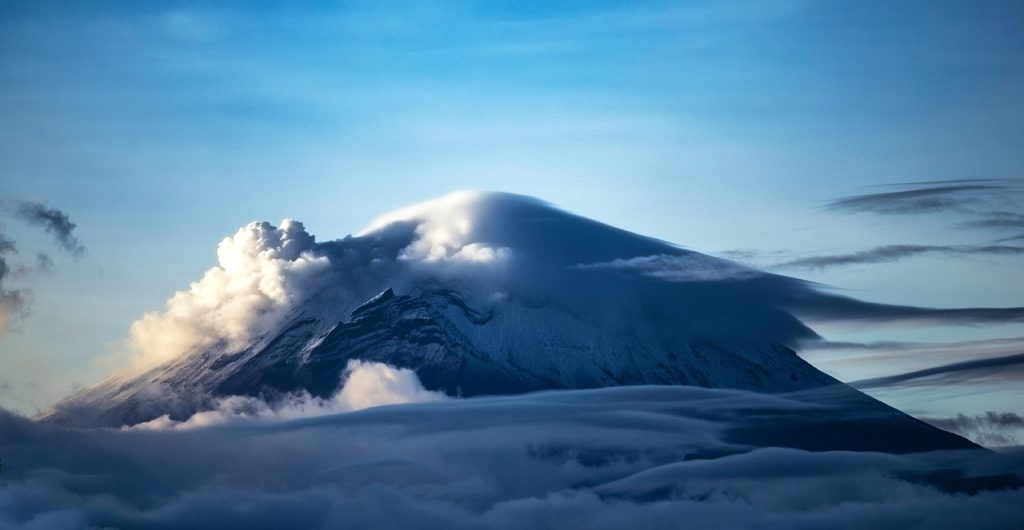
- Major features: Sierra Madre mountain ranges, Yucatán Peninsula, Sonoran and Chihuahuan Deserts, Valley of Mexico, and many volcanoes including Popocatépetl.
- Climate ranges from desert in the north to tropical in the south and temperate in highlands.
- Best time to visit: November–April (dry season).
- National parks: Sumidero Canyon, Copper Canyon, Monarch Butterfly Biosphere Reserve.
- Biodiversity: one of the world’s megadiverse countries, home to jaguars, monarch butterflies, whales, and exotic reptiles.
- Environmental challenges: deforestation, air pollution, water scarcity, hurricanes, earthquakes.
Demographics
- Population: ~130 million.
- Median age: ~30 years.
- Urban population: ~80%.
- Main ethnic groups: Mestizo (mixed ancestry), Indigenous, European descent, Afro-Mexican communities.
- Religions: predominantly Roman Catholic, followed by Protestant and secular populations.
- Major cities: Mexico City, Guadalajara, Monterrey, Puebla, Tijuana.
History
- Home to ancient civilizations: Olmec, Maya, Aztec, Zapotec, and more.
- Conquered by Spain in 1521, becoming the Viceroyalty of New Spain.
- War of Independence led by Miguel Hidalgo and José María Morelos.
- Independence achieved on September 16, 1810 (celebrated annually).
- Important periods: Mexican–American War, French Intervention, Mexican Revolution (1910–1920).
- Modern era includes democratization, economic growth, and cultural globalization.
Government & Politics
- Federal presidential republic with 32 federal entities (31 states + Mexico City).
- Executive: President.
- Legislature: Congress (Senate + Chamber of Deputies).
- Judiciary: Supreme Court and federal courts.
- Main political challenges: corruption, inequality, organized crime.
- International alliances: USMCA, UN, OAS, G20, Pacific Alliance.
Economy
- Major industries: manufacturing, automotive, oil, tourism, agriculture, mining, electronics.
- Main exports: cars, machinery, electronics, oil, agricultural goods.
- Main imports: machinery, vehicles, electronics, consumer goods.
- Strengths: strategic trade location, large labor force, strong manufacturing base.
- Weaknesses: inequality, crime, dependence on U.S. market.
- GDP sectors: Services (~63%), Industry (~30%), Agriculture (~7%).
- Key reforms: energy reform, trade expansion, infrastructure modernization.
Culture & Society
- Known for rich traditions, family values, and a fusion of indigenous and Spanish heritage.
- Major festivals: Día de los Muertos, Independence Day, Holy Week, Guelaguetza.
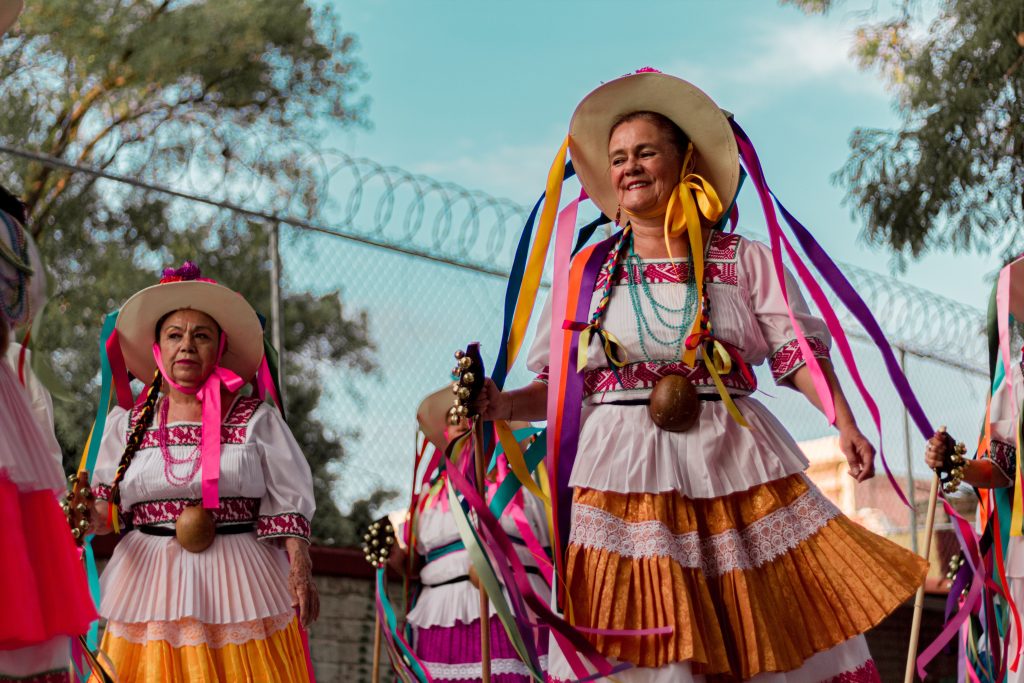
- Traditional dress includes charro suits, embroidered dresses, and indigenous garments.
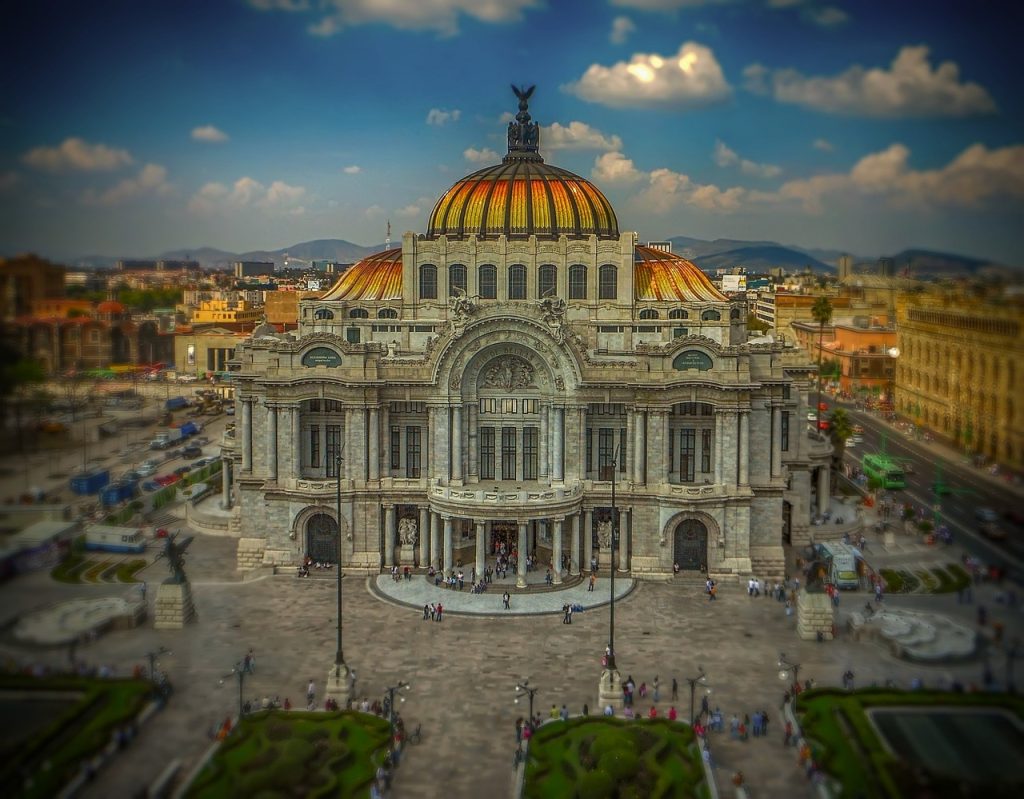
- World-famous contributions in music (mariachi), art (Frida Kahlo, Diego Rivera), literature (Octavio Paz), and architecture.
- Languages: Spanish and diverse indigenous languages (Nahuatl, Maya, Mixtec, Zapotec).
Food & Cuisine
- Mexico’s cuisine is UNESCO-recognized and globally celebrated.
- National dishes: Mole poblano and Chiles en nogada.
- Famous foods: tacos, tamales, pozole, enchiladas, quesadillas, guacamole.
- Street foods: elotes, street tacos, tortas, churros.
- Beverages: tequila, mezcal, atole, tequila-based cocktails, Mexican hot chocolate.
Education & Institutions
- Medium of instruction: Spanish.
- Literacy rate: ~95%.
- Top universities: UNAM, IPN, Tecnológico de Monterrey.
- Strong programs in engineering, medicine, social sciences, and arts.
Tourism
- Top destinations: Cancún, Mexico City, Tulum, Cabo San Lucas, Guadalajara, Oaxaca.
- UNESCO sites: Chichén Itzá, Teotihuacán, Palenque, Historic Center of Mexico City.
- Natural attractions: Copper Canyon, cenotes, Sierra Madre mountains, Pacific beaches.
- Adventure tourism: diving, hiking, caving, ziplining.
- Visa: visa-free for many nationalities; others require online authorization or visa.
- Transportation: extensive road, air, and bus networks; metro systems in major cities.
Practical Information
- Safety varies by region; tourist zones are generally safe.
- Healthcare quality is high in major cities.
- Emergency number: 911.
- Plug type: A/B; Voltage: 127V.
- Internet: good in urban areas; moderate in rural regions.
- Best time to visit: November–April.
- Budget: affordable to mid-range depending on region.
Sports, Entertainment & Notable People
- Popular sports: football (soccer), boxing, baseball, lucha libre.
- Major athletes: Canelo Álvarez, Hugo Sánchez, Julio César Chávez.
- Famous artists: Frida Kahlo, Diego Rivera.
- Famous writers: Octavio Paz (Nobel Prize), Carlos Fuentes.
- Entertainment icons: Guillermo del Toro, Salma Hayek, Gael García Bernal.
Neighboring Countries of Mexico
Mexico shares land borders with the following countries:
- 250 km with Belize
- 962 km with Guatemala
- 3,141 km with United States
Famous For
- Mayan and Aztec civilizations.
- World-class cuisine.
- Beaches and resort cities.
- Mariachi music.
- Día de los Muertos.
- Colourful culture and festivals.
- Silver jewelry and handicrafts.
Sources
- World Bank
- United Nations (UN Data)
- IMF
- CIA World Factbook
- INEGI (Mexico National Statistics Institute)
- Mexican Government Portals