
Random Country Generator 🌎
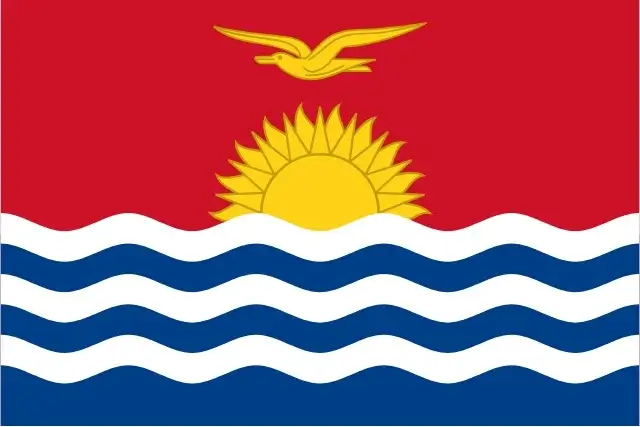
Kiribati
🏙️ Capital city:
South Tarawa
📈 Country population:
130,000
🗺️ Country area:
811 km²
Core Facts / Infobox
Present this as a clean two-column table containing accurate and verified national facts. Include only fields with real data.
| Official Name | Republic of Kiribati |
| Common Name | Kiribati |
| ISO Codes | KI, KIR, 296 |
| Internet TLD | .ki |
| Calling Code | +686 |
| Capital City | South Tarawa |
| Largest City | South Tarawa |
| Coordinates | 0.0° N, 173.0° E (varies across islands) |
| Time Zones | UTC+12, UTC+13, UTC+14 (Kiribati spans three) |
| Population (2025 est.) | ~130,000 |
| Area | 811 km² (land) across 3.5 million km² of ocean |
| Population Density | ~160 per km² (very high in South Tarawa) |
| Languages | Gilbertese (i-Kiribati), English |
| Currency | Australian Dollar (AUD) |
| Driving Side | Left |
| GDP (Nominal) | ~USD 240 million |
| GDP Per Capita | ~USD 1,700–2,000 |
| HDI | 0.624 (Medium) |
| Literacy Rate | ~90% |
| Life Expectancy | ~67 years |
| Continent & Subregion | Oceania — Micronesia |
| National Day | 12 July (Independence Day) |
| National Sport | Football (Soccer) |
| National Dish | Palusami |
| National Anthem | Teirake kaini Kiribati |
Geography & Environment
- Kiribati is a unique island nation composed of 33 atolls and reef islands spread across the central Pacific Ocean.
- It spans an enormous area, crossing all hemispheres and touching both the International Date Line and the equator.
- Major island groups: Gilbert Islands, Phoenix Islands, Line Islands.
- Landscape: flat coral atolls, white-sand beaches, lagoons, and coconut plantations.
- Climate: hot, humid, and tropical, with minimal elevation — highest point is only ~3 meters above sea level.
- Best time to visit: May–October (dry season).
- Wildlife: seabirds, reef fish, turtles, dolphins, sharks, and marine biodiversity.
- Phoenix Islands Protected Area (PIPA) is one of the world’s largest marine reserves and a UNESCO World Heritage Site.
- Environmental challenges: extreme vulnerability to rising sea levels, coastal erosion, drought, and freshwater scarcity.
Demographics
- Total population: ~130,000.
- Median age: ~25 years.
- Urban population: heavily concentrated in South Tarawa.
- Ethnic groups: predominantly Micronesian (i-Kiribati people).
- Religions: Christianity (Catholic and Protestant majority).
- Literacy rate: ~90%.
- Major settlements: South Tarawa, Betio, Bairiki, Bikenibeu.
History
- Ancestors of the i-Kiribati people settled the islands over 2,000 years ago.
- European contact began in the 16th century with Spanish explorers.
- Became a British protectorate in 1892 and later the Gilbert and Ellice Islands Colony.
- Played a role in WWII, including the Battle of Tarawa in 1943.
- Kiribati gained independence on 12 July 1979.
- Modern challenges include climate change, economic sustainability, and freshwater shortages.
Government & Politics
- Government type: Unitary parliamentary republic.
- Executive: President (Beretitenti), who is also the head of government.
- Legislature: unicameral House of Assembly (Maneaba ni Maungatabu).
- Judiciary: High Court and Magistrates’ Courts.
- Administrative divisions: 3 major island groups with local councils.
- Political issues: climate displacement plans, sustainable fisheries, international aid partnerships.
Economy
- One of the world’s smallest and most vulnerable economies.
- Major industries: fishing, copra production, seaweed farming, tourism, remittances.
- Main exports: fish, copra, seaweed, handicrafts.
- Main imports: food, fuel, machinery, manufactured goods.
- Strengths: large fisheries area, sovereign wealth fund, cultural tourism growth.
- Weaknesses: isolation, import dependency, climate risk, limited land resources.
- GDP sectors: Services (~70%), Industry (~10%), Agriculture (~20%).
Culture & Society
- Kiribati culture emphasizes community, respect, and storytelling through dance and song.
- Traditional dances (te mwaie) are central to festivals and ceremonies.
- Major festivals: Independence Day, Maneaba celebrations, church feasts.
- Traditional dress includes skirts and handcrafted mats.
- Art forms: wood carving, weaving, shell jewelry.
- Languages: Gilbertese widely spoken; English used for government and education.
Food & Cuisine
- National dish: Palusami — taro leaves cooked with coconut milk.
- Common dishes: fresh fish, taro, breadfruit, coconut-based dishes.
- Street foods: grilled fish, coconut crab (where sustainable), pandanus sweets.
- Beverages: toddy (fermented coconut sap), coconut water, tea.
- Diets are heavily reliant on seafood and coconut products due to limited agriculture.
Education & Institutions
- Medium of instruction: English and Gilbertese.
- Literacy rate: ~90%.
- Top institutions: University of the South Pacific (USP – Tarawa Campus), Kiribati Teachers’ College, Marine Training Centre.
- Key fields: seafaring, education, fisheries, environmental studies.
Tourism
- Top destinations: South Tarawa lagoon, Fanning Island, Christmas Island (Kiritimati), Phoenix Islands.
- UNESCO site: Phoenix Islands Protected Area (PIPA).
- Natural attractions: beaches, lagoons, bird sanctuaries, reefs.
- Adventure tourism: snorkeling, diving, fishing, cultural tours.
- Historic sites: WWII battle locations in Tarawa.
- Visa: visa-free or visa-on-arrival for many nationalities.
- Transportation: limited domestic flights, ferries, buses, bicycles.
Practical Information
- Safety: generally safe; infrastructure challenges exist.
- Healthcare: basic services available; serious cases require evacuation.
- Emergency numbers: Police 192, Fire 193, Hospital 194.
- Plug type: I; Voltage: 240V.
- Internet: improving but slow in outer islands.
- Best time to visit: May–October.
- Budget: moderate; costs vary due to import reliance.
Sports, Entertainment & Notable People
- Most popular sports: football, volleyball, weightlifting.
- Global attention: Kiribati weightlifter David Katoatau known for dancing on the Olympic stage.
- Entertainment: traditional dances, church choirs, storytelling.
- Notable figures: Teburoro Tito (former president), David Katoatau (athlete).
Neighboring Countries of Kiribati
Kiribati does not share any land borders. Its maritime neighbours include Nauru, Marshall Islands, Tuvalu, United States, Australia, and Japan.
Famous For
- First country to see the sunrise (Line Islands, UTC+14).
- Unique atoll geography.
- Phoenix Islands Protected Area (UNESCO).
- Traditional Micronesian culture.
- Climate change vulnerability.
- Remote island beauty and marine biodiversity.
Sources
- World Bank
- United Nations (UN Data)
- IMF
- CIA World Factbook
- Kiribati National Statistics Office
- Government of Kiribati Publications