Random Country Generator 🌎

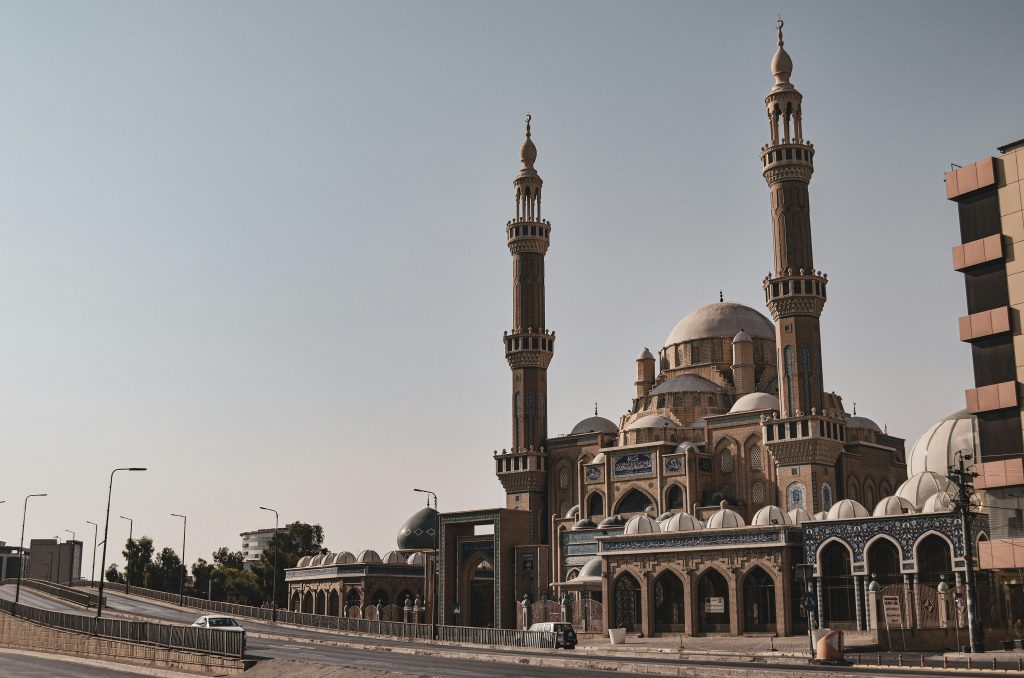
Iraq
🏙️ Capital city:
Baghdad
📈 Country population:
46 million
🗺️ Country area:
438,317 km²
Core Facts / Infobox
Present this as a clean two-column table containing accurate and verified national facts. Include only fields with real data.
| Official Name | Republic of Iraq |
| Common Name | Iraq |
| ISO Codes | IQ, IRQ, 368 |
| Internet TLD | .iq |
| Calling Code | +964 |
| Capital City | Baghdad |
| Largest City | Baghdad |
| Coordinates | 33° N, 44° E |
| Time Zone | UTC+3 |
| Population (2025 est.) | ~46 million |
| Area | 438,317 km² |
| Population Density | ~105 per km² |
| Languages | Arabic and Kurdish (official), Turkmen and Syriac recognized regionally |
| Currency | Iraqi Dinar (IQD) |
| Driving Side | Right |
| GDP (Nominal) | ~USD 250 billion |
| GDP (PPP) | ~USD 680 billion |
| GDP Per Capita | ~USD 5,000 |
| GDP Growth | ~2–4% (energy-dependent) |
| HDI | 0.674 (Medium) |
| Literacy Rate | ~80% |
| Life Expectancy | ~71 years |
| Unemployment | ~12–14% |
| Inflation | ~5–6% |
| Leaders | President, Prime Minister (names omitted for long-term accuracy) |
| Continent & Subregion | Asia — Middle East (Western Asia) |
| National Day | 3 October (National Independence Day) |
| National Sport | Football |
| National Dish | Masgouf |
| National Anthem | Mawtini |
Geography & Environment
- Iraq is located in the Middle East, bordered by Turkey, Iran, Kuwait, Saudi Arabia, Jordan, and Syria.
- It features two major rivers—the Tigris and Euphrates—which form the historic region of Mesopotamia.
- Geographic zones include desert plains, fertile river valleys, northern mountains, and southern marshlands.
- Climate: primarily desert; extremely hot summers and mild winters.
- Best time to visit: October to April.
- National parks and natural areas include the Mesopotamian Marshes, protected mountain reserves in Kurdistan, and nature zones near Sulaymaniyah.
- Wildlife includes gazelles, wild boar, wolves, jackals, and diverse bird species.
- Environmental challenges: water scarcity, pollution, desertification, declining river levels.
- Unique features include the Mesopotamian Marshlands, one of the world’s oldest wetland ecosystems.
Demographics
- Total population: ~46 million.
- Median age: ~21 years (one of the youngest populations in the region).
- Urban vs rural: ~70% urban, ~30% rural.
- Main ethnic groups: Arabs (majority), Kurds, Turkmen, Assyrians, Armenians.
- Main religions: Islam (Shia and Sunni), with Christian and Yazidi minorities.
- Literacy rate: ~80%.
- Major cities: Baghdad, Basra, Mosul, Erbil, Najaf, Karbala, Kirkuk.
History
- Iraq is home to ancient Mesopotamia, birthplace of civilization and writing (Sumerians, Akkadians, Babylonians, Assyrians).
- The region later became part of the Persian Empire, Islamic Caliphates, and Ottoman Empire.
- Iraq gained its modern independence in 1932.
- Significant 20th-century events include the Iran–Iraq War, Gulf War, 2003 conflict, and rebuilding period.
- Modern Iraq has faced political changes, reconstruction challenges, and regional influence shifts.
Government & Politics
- Government type: Federal parliamentary republic.
- Executive branch: President (head of state) and Prime Minister (head of government).
- Legislature: Council of Representatives (parliament).
- Judiciary: Supreme Judicial Council, Federal Supreme Court.
- Administrative divisions: 19 governorates, including the autonomous Kurdistan Region.
- Key political issues: governance reforms, national unity, security challenges, and oil distribution.
Economy
- Iraq’s economy relies heavily on oil, which accounts for over 90% of government revenue.
- Major industries: oil & gas, agriculture, construction, chemicals, textiles.
- Main exports: crude oil, petroleum products, dates, chemicals.
- Main imports: machinery, food products, vehicles, medicines, electronics.
- Strengths: vast oil reserves (5th largest globally), fertile agricultural zones.
- Weaknesses: infrastructure damage, political instability, limited diversification.
- GDP sectors: Services (~40%), Industry (~55% dominated by oil), Agriculture (~5%).
Culture & Society
- Iraq’s culture blends ancient Mesopotamian heritage with Arab, Kurdish, Islamic, and tribal traditions.
- Family, hospitality, and respect for elders are core social values.
- Major festivals: Eid al-Fitr, Eid al-Adha, Nowruz, Arbaeen pilgrimage, Ramadhan traditions.
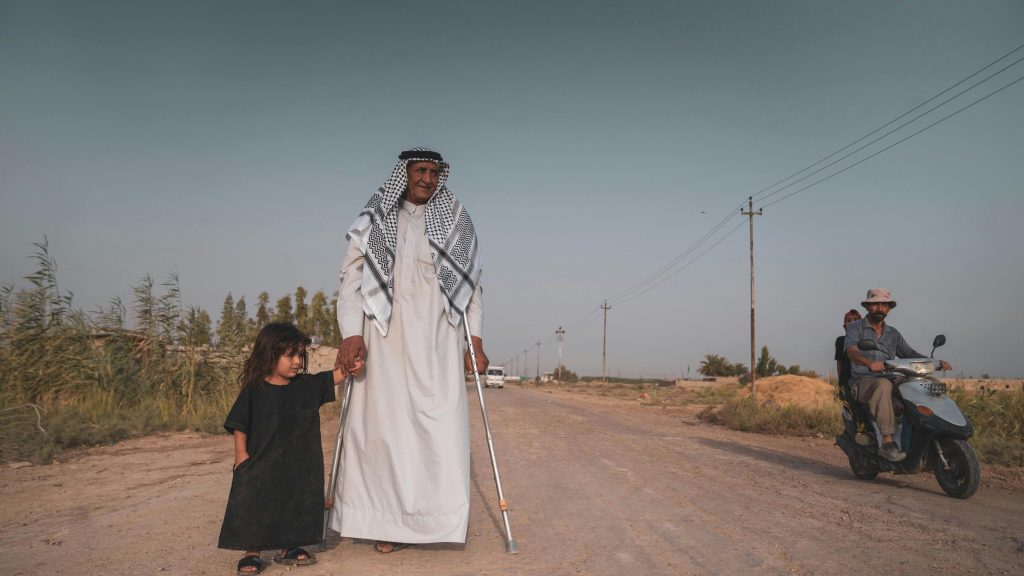
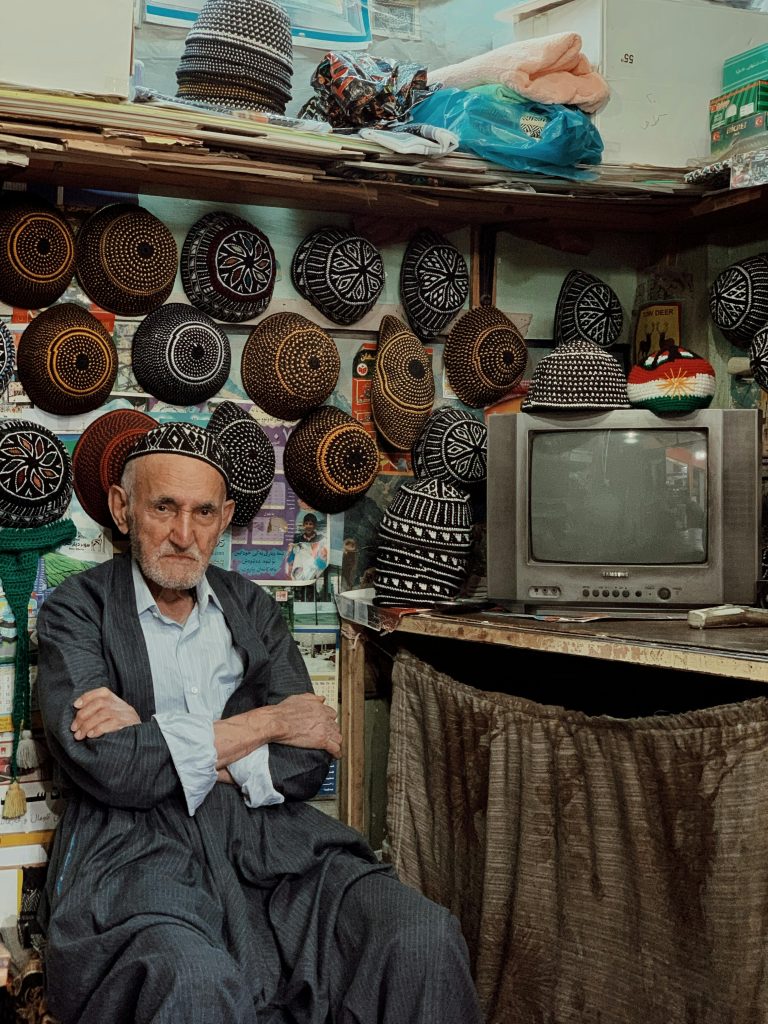
- Traditional dress includes the dishdasha (men) and abaya (women), with variations in Kurdish regions.
- Arts include oud music, calligraphy, poetry, carpet weaving, and ancient architecture.
- Main languages: Arabic, Kurdish, and minority languages.
Food & Cuisine
- National dish: Masgouf (grilled river fish).
- Other iconic dishes: Dolma, Quzi, Kubba, Biryani Iraqi-style, Tashreeb.
- Street foods: Shawarma, samoon sandwiches, falafel, grilled kebabs.
- Beverages: Iraqi tea, cardamom coffee, laban drinks.
- Cuisine features rice, lamb, fish, lentils, spices, and traditional bread.
Education & Institutions
- Education is compulsory in primary years, with improving literacy rates.
- Medium of instruction: Arabic; Kurdish in the Kurdistan Region; English widely taught.
- Literacy rate: ~80%.
- Top universities: University of Baghdad, University of Basra, Mosul University, Salahaddin University in Erbil.
- Strong fields: engineering, oil sciences, medicine, Islamic studies.
Tourism
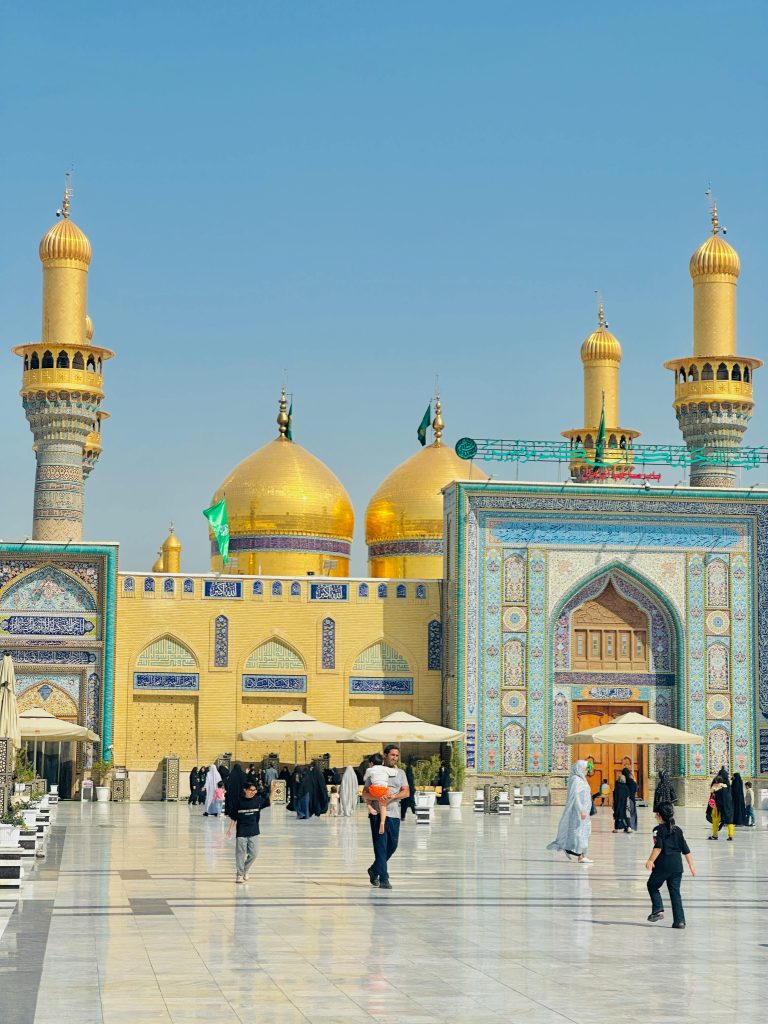
- Top destinations: Baghdad, Erbil, Basra, Najaf, Karbala, Mosul (historic sites).
- UNESCO sites: Hatra, Ashur, Samarra Archaeological City, Babylon.
- Natural attractions: Kurdistan mountains, Gali Ali Beg waterfall, marshlands of southern Iraq.
- Historical landmarks: Ziggurat of Ur, Abbasid Palace, Erbil Citadel.
- Religious tourism: millions visit Najaf and Karbala annually.
- Transportation: domestic flights, highways, taxis, buses.
Practical Information
- Safety: varies significantly by region; Kurdistan Region is safer and more stable.
- Healthcare: improving but uneven across regions.
- Emergency numbers: Police 104, Ambulance 122, Fire 115.
- Plug type: C & D; Voltage: 230V.
- Internet: widely available, especially in cities.
- Best time to visit: October–April.
- Budget: moderate; hotels and transport vary by region.
Sports, Entertainment & Notable People
- National sport: Football.
- Popular sports: weightlifting, wrestling, basketball, athletics.
- Famous athletes: Younis Mahmoud, Ali Adnan.
- Notable figures: Al-Kindi, Al-Farabi, Sinan Antoon, Ahmed Saadawi.
- Iraq has a vibrant poetry and literature tradition.
Neighboring Countries of Iraq
Iraq shares land borders with the following countries:
- 1,458 km with Iran
- 181 km with Jordan
- 240 km with Kuwait
- 814 km with Saudi Arabia
- 605 km with Syria
- 352 km with Turkey
Famous For
- Mesopotamian civilization — the world’s earliest cities.
- Tigris and Euphrates rivers.
- Historic sites such as Babylon and Ur.
- Islamic heritage and religious tourism.
- Masgouf and traditional Iraqi cuisine.
- Kurdistan mountains and landscapes.
- Oil reserves and economic significance.
- Rich literature, poetry, and calligraphy.
Sources
- World Bank
- United Nations (UN Data)
- IMF
- CIA World Factbook
- Iraq Central Statistics Organization
- Official Government Portals
Add Your Heading Text Here