Random Country Generator 🌎
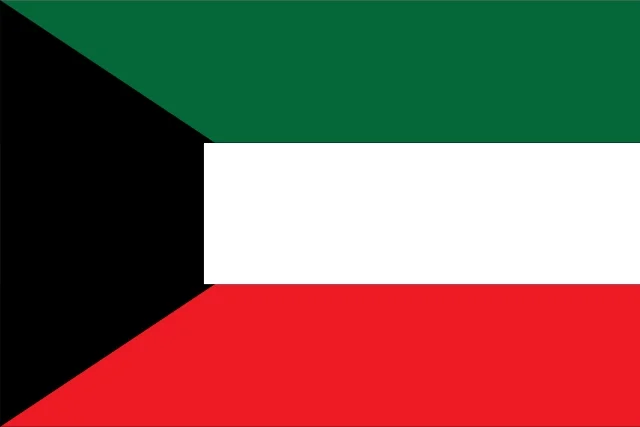
Kuwait
🏙️ Capital city:
Hanoi
📈 Country population:
97.34 million, ranks 15th globally.
🗺️ Country area:
331,212 km²
Core Facts / Infobox
Present this as a clean two-column table containing accurate and verified national facts. Include only fields with real data.
| Official Name | State of Kuwait |
| Common Name | Kuwait |
| ISO Codes | KW, KWT, 414 |
| Internet TLD | .kw |
| Calling Code | +965 |
| Capital City | Kuwait City |
| Largest City | Kuwait City |
| Coordinates | 29.3° N, 47.5° E |
| Time Zone | UTC+3 |
| Population (2025 est.) | ~4.7 million |
| Area | 17,818 km² |
| Population Density | ~265 per km² |
| Languages | Arabic (official), English widely spoken |
| Currency | Kuwaiti Dinar (KWD) |
| Driving Side | Right |
| GDP (Nominal) | ~USD 155+ billion |
| GDP (PPP) | ~USD 250+ billion |
| GDP Per Capita | ~USD 32,000+ |
| GDP Growth | ~2–3% |
| HDI | 0.831 (Very High) |
| Literacy Rate | ~96% |
| Life Expectancy | ~75 years |
| Unemployment | ~3% |
| Inflation | ~3–4% |
| Leaders | Emir & Prime Minister (names omitted for longevity) |
| Continent & Subregion | Asia — Middle East (Arabian Peninsula) |
| National Day | 25 February |
| National Sport | Football (soccer) |
| National Dish | Machboos |
| National Anthem | Al-Nasheed Al-Watani |
Geography & Environment
- Kuwait is a desert country located in the northeastern Arabian Peninsula, bordering Iraq to the north and Saudi Arabia to the south.
- It has a long coastline along the Arabian Gulf.
- Geographical features include vast deserts, low plains, coastal islands, and tidal flats.
- Major islands: Failaka Island, Bubiyan Island, Warbah Island.
- Climate: extremely hot desert climate with mild winters.
- Best time to visit: November–March.
- Important biodiversity areas include Jahra Nature Reserve and Kuwait Bay.
- Wildlife includes desert foxes, gazelles, migratory birds, and marine species.
- Environmental challenges: extreme heat, sandstorms, water scarcity, pollution.
- Unique features: oil-rich desert landscapes and culturally significant islands.
Demographics
- Total population: ~4.7 million.
- Median age: ~33 years.
- Urban vs rural: ~98% urban.
- Population includes a large expatriate community (over 60%).
- Ethnic groups: Kuwaiti Arabs, expatriates from Asia, Middle East, and the West.
- Religions: Islam (majority Sunni & Shia), with small Christian and other communities.
- Literacy rate: ~96%.
- Major cities: Kuwait City, Hawalli, Salmiya, Fahaheel, Jahra.
History
- Kuwait has been inhabited since ancient times, with links to Mesopotamian civilizations.
- The modern state emerged in the 18th century under the Al Sabah ruling family.
- Became a British protectorate in the 19th century.
- Gained independence on 19 June 1961.
- In 1990, Kuwait was invaded by Iraq, leading to the Gulf War; liberation occurred in 1991.
- Recent history includes rapid modernization, economic diversification, and infrastructural growth.
Government & Politics
- Government type: Constitutional monarchy.
- Executive: Emir (head of state) and Prime Minister (head of government).
- Legislature: unicameral National Assembly.
- Judiciary: Courts of Cassation, Appeals, and Sharia courts.
- Administrative divisions: 6 governorates.
- Political priorities focus on economic reform, diversification, and social welfare.
Economy
- Kuwait has one of the world’s highest incomes per capita due to its large oil reserves.
- Major industries: oil & gas, petrochemicals, construction, finance, logistics.
- Main exports: crude oil, petroleum products, fertilizers.
- Main imports: machinery, vehicles, electronics, food, manufactured goods.
- Strengths: substantial oil wealth, strong financial sector, sovereign wealth funds.
- Weaknesses: heavy reliance on hydrocarbon revenues.
- GDP sectors: Oil (~40%), Services (~55%), Industry (~5%).
- National Vision 2035 focuses on diversification and sustainable development.
Culture & Society
- Kuwaiti culture blends Arabian, Bedouin, and Gulf traditions.
- Family, hospitality, and cultural heritage play central roles.
- Important festivals: National Day, Liberation Day, Eid al-Fitr, Eid al-Adha.
- Traditional dress includes the dishdasha for men and abaya for women.
- Arts: Arabic music, poetry (nabati), theatre, and dhow-building heritage.
- Languages: Arabic (official), English widely used.
Food & Cuisine
- National dish: Machboos — spiced rice with chicken or lamb.
- Popular dishes: Harees, Jareesh, Mutabbaq Samak, Gabout.
- Street foods: shawarma, falafel, grilled meats.
- Desserts: luqaimat, kunafa, date sweets.
- Beverages: Arabic coffee, saffron tea, laban.
- Kuwaiti cuisine incorporates Arabian and Persian influences.
Education & Institutions
- Kuwait has a strong education system with high literacy.
- Medium of instruction: Arabic (schools), English widely used in universities.
- Literacy rate: ~96%.
- Top universities: Kuwait University, American University of Kuwait, Gulf University for Science & Technology.
- Key fields: engineering, medicine, business, oil & gas studies.
Tourism
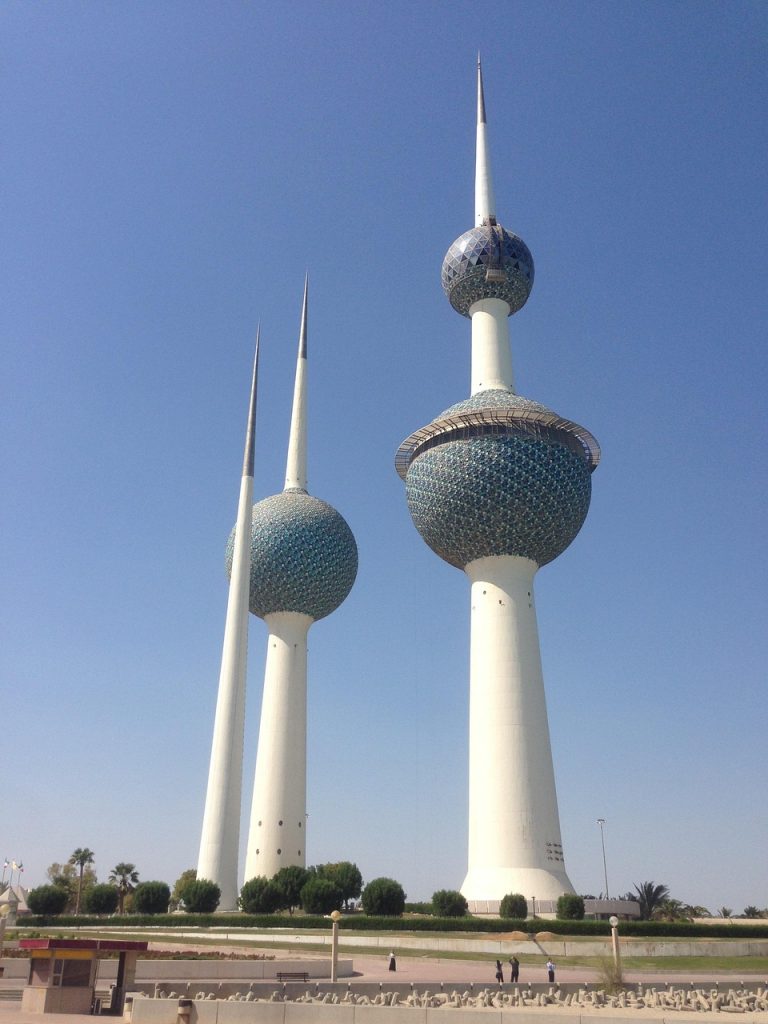
- Top attractions: Kuwait Towers, Grand Mosque, Souq Al-Mubarakiya, Failaka Island, Sheikh Abdullah Al-Salem Cultural Centre.
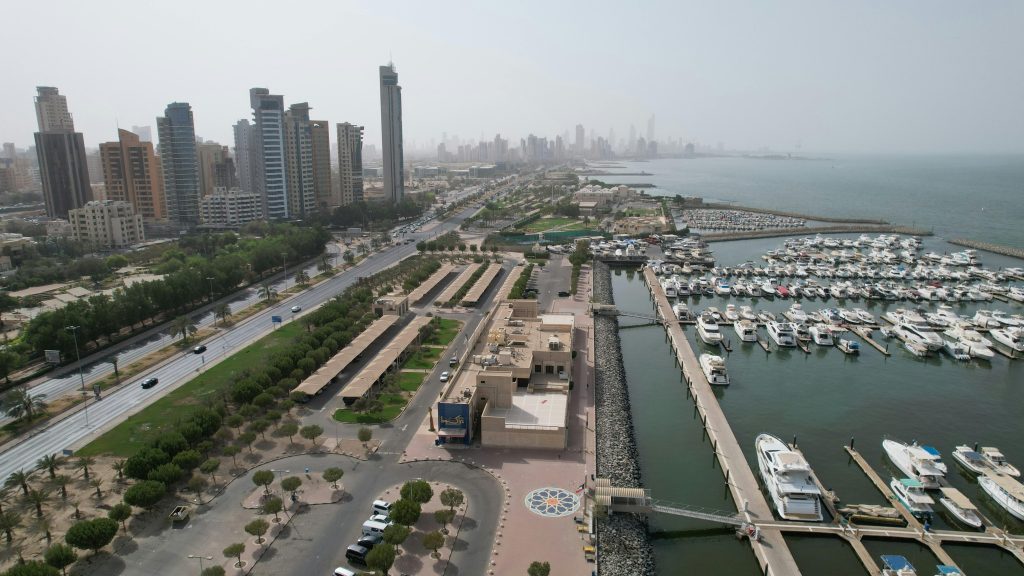
- Modern attractions: Al Shaheed Park, Avenues Mall, Marina Crescent.
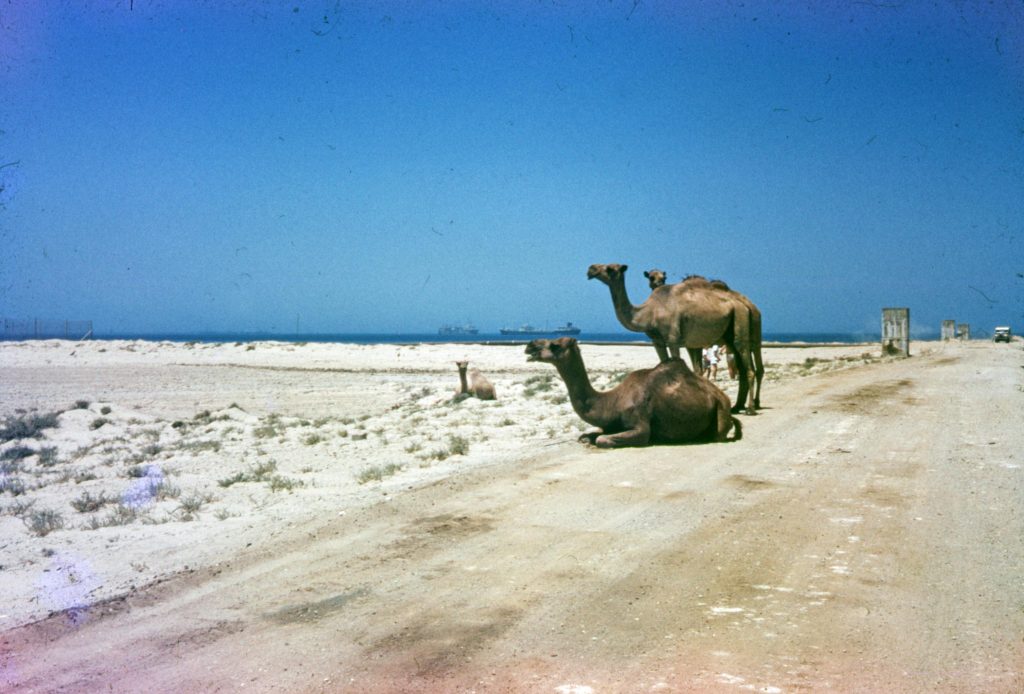
- Natural attractions: desert dunes, coastal areas, islands.
- Historical sites: old forts, museums, archaeological sites on Failaka.
- Adventure tourism: desert camping, water sports, dhow cruises.
- Visa: eVisa available for many nationalities.
- Transportation: modern highways, buses, taxis, ride-hailing services.
Practical Information
- Safety: very safe; low crime rates.
- Healthcare: modern hospitals and clinics; high-quality services.
- Emergency numbers: Police 112, Ambulance 112, Fire 112.
- Plug type: G; Voltage: 240V.
- Internet: fast and widespread 5G coverage.
- Best time to visit: November–March.
- Budget: moderate to high depending on lifestyle.
Sports, Entertainment & Notable People
- National sport: Football.
- Popular sports: badminton, handball, motorsports, camel racing.
- Kuwait is known for strong football clubs and Gulf Cup titles.
- Culture includes renowned poets, actors, musicians, and media personalities.
Neighboring Countries of Kuwait
Kuwait shares land borders with the following countries:
- 240 km with Iraq
- 222 km with Saudi Arabia
Famous For
- Oil wealth & high living standards.
- Kuwait Towers.
- Failaka Island.
- Traditional dhow culture.
- Arabian Gulf cuisine.
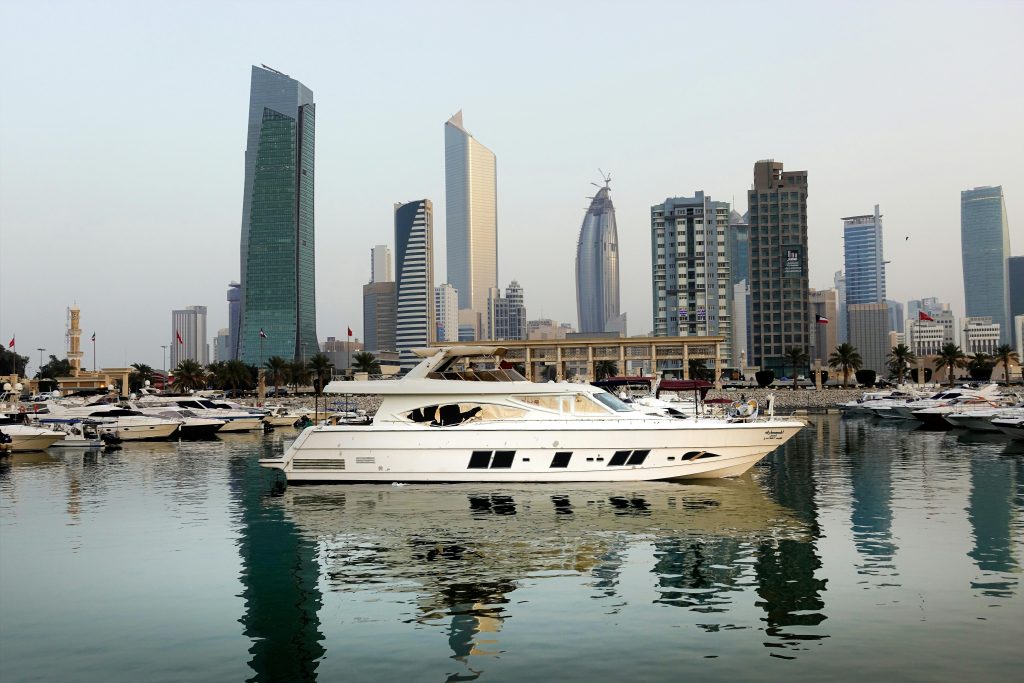
- Luxurious malls and modern architecture.
- Strong cultural heritage and literature.
Sources
- World Bank
- United Nations (UN Data)
- IMF
- CIA World Factbook
- Kuwait Central Statistical Bureau
- Official Government Publications