
Random Country Generator 🌎
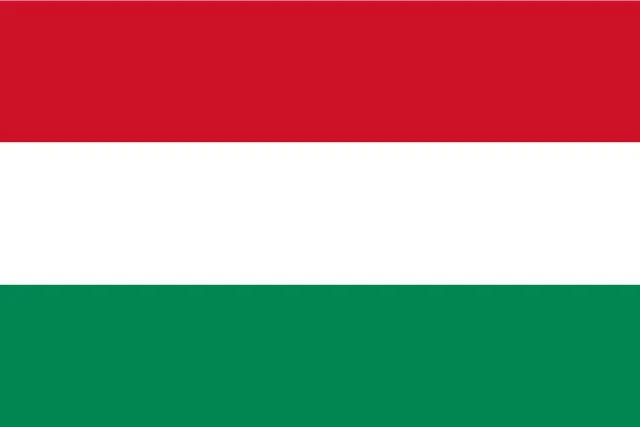
Hungary
🏙️ Capital city:
Budapest
📈 Country population:
9.6 million
🗺️ Country area:
93,030 km²
Core Facts / Infobox
Present this as a clean two-column table containing accurate and verified national facts. Include only fields with real data.
| Official Name | Hungary |
| Common Name | Hungary |
| Political Status | Sovereign unitary parliamentary republic |
| ISO Codes | HU, HUN, 348 |
| Internet TLD | .hu |
| Calling Code | +36 |
| Capital City | Budapest |
| Largest City | Budapest |
| Coordinates | 47.50° N, 19.04° E |
| Time Zone | UTC+1 (CET), UTC+2 (CEST) |
| Population (2025 est.) | ~9.6 million |
| Area | 93,030 km² |
| Population Density | ~103 per km² |
| Languages | Hungarian (official) |
| Currency | Hungarian Forint (HUF) |
| Driving Side | Right |
| GDP (Nominal) | ~USD 230 billion |
| GDP Per Capita | ~USD 24,000 |
| HDI | Very High |
| Life Expectancy | ~76 years |
| Continent & Subregion | Europe — Central Europe |
| National Day | Saint Stephen’s Day (20 August) |
| National Anthem | Himnusz |
Geography & Environment
- Landlocked country in Central Europe.
- Dominated by the Great Hungarian Plain.
- Major rivers: Danube, Tisza, Drava.
- Lake Balaton is the largest lake in Central Europe.
- Climate: temperate continental with hot summers and cold winters.
Demographics
- Population: ~9.6 million.
- Highly urbanized with Budapest as the primary metropolitan area.
- Major cities: Budapest, Debrecen, Szeged, Miskolc.
- Ethnic composition: predominantly ethnic Hungarian.
- Religions: Christianity (mainly Roman Catholic), others.
History
- Founded as a Christian kingdom in 1000 CE.
- Part of the Kingdom of Hungary and later the Austro-Hungarian Empire.
- Lost significant territory after World War I.
- Communist rule from 1949 to 1989.
- Transitioned to democracy in 1989.
- Member of the European Union since 2004.
Government & Politics
- Political system: Parliamentary republic.
- Head of State: President of Hungary.
- Head of Government: Prime Minister.
- Legislature: unicameral National Assembly.
- Administrative divisions: counties and capital city.
Economy
- High-income, export-oriented economy.
- Key sectors: manufacturing, automotive, pharmaceuticals, services.
- Strong integration with EU supply chains.
- Main exports: vehicles, machinery, electronics.
- Strengths: skilled labor, central location.
- Weaknesses: demographic decline, inflation volatility.
Culture & Society
- Unique Finno-Ugric language and cultural heritage.
- Strong traditions in music, literature, and thermal bathing.
- Famous figures: Franz Liszt, Béla Bartók, Ernő Rubik.
Food & Cuisine
- Traditional dishes: goulash, paprikás, lángos.
- Cuisine known for paprika and hearty flavors.
- Renowned wine regions such as Tokaj.
Education & Institutions
- High literacy rate.
- Strong public education system.
- Major universities in Budapest, Szeged, and Debrecen.
Tourism
- Popular destination for cultural and thermal tourism.
- Top attractions: Budapest, Lake Balaton, historic towns.
- Rich architectural heritage.
Practical Information
- Emergency number: 112.
- Plug type: C/F; Voltage: 230V.
- Developed rail and road infrastructure.
Sports, Entertainment & Notable People
- Popular sports: football, water polo, fencing.
- Strong Olympic tradition.
- Notable figures: Ferenc Puskás, Katinka Hosszú.
Neighboring Countries of Hungary
Hungary is located in Central Europe and borders seven countries:
Austria 366 km,
Croatia 329 km,
Romania 443 km,
Serbia 151 km,
Slovakia 677 km,
Slovenia 102 km, and
Ukraine 103 km.
Famous For
- Thermal baths and spa culture.
- Unique Hungarian language.
- Historic Budapest cityscape.
- Wine regions and cuisine.
Sources
- World Bank
- United Nations (UN Data)
- IMF
- CIA World Factbook
- Hungarian Central Statistical Office (KSH)