
Random Country Generator 🌎
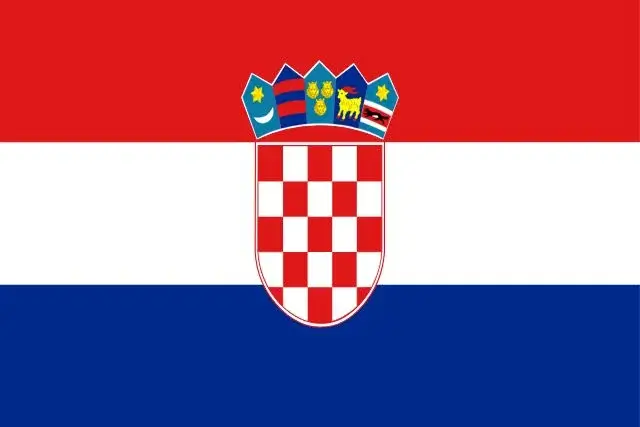
Croatia
🏙️ Capital city:
Zagreb
📈 Country population:
3.8 million
🗺️ Country area:
56,594 km²
Core Facts / Infobox
Present this as a clean two-column table containing accurate and verified national facts. Include only fields with real data.
| Official Name | Republic of Croatia |
| Common Name | Croatia |
| Political Status | Sovereign unitary parliamentary republic |
| ISO Codes | HR, HRV, 191 |
| Internet TLD | .hr |
| Calling Code | +385 |
| Capital City | Zagreb |
| Largest City | Zagreb |
| Coordinates | 45.81° N, 15.98° E |
| Time Zone | UTC+1 (CET), UTC+2 (CEST) |
| Population (2025 est.) | ~3.8 million |
| Area | 56,594 km² |
| Population Density | ~67 per km² |
| Languages | Croatian (official) |
| Currency | Euro (EUR) |
| Driving Side | Right |
| GDP (Nominal) | ~USD 90 billion |
| GDP Per Capita | ~USD 23,000 |
| HDI | Very High |
| Life Expectancy | ~78 years |
| Continent & Subregion | Europe — Southeastern Europe (Balkans) |
| National Day | Statehood Day (30 May) |
| National Anthem | Lijepa naša domovino |
Geography & Environment
- Located in Southeastern Europe along the Adriatic Sea.
- Borders Slovenia, Hungary, Serbia, Bosnia and Herzegovina, and Montenegro.
- Noted for its long, indented coastline with over 1,000 islands.
- Major regions: Pannonian Plain, Dinaric Alps, Adriatic coast.
- Climate ranges from Mediterranean along the coast to continental inland.
Demographics
- Population: ~3.8 million.
- Urban population centered in Zagreb and coastal cities.
- Major cities: Zagreb, Split, Rijeka, Osijek, Zadar.
- Ethnic groups: Croats (majority), Serbs, others.
- Religion: Roman Catholic Christianity (majority).
History
- Medieval Kingdom of Croatia established in the 10th century.
- Entered union with Hungary in 1102.
- Part of the Habsburg Monarchy and later Austro-Hungarian Empire.
- Part of Yugoslavia during the 20th century.
- Declared independence in 1991.
- Member of the European Union since 2013.
Government & Politics
- Political system: Parliamentary republic.
- Head of State: President of Croatia.
- Head of Government: Prime Minister.
- Legislature: unicameral Croatian Parliament (Sabor).
- Administrative divisions: counties (županije).
Economy
- High-income economy with strong tourism sector.
- Key sectors: tourism, services, manufacturing, energy.
- Main exports: machinery, vehicles, chemicals, food products.
- Tourism accounts for a significant share of GDP.
- Strengths: natural beauty, EU membership.
- Weaknesses: demographic decline, reliance on tourism.
Culture & Society
- Blend of Central European and Mediterranean cultural influences.
- Rich traditions in music, folklore, and literature.
- Famous figures: Nikola Tesla, Miroslav Krleža.
Food & Cuisine
- Traditional dishes: peka, ćevapi, pašticada.
- Coastal cuisine emphasizes seafood and olive oil.
- Inland cuisine influenced by Central European traditions.
Education & Institutions
- High literacy rate.
- Public universities in Zagreb, Split, Rijeka, and Osijek.
- Growing emphasis on science and technology.
Tourism
- Major Mediterranean tourist destination.
- Top attractions: Dubrovnik, Split, Plitvice Lakes National Park.
- Island hopping and coastal tourism are key draws.
Practical Information
- Emergency number: 112.
- Plug type: C/F; Voltage: 230V.
- Modern road network and ferry connections.
Sports, Entertainment & Notable People
- Popular sports: football, basketball, handball.
- International success in football and water polo.
- Notable figures: Luka Modrić, Dražen Petrović.
Neighboring Countries of Croatia
Croatia shares land borders with Bosnia and Herzegovina 932 km, Hungary 329 km, Montenegro 25 km, Serbia 241 km, and Slovenia 670 km.
Famous For
- Adriatic coastline and islands.
- Historic cities like Dubrovnik.
- UNESCO World Heritage Sites.
- Strong football tradition.
Sources
- World Bank
- United Nations (UN Data)
- IMF
- CIA World Factbook
- Croatian Bureau of Statistics