
Random Country Generator 🌎
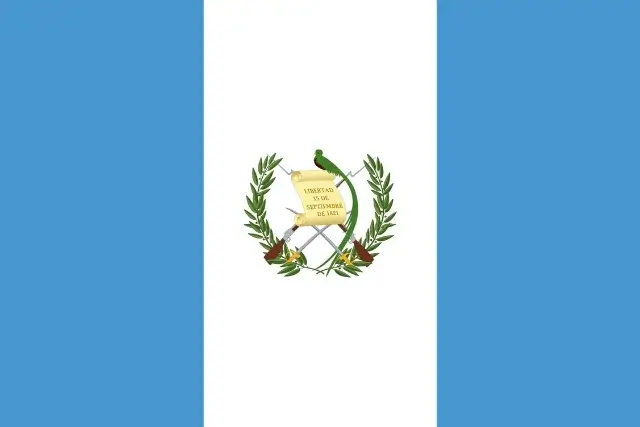
Guatemala
🏙️ Capital city:
Guatemala City
📈 Country population:
18.5 million
🗺️ Country area:
108,889 km²
Core Facts / Infobox
Present this as a clean two-column table containing accurate and verified national facts. Include only fields with real data.
| Official Name | Republic of Guatemala |
| Common Name | Guatemala |
| ISO Codes | GT, GTM, 320 |
| Internet TLD | .gt |
| Calling Code | +502 |
| Capital City | Guatemala City |
| Largest City | Guatemala City |
| Coordinates | 14.6° N, 90.5° W |
| Time Zone | UTC−6 |
| Population (2025 est.) | ~18.5 million |
| Area | 108,889 km² |
| Population Density | ~170 per km² |
| Languages | Spanish (official); 24 recognized indigenous languages including K’iche’, Q’eqchi’, and Mam |
| Currency | Guatemalan Quetzal (GTQ) |
| Driving Side | Right |
| GDP (Nominal) | ~USD 110 billion |
| GDP (PPP) | ~USD 220 billion |
| GDP Per Capita | ~USD 6,000 (PPP ~12,000) |
| GDP Growth | ~3–4% |
| HDI | 0.663 (Medium) |
| Literacy Rate | ~83% |
| Life Expectancy | ~74 years |
| Unemployment | ~3% |
| Inflation | ~4–5% |
| Leaders | President; Vice President |
| Continent & Subregion | North America — Central America |
| National Day | September 15 (Independence Day) |
| National Sport | Football (Soccer) |
| National Dish | Peppian |
| National Anthem | Himno Nacional de Guatemala |
Geography & Environment
- Guatemala is located in Central America, bordered by Mexico, Belize, Honduras, and El Salvador.
- It has coastlines on both the Pacific Ocean and the Caribbean Sea.
- Major features: volcanic mountain ranges, highland plateaus, rainforests, Lake Atitlán, and the Petén Basin.
- Climate varies from tropical in lowlands to temperate in highlands.
- Best time to visit: November–April (dry season).
- National parks: Tikal National Park, Sierra de las Minas Biosphere Reserve, Laguna del Tigre.
- Biodiversity: jaguars, tapirs, quetzals, toucans, howler monkeys.
- Environmental challenges: deforestation, earthquakes, volcano activity, hurricanes.
Demographics
- Population: ~18.5 million.
- Median age: ~23 years (young population).
- Main groups: Mestizo (Ladino), Indigenous Maya (over 40%), Garifuna, Xinca.
- Spanish is the national language; many indigenous languages widely used.
- Urbanization: ~52% urban population.
- Major cities: Guatemala City, Mixco, Villa Nueva, Quetzaltenango.
History
- Home to the ancient Maya civilization, one of the most advanced pre-Columbian cultures.
- Conquered by Spain in the 16th century.
- Became part of the Captaincy General of Guatemala.
- Gained independence on September 15, 1821 along with most of Central America.
- Experienced civil war from 1960 to 1996, ending with peace accords.
- Modern era marked by democratization and economic reforms.
Government & Politics
- Government type: Unitary presidential republic.
- Executive: President.
- Legislature: unicameral Congress of the Republic.
- Judiciary: Supreme Court of Justice.
- Subdivisions: 22 departments.
- Key political issues: corruption, security, inequality, indigenous rights.
Economy
- Largest economy in Central America.
- Major industries: agriculture, manufacturing, mining, textiles, tourism, remittances.
- Main exports: coffee, sugar, bananas, cardamom, textiles, vegetables.
- Main imports: fuel, machinery, chemicals, consumer goods.
- Strengths: young workforce, strong agriculture, growing industrial sector.
- Weaknesses: poverty, inequality, reliance on remittances, vulnerability to disasters.
- GDP sectors: Services (~60%), Industry (~25%), Agriculture (~15%).
Culture & Society
- Rich blend of Maya heritage and Spanish colonial influence.
- Strong indigenous cultural presence, especially in textiles and traditions.
- Key festivals: Semana Santa (Easter Week), Independence Day, Day of the Dead.
- Traditional clothing includes colorful Mayan huipiles and woven garments.
- Arts: marimba music, traditional weaving, stone carving, Maya architecture.
- Languages: Spanish plus many Mayan languages such as K’iche’, Q’eqchi’, and Kaqchikel.
Food & Cuisine
- National dish: Peppian — rich stew with meat, chilies, and spices.
- Other iconic dishes: Kak’ik (turkey soup), Tamales, Hilachas, Jocon.
- Street foods: tostadas, rellenitos, chuchitos, elotes.
- Beverages: atol, hot chocolate, coffee (world-famous), horchata.
Education & Institutions
- Medium of instruction: Spanish; bilingual education for indigenous communities.
- Literacy rate: ~83%.
- Top universities: Universidad de San Carlos, Universidad del Valle, Universidad Rafael Landívar.
- Key fields: agriculture, business, engineering, anthropology.
Tourism
- Top destinations: Tikal, Antigua Guatemala, Lake Atitlán, Semuc Champey, Chichicastenango.
- UNESCO sites: Antigua Guatemala, Tikal National Park, Quiriguá.
- Natural attractions: volcanoes (Acatenango, Pacaya), hot springs, cloud forests.
- Adventure tourism: hiking, volcano climbing, rafting, ziplining.
- Visa: many nationalities are visa-free; others require prior approval.
- Transportation: buses, shuttles, domestic flights, tuk-tuks in towns.
Practical Information
- Safety varies; exercise caution in major cities.
- Healthcare: good private hospitals in cities; limited in remote areas.
- Emergency number: 110 (police), 122 (fire), 123 (medical).
- Plug type: A/B; Voltage: 120V.
- Internet: widely available in urban areas; slower in remote regions.
- Best time to visit: November–April.
- Budget: highly affordable for travelers.
Sports, Entertainment & Notable People
- Popular sports: football (soccer), basketball, baseball.
- Notable athletes: Erick Barrondo (Olympic medalist).
- Famous artists: Carlos Mérida (painter), Efraín Recinos (architect).
- Writers: Miguel Ángel Asturias (Nobel Prize in Literature).
- Entertainment icons: Ricardo Arjona (singer), Gaby Moreno (musician).
Neighboring Countries of Guatemala
Guatemala shares land borders with the following countries:
- 266 km with Belize
- 203 km with El Salvador
- 256 km with Honduras
- 962 km with Mexico
Famous For
- Mayan ruins like Tikal.
- Lake Atitlán.
- Colorful indigenous textiles.
- Volcanoes and highlands.
- Antigua Guatemala.
- Premium coffee production.
Sources
- World Bank
- United Nations (UN Data)
- IMF
- CIA World Factbook
- Guatemala National Statistics Institute (INE)
- Government of Guatemala