
Random Country Generator 🌎
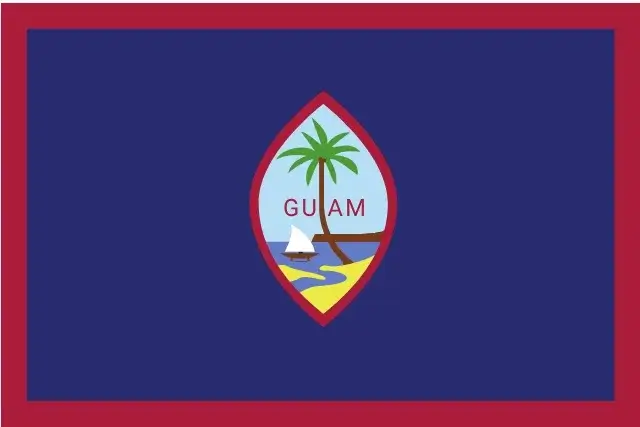
Guam
🏙️ Capital city:
Hagåtña
📈 Country population:
173,000
🗺️ Country area:
544 km²
Core Facts / Infobox
Present this as a clean two-column table containing accurate and verified national facts. Include only fields with real data.
| Official Name | Guam (Unincorporated Territory of the United States) |
| Common Name | Guam |
| ISO Codes | GU, GUM, 316 |
| Internet TLD | .gu |
| Calling Code | +1-671 |
| Capital City | Hagåtña |
| Largest City | Dededo |
| Coordinates | 13.4° N, 144.8° E |
| Time Zone | UTC+10 |
| Population (2025 est.) | ~173,000 |
| Area | 544 km² |
| Population Density | ~318 per km² |
| Languages | English, Chamorro, Filipino |
| Currency | US Dollar (USD) |
| Driving Side | Right |
| GDP (PPP) | ~USD 6+ billion |
| GDP Per Capita | ~USD 35,000+ |
| Literacy Rate | ~99% |
| Life Expectancy | ~78 years |
| Continent & Subregion | Oceania — Micronesia |
| National Day | 21 July (Liberation Day) |
| National Sport | Baseball |
| National Dish | Kadon Pika |
| National Anthem | Fanohge Chamoru |
Geography & Environment
- Guam is the westernmost territory of the United States, located in the western Pacific Ocean, part of the Mariana Islands.
- Neighboring regions include the Northern Mariana Islands to the north and Micronesian island nations to the south.
- The island features volcanic highlands in the south and limestone plateaus in the north.
- Guam has beautiful beaches, coral reefs, tropical forests, and significant limestone caves.
- Climate: tropical marine climate with warm temperatures year-round; rainy season runs from June–December.
- Best time to visit: January–May (dry season).
- Important natural sites: Two Lovers Point, Ritidian Point, Tumon Bay Marine Preserve, Cetti Bay Overlook.
- Wildlife includes fruit bats, coconut crabs, sea turtles, reef fish, and native birds.
- Environmental challenges: typhoons, rising sea levels, coral bleaching, invasive brown tree snake.
Demographics
- Total population: ~173,000.
- Median age: ~29 years.
- Urban population: ~95%.
- Ethnic groups: Chamorro (indigenous), Filipino, White (American/European), other Pacific Islanders.
- Religions: Christianity (predominantly Roman Catholic).
- Literacy rate: ~99%.
- Major cities: Dededo, Hagåtña, Mangilao, Yigo, Tamuning.
History
- Guam was first settled by the Chamorro people over 3,500 years ago.
- Spanish colonization began in 1668 and continued for over 200 years.
- The United States acquired Guam in 1898 following the Spanish–American War.
- Japan occupied Guam during World War II until U.S. forces liberated it on 21 July 1944.
- Post-war development transformed Guam into a strategic U.S. military location.
- Today, the island maintains an autonomous government under U.S. federal oversight.
Government & Politics
- Political status: Unincorporated organized territory of the United States.
- Executive: Governor of Guam.
- Legislature: unicameral Guam Legislature.
- Judiciary: Supreme Court of Guam and U.S. District Court of Guam.
- Representation: one non-voting delegate to the U.S. House of Representatives.
- Administrative divisions: 19 villages.
- Political issues include discussions on self-determination, economic diversification, and military expansion.
Economy
- Guam’s economy is driven by tourism, the U.S. military presence, and services.
- Major industries: tourism, retail, construction, defense services, transportation.
- Main exports: fish, crafts, re-exports from duty-free trade.
- Main imports: food, vehicles, fuel, machinery, manufactured goods.
- Strengths: strategic location, strong U.S. support, tourism demand.
- Weaknesses: reliance on imports, vulnerability to typhoons, economic dependence on tourism and military.
- GDP sectors: Services (~80%), Industry (~15%), Agriculture (~5%).
Culture & Society
- Guam’s culture blends Chamorro traditions with American, Filipino, and Pacific Island influences.
- Chamorro culture emphasizes respect, hospitality, family, and traditional values.
- Festivals: Liberation Day, Guam Micronesia Island Fair, village fiestas.
- Traditional arts include weaving, carving, chanting, and dance.
- Languages: Chamorro and English widely spoken; Filipino languages common due to migration.
Food & Cuisine
- National dish: Kadon Pika — spicy chicken cooked in coconut milk and soy sauce.
- Popular dishes: Red rice, kelaguen, tinaktak, bbq short ribs, taro and breadfruit dishes.
- Street foods: chicken kelaguen tacos, empanadas, barbecue skewers.
- Beverages: coconut water, Chamorro-style coffee, tropical fruit drinks.
- Cuisine reflects Chamorro, Filipino, and American influences.
Education & Institutions
- Medium of instruction: English; Chamorro taught in cultural and language programs.
- Literacy rate: ~99%.
- Top institutions: University of Guam (UOG), Guam Community College.
- Important fields: marine biology, environmental science, business, Pacific studies.
Tourism
- Top destinations: Tumon Bay, Two Lovers Point, Ritidian Beach, Fish Eye Marine Park, Cetti Bay.
- Natural attractions: coral reefs, beaches, hiking trails, limestone forests.
- Adventure tourism: diving, snorkeling, parasailing, hiking, dolphin watching.
- Historical sites: WWII tunnels, Asan Beach, War in the Pacific National Historical Park.
- Visa: U.S. visa requirements apply; Guam also participates in its own visa waiver program for certain nationalities.
- Transportation: buses, taxis, rental cars, hotel shuttles.
Practical Information
- Safety: generally safe; petty crime occurs in urban areas.
- Healthcare: modern facilities available, especially in Tamuning and Hagåtña.
- Emergency numbers: 911 (all services).
- Plug type: A & B; Voltage: 110V (U.S. standard).
- Internet: widely available; fast in urban areas.
- Best time to visit: January–May.
- Budget: moderate; resorts and shopping areas cater to tourists.
Sports, Entertainment & Notable People
- Popular sports: baseball, rugby, soccer, basketball.
- Notable athletes: Jon Tuck (MMA), Zach Banner (NFL; Chamorro heritage).
- Cultural entertainment: Chamorro dances, fiestas, traditional chanting.
- Notable figures: Judy Flores (artist), Pia Mia (singer, Chamorro heritage).
Neighboring Countries of Guam
Guam does not share any land borders. Its maritime neighbours include Northern Mariana Islands, Palau, Philippines, Japan, and United States.
Famous For
- Tumon Bay beaches and luxury resorts.
- Strong Chamorro culture.
- U.S. military bases and strategic location.
- WWII history sites.
- Beautiful coral reefs and diving spots.
- Warm hospitality and island lifestyle.
Sources
- World Bank
- United Nations (UN Data)
- IMF
- CIA World Factbook
- Guam Bureau of Statistics & Plans
- Government of Guam Publications