
Random Country Generator 🌎
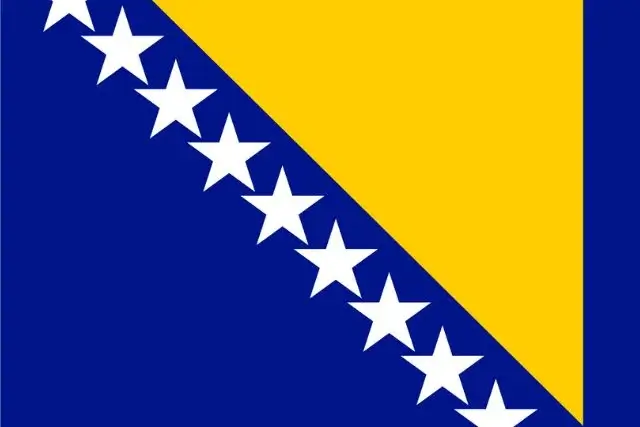
Bosnia and Herzegovina
🏙️ Capital city:
Sarajevo
📈 Country population:
3.2 million
🗺️ Country area:
51,209 km²
Core Facts / Infobox
Present this as a clean two-column table containing accurate and verified national facts. Include only fields with real data.
| Official Name | Bosnia and Herzegovina |
| Common Name | Bosnia and Herzegovina |
| Political Status | Sovereign federal parliamentary republic (complex constitutional system) |
| ISO Codes | BA, BIH, 070 |
| Internet TLD | .ba |
| Calling Code | +387 |
| Capital City | Sarajevo |
| Largest City | Sarajevo |
| Coordinates | 43.86° N, 18.41° E |
| Time Zone | UTC+1 (CET), UTC+2 (CEST) |
| Population (2025 est.) | ~3.2 million |
| Area | 51,209 km² |
| Population Density | ~63 per km² |
| Languages | Bosnian, Croatian, Serbian (official) |
| Currency | Convertible Mark (BAM) |
| Driving Side | Right |
| GDP (Nominal) | ~USD 30 billion |
| GDP Per Capita | ~USD 9,000 |
| HDI | High |
| Life Expectancy | ~77 years |
| Continent & Subregion | Europe — Southeastern Europe (Balkans) |
| National Day | 1 March (Independence Day – observed in Federation of BiH) |
| National Anthem | Intermeco |
Geography & Environment
- Located in Southeastern Europe on the Balkan Peninsula.
- Borders Croatia, Serbia, and Montenegro.
- Small coastline on the Adriatic Sea near Neum.
- Mountainous terrain dominated by the Dinaric Alps.
- Climate: continental inland and Mediterranean influence in the south.
Demographics
- Population: ~3.2 million.
- Major cities: Sarajevo, Banja Luka, Mostar, Tuzla, Zenica.
- Constituent peoples: Bosniaks, Serbs, Croats.
- Religions: Islam, Eastern Orthodoxy, Roman Catholicism.
- Significant diaspora population abroad.
History
- Medieval Bosnian Kingdom existed in the Middle Ages.
- Part of the Ottoman Empire for centuries.
- Later ruled by Austria-Hungary.
- Part of Yugoslavia during the 20th century.
- Declared independence in 1992.
- Post-war state structured by the Dayton Peace Agreement (1995).
Government & Politics
- Political system: Federal parliamentary republic with power-sharing.
- Collective Head of State: Tripartite Presidency.
- Legislature: bicameral Parliamentary Assembly.
- Two main entities: Federation of Bosnia and Herzegovina and Republika Srpska.
- Brčko District operates as a self-governing unit.
Economy
- Upper-middle-income economy.
- Key sectors: manufacturing, energy, agriculture, services.
- Main exports: metals, machinery, wood products.
- Strengths: natural resources, hydropower.
- Weaknesses: unemployment, political complexity.
Culture & Society
- Multicultural society shaped by Ottoman, Austro-Hungarian, and Slavic influences.
- Rich traditions in music, cuisine, and crafts.
- Notable figures: Ivo Andrić, Goran Bregović.
Food & Cuisine
- Traditional dishes: ćevapi, burek, begova čorba.
- Cuisine influenced by Ottoman and Balkan traditions.
- Strong coffee culture.
Education & Institutions
- High literacy rate.
- Public universities in Sarajevo, Banja Luka, Tuzla, and Mostar.
- Education systems administered at entity and cantonal levels.
Tourism
- Cultural, historical, and nature tourism.
- Top attractions: Sarajevo, Mostar (Stari Most), Blagaj, national parks.
- Growing adventure and heritage tourism.
Practical Information
- Emergency number: 112.
- Plug type: C/F; Voltage: 230V.
- Developing transport infrastructure.
Sports, Entertainment & Notable People
- Popular sports: football, basketball, athletics.
- Strong regional sports culture.
- Notable figures: Edin Džeko, Mirza Teletović.
Neighboring Countries of Bosnia and Herzegovina
Bosnia and Herzegovina shares land borders with Croatia 932 km, Montenegro 225 km, and Serbia 302 km.
Famous For
- Stari Most (Mostar Bridge).
- Multicultural heritage.
- Mountain landscapes and rivers.
- Traditional coffee and cuisine.
Sources
- World Bank
- United Nations (UN Data)
- IMF
- CIA World Factbook
- Agency for Statistics of Bosnia and Herzegovina