Random Country Generator 🌎
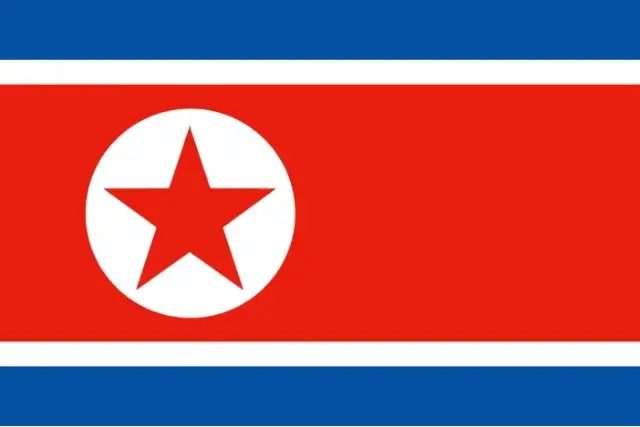
North Korea
🏙️ Capital city:
Pyongyang
📈 Country population:
26 million
🗺️ Country area:
120,538 km²
Core Facts / Infobox
Present this as a clean two-column table containing accurate and verified national facts. Include only fields with real data.
| Official Name | Democratic People’s Republic of Korea |
| Common Name | North Korea |
| ISO Codes | KP, PRK, 408 |
| Internet TLD | .kp |
| Calling Code | +850 |
| Capital City | Pyongyang |
| Largest City | Pyongyang |
| Coordinates | 40° N, 127° E |
| Time Zone | UTC+9 |
| Population (2025 est.) | ~26 million |
| Area | 120,538 km² |
| Population Density | ~215 per km² |
| Languages | Korean (official) |
| Currency | North Korean Won (KPW) |
| Driving Side | Right |
| GDP (Nominal) | ~USD 20–25 billion (estimated) |
| GDP (PPP) | ~USD 40–50 billion (estimated) |
| GDP Per Capita | ~USD 700–900 |
| GDP Growth | Varies; limited reliable data |
| HDI | Not officially published; estimates place it around medium |
| Literacy Rate | ~100% (claimed) |
| Life Expectancy | ~72 years |
| Unemployment | Officially 0% (state-controlled) |
| Inflation | Unknown; estimates fluctuate |
| Leaders | Head of State & Government (names omitted for longevity) |
| Continent & Subregion | Asia — East Asia |
| National Day | 9 September (Founding Day) |
| National Sport | Mass gymnastics; football is widely played |
| National Dish | Naengmyeon (cold noodles) |
| National Anthem | Aegukka |
Geography & Environment
- North Korea is located in East Asia, sharing borders with South Korea, China, and Russia.
- It features rugged mountains, plateaus, narrow river valleys, and coastal plains along the East and Yellow Seas.
- Highest mountain: Mount Paektu, a volcanic peak shared with China.
- Major rivers: Taedong, Yalu (Amnok), Tumen.
- Climate: continental with cold winters and warm summers.
- Best time to visit: April–June and September–October.
- Protected areas include Mount Myohyang, Mount Kumgang, and various biosphere reserves.
- Wildlife includes bears, lynx, deer, cranes, and diverse bird species.
- Environmental challenges: deforestation, flooding, soil erosion, energy shortages.
Demographics
- Total population: ~26 million.
- Median age: ~35 years.
- Urban vs rural: ~63% urban, ~37% rural.
- Ethnic composition: almost entirely Korean.
- Religion: officially atheist; traditional and folk practices exist.
- Literacy rate: ~100% (state-reported).
- Major cities: Pyongyang, Hamhung, Chongjin, Nampo, Wonsan.
History
- North Korea’s roots trace back to ancient Korean kingdoms like Goguryeo and Balhae.
- Japan ruled Korea from 1910 to 1945.
- After WWII, the peninsula was divided between North and South.
- North Korea was founded on 9 September 1948.
- The Korean War (1950–1953) ended in an armistice, not a peace treaty.
- The country has since remained politically isolated with a centrally planned economy.
- Recent decades marked by military development, sanctions, and limited international engagement.
Government & Politics
- Government type: Single-party authoritarian state.
- The ruling party: Workers’ Party of Korea.
- Executive includes Supreme Leader, Cabinet, and National Defence Commission.
- Legislature: Supreme People’s Assembly.
- Judiciary operates under state-controlled court systems.
- Administrative divisions: 9 provinces, 3 directly governed cities.
- Key policies emphasize self-reliance (Juche ideology) and military-first (Songun).
Economy
- North Korea has a centrally planned, state-controlled economy.
- Major industries: mining (coal, iron ore), metallurgy, chemicals, military production, textiles, agriculture.
- Main exports (limited): minerals, textiles, seafood, machinery (often restricted by sanctions).
- Main imports: fuel, machinery, food, industrial goods.
- Strengths: mineral resources, industrial base, educated population.
- Weaknesses: sanctions, isolation, food shortages, energy scarcity.
- GDP sectors: Services (~30%), Industry (~40%), Agriculture (~30%).
Culture & Society
- North Korean culture emphasizes collectivism, discipline, and national pride.
- Traditional arts include mask dancing, folk songs, Arirang performances, pottery, and calligraphy.
- Major festivals: national holidays celebrating state events and leaders.
- Traditional dress: Hanbok (Joseon-ot).
- Main language: Korean (Pyongyang dialect).
- Cultural identity is tied to Confucian values and national mythology.
Food & Cuisine
- National dish: Naengmyeon (cold buckwheat noodles).
- Other iconic dishes: Kimchi, Bulgogi, Kimchi Jjigae, Pyongyang Onban.
- Street foods: dumplings (mandu), rice cakes, corn noodles.
- Beverages: barley tea, ginseng liquor, rice wine.
- Cuisine focuses on vegetables, noodles, soups, and fermented dishes.
Education & Institutions
- Education is universal and state-controlled.
- Medium of instruction: Korean.
- Literacy rate: ~100% (official claim).
- Major institutions: Kim Il-sung University, Kim Chaek University of Technology.
- Key study fields: engineering, science, military studies.
Tourism
- Top destinations: Pyongyang, Mount Paektu, Kaesong, Mount Kumgang, Wonsan.
- UNESCO sites: Complex of Koguryo Tombs.
- Natural attractions: volcanic craters, lakes, coastal landscapes.
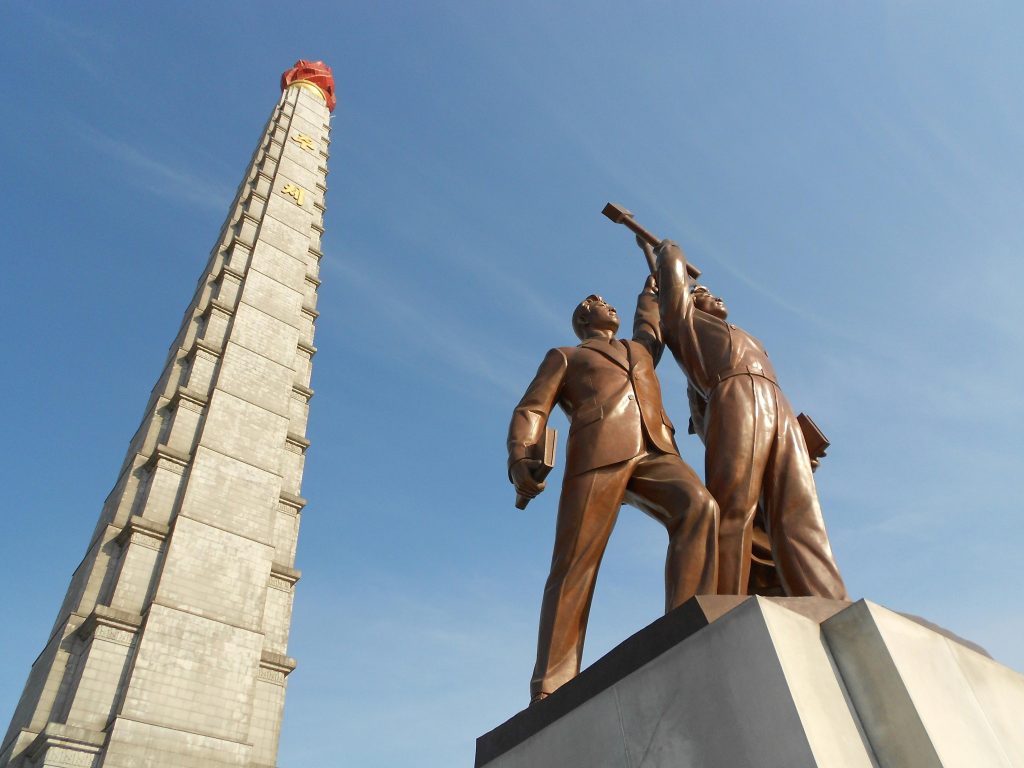
- Historical landmarks: Arch of Triumph, Juche Tower, Kumsusan Palace of the Sun.
- Adventure tourism: hiking areas around Paektu; limited access.
- Visa: must be arranged via state-approved agencies.
- Transportation: state-run airlines, trains, limited public transport.
Practical Information
- Safety: controlled environment for tourists; independent travel not permitted.
- Healthcare: limited facilities; basic treatments available.
- Emergency numbers: vary; access may be restricted.
- Plug type: C & F; Voltage: 220V.
- Internet: not accessible to general public; controlled intranet.
- Best time to visit: spring and autumn.
- Budget: mid to high due to fixed tourism packages.
Sports, Entertainment & Notable People
- National sport: Mass gymnastics; football widely played.
- Popular sports: football, gymnastics, weightlifting, table tennis.
- Famous athletes: Jong Song-ok (marathon), Om Yun-chol (weightlifting).
- Traditional entertainment: mass games, folk music, operatic performances.
- Notable historical figures: ancient Goguryeo rulers and cultural heroes.
Neighboring Countries of North Korea
North Korea shares land borders with the following countries:
- 1,416 km with China
- 238 km with South Korea
- 19 km with Russia
Famous For
- Mount Paektu volcanic landscapes.
- Pyongyang architecture and monuments.
- Arirang Mass Games.
- Strict political system and isolation.
- Korean cuisine traditions.
- Historic Goguryeo sites.
- State-run cultural performances.
Sources
- World Bank
- United Nations (UN Data)
- IMF Estimates
- CIA World Factbook
- International Research Reports
- Official Publications