
Random Country Generator 🌎
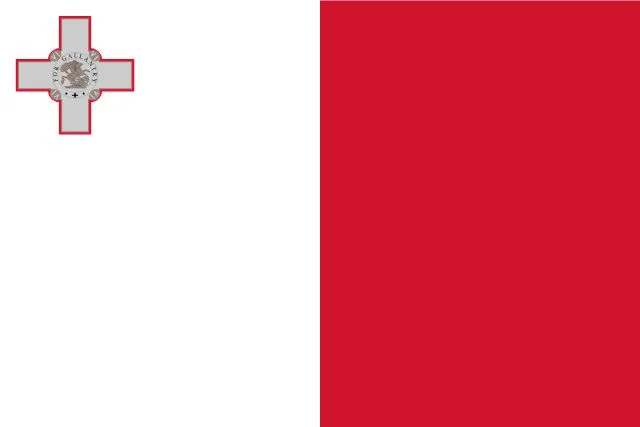
Malta
🏙️ Capital city:
Valletta
📈 Country population:
560,000
🗺️ Country area:
316 km²
Core Facts / Infobox
Present this as a clean two-column table containing accurate and verified national facts. Include only fields with real data.
| Official Name | Republic of Malta |
| Common Name | Malta |
| Political Status | Sovereign unitary parliamentary republic |
| ISO Codes | MT, MLT, 470 |
| Internet TLD | .mt |
| Calling Code | +356 |
| Capital City | Valletta |
| Largest City | Saint Paul’s Bay (by population) |
| Coordinates | 35.90° N, 14.51° E |
| Time Zone | UTC+1 (CET), UTC+2 (CEST) |
| Population (2025 est.) | ~560,000 |
| Area | 316 km² |
| Population Density | ~1,770 per km² |
| Languages | Maltese, English (official) |
| Currency | Euro (EUR) |
| Driving Side | Left |
| GDP (Nominal) | ~USD 22 billion |
| GDP Per Capita | ~USD 39,000 |
| HDI | Very High |
| Life Expectancy | ~83 years |
| Continent & Subregion | Europe — Southern Europe (Mediterranean) |
| National Day | Independence Day (21 September) |
| National Anthem | L-Innu Malti |
Geography & Environment
- Island country in the central Mediterranean Sea.
- Located south of Italy and north of Libya.
- Archipelago consisting mainly of Malta, Gozo, and Comino.
- Rocky coastline with natural harbors.
- Climate: Mediterranean with hot summers and mild winters.
Demographics
- Population: ~560,000.
- One of the most densely populated countries in Europe.
- Major urban areas: Valletta metropolitan region, Sliema, Birkirkara.
- Growing expatriate and foreign workforce population.
- Religion: Roman Catholic Christianity (majority).
History
- Ancient settlement dating back over 7,000 years.
- Ruled by Phoenicians, Romans, Arabs, Normans, and the Knights of St. John.
- British rule from 1800 to 1964.
- Gained independence in 1964.
- Became a republic in 1974.
- Member of the European Union since 2004.
Government & Politics
- Political system: Parliamentary republic.
- Head of State: President of Malta.
- Head of Government: Prime Minister.
- Legislature: unicameral House of Representatives.
- Administrative divisions: local councils.
Economy
- High-income, service-based economy.
- Key sectors: financial services, tourism, gaming, manufacturing.
- Main exports: machinery, pharmaceuticals, electronics.
- Strengths: strategic location, EU membership, English-speaking workforce.
- Weaknesses: limited natural resources, high population density.
Culture & Society
- Unique blend of Southern European and North African influences.
- Maltese language derived from Arabic with Romance influences.
- Strong religious and festival traditions.
Food & Cuisine
- Traditional dishes: fenek (rabbit stew), pastizzi, bragioli.
- Cuisine influenced by Italian and Mediterranean traditions.
- Strong use of seafood, olive oil, and pastries.
Education & Institutions
- High literacy rate.
- Free public education including university.
- Main institution: University of Malta.
Tourism
- Major Mediterranean tourism destination.
- Top attractions: Valletta (UNESCO), Mdina, Blue Lagoon, Gozo.
- Popular for history, diving, and beach tourism.
Practical Information
- Emergency number: 112.
- Plug type: G; Voltage: 230V.
- Well-developed transport and digital services.
Sports, Entertainment & Notable People
- Popular sports: football, water polo.
- Strong tradition in water polo.
- Notable figures: Daphne Caruana Galizia, Ira Losco.
Neighboring Countries of Malta
Malta does not share any land borders. Its maritime neighbours include Italy to the north, Libya to the south, and Tunisia to the west.
Famous For
- Ancient temples and UNESCO heritage sites.
- Mediterranean climate and clear waters.
- Strategic maritime history.
- English-speaking EU island nation.
Sources
- World Bank
- United Nations (UN Data)
- IMF
- CIA World Factbook
- National Statistics Office Malta