
Random Country Generator 🌎
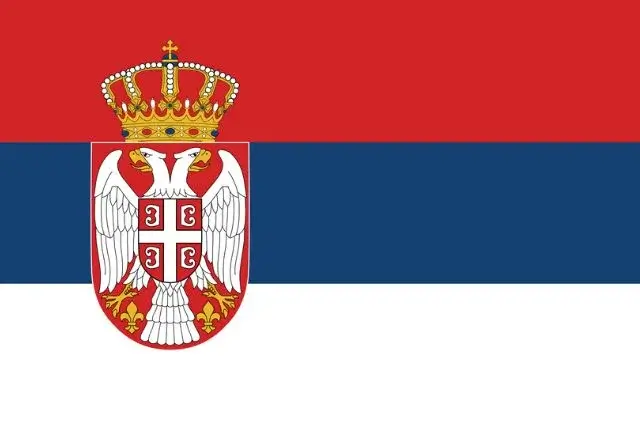
Serbia
🏙️ Capital city:
Belgrade
📈 Country population:
6.6 million
🗺️ Country area:
88,361 km²
Core Facts / Infobox
Present this as a clean two-column table containing accurate and verified national facts. Include only fields with real data.
| Official Name | Republic of Serbia |
| Common Name | Serbia |
| Political Status | Sovereign unitary parliamentary republic |
| ISO Codes | RS, SRB, 688 |
| Internet TLD | .rs |
| Calling Code | +381 |
| Capital City | Belgrade |
| Largest City | Belgrade |
| Coordinates | 44.81° N, 20.46° E |
| Time Zone | UTC+1 (CET), UTC+2 (CEST) |
| Population (2025 est.) | ~6.6 million |
| Area | 88,361 km² |
| Population Density | ~75 per km² |
| Languages | Serbian (official) |
| Currency | Serbian Dinar (RSD) |
| Driving Side | Right |
| GDP (Nominal) | ~USD 80 billion |
| GDP Per Capita | ~USD 12,000 |
| HDI | High |
| Life Expectancy | ~75 years |
| Continent & Subregion | Europe — Southeastern Europe (Balkans) |
| National Day | Statehood Day (15 February) |
| National Anthem | Bože pravde |
Geography & Environment
- Landlocked country in Southeastern Europe.
- Borders Hungary, Romania, Bulgaria, North Macedonia, Croatia, Bosnia and Herzegovina, and Montenegro.
- Landscape ranges from plains in the north to mountains and hills in the south.
- Major rivers: Danube, Sava, Morava, Tisza.
- Climate: continental in the north, more mountainous and continental-mediterranean in the south.
Demographics
- Population: ~6.6 million.
- Urban population concentrated in Belgrade and regional centers.
- Major cities: Belgrade, Novi Sad, Niš, Kragujevac.
- Ethnic groups: Serbs (majority), Hungarians, Bosniaks, Roma, others.
- Religion: Eastern Orthodox Christianity (majority), Roman Catholicism, Islam, others.
History
- Medieval Serbian states emerged in the Middle Ages.
- Reached peak under the Serbian Empire in the 14th century.
- Centuries under Ottoman rule.
- Modern Serbian state formed in the 19th century.
- Part of Yugoslavia during most of the 20th century.
- Independent republic since 2006.
Government & Politics
- Political system: Parliamentary republic.
- Head of State: President of Serbia.
- Head of Government: Prime Minister.
- Legislature: unicameral National Assembly.
- Administrative divisions: districts and municipalities.
Economy
- Upper-middle-income economy.
- Key sectors: manufacturing, agriculture, energy, services.
- Main industries: automotive components, machinery, food processing.
- Main exports: machinery, vehicles, agricultural products.
- Strengths: strategic location, diversified economy.
- Weaknesses: emigration, demographic decline.
Culture & Society
- Strong South Slavic cultural traditions.
- Rich heritage in music, folklore, and literature.
- Famous figures: Nikola Tesla, Ivo Andrić.
Food & Cuisine
- Traditional dishes: ćevapi, sarma, pljeskavica.
- Balkan cuisine with Ottoman and Central European influences.
- Strong grilling and bread traditions.
Education & Institutions
- High literacy rate.
- Public universities in Belgrade, Novi Sad, Niš.
- Strong technical and scientific education base.
Tourism
- Growing cultural and city tourism.
- Top attractions: Belgrade, Novi Sad, monasteries, national parks.
- Festivals and nightlife tourism.
Practical Information
- Emergency number: 112.
- Plug type: C/F; Voltage: 230V.
- Developing transport infrastructure.
Sports, Entertainment & Notable People
- Popular sports: basketball, football, tennis.
- Strong international success in basketball and tennis.
- Notable figures: Novak Djokovic, Nikola Jokić.
Neighboring Countries of Serbia
Serbia shares land borders with Bosnia and Herzegovina 302 km, Bulgaria 318 km, Croatia 241 km, Hungary 151 km, Kosovo 352 km, Montenegro 124 km, North Macedonia 62 km, and Romania 476 km.
Famous For
- Belgrade nightlife and festivals.
- Medieval monasteries and cultural heritage.
- Strong sports achievements.
- Balkan cuisine and hospitality.
Sources
- World Bank
- United Nations (UN Data)
- IMF
- CIA World Factbook
- Statistical Office of the Republic of Serbia