
Random Country Generator 🌎
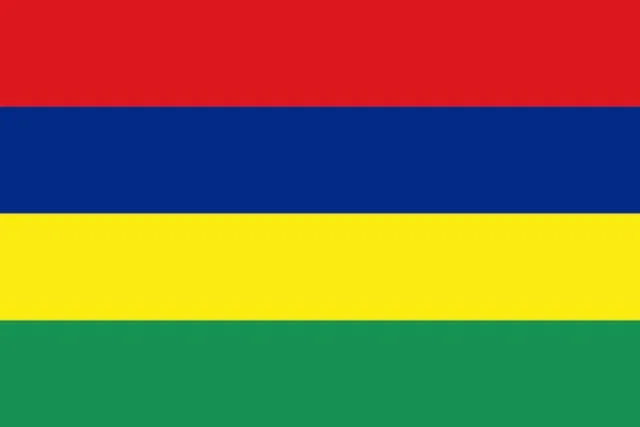
Mauritius
🏙️ Capital city:
Port Louis
📈 Country population:
1.3 million
🗺️ Country area:
2,040 km²
Core Facts / Infobox
Present this as a clean two-column table containing accurate and verified national facts. Include only fields with real data.
| Official Name | Republic of Mauritius |
| Common Name | Mauritius |
| Political Status | Sovereign parliamentary republic |
| ISO Codes | MU, MUS, 480 |
| Internet TLD | .mu |
| Calling Code | +230 |
| Capital City | Port Louis |
| Largest City | Port Louis |
| Coordinates | 20.35° S, 57.55° E |
| Time Zone | UTC+4 (Mauritius Time) |
| Population (2025 est.) | ~1.3 million |
| Area | 2,040 km² |
| Population Density | ~640 per km² |
| Languages | English (official); French and Mauritian Creole widely spoken |
| Currency | Mauritian Rupee (MUR) |
| Driving Side | Left |
| GDP (Nominal) | ~USD 14 billion |
| GDP Per Capita | ~USD 11,000 |
| HDI | High |
| Life Expectancy | ~75 years |
| Continent & Subregion | Africa — East Africa (Indian Ocean) |
| National Day | Independence Day (12 March) |
| National Anthem | Motherland |
Geography & Environment
- Island nation in the Indian Ocean, east of Madagascar.
- Volcanic origin with central plateau and coastal plains.
- Surrounded by coral reefs and lagoons.
- Includes Rodrigues Island and outer islands.
- Climate: tropical maritime with cyclone season (Nov–Apr).
Demographics
- Population: ~1.3 million.
- Ethnically diverse: Indo-Mauritian, Creole, Sino-Mauritian, Franco-Mauritian.
- Highly urbanized along the coast.
- Religions: Hinduism, Christianity, Islam, Buddhism.
History
- Uninhabited until European settlement.
- Colonized successively by the Dutch, French, and British.
- Became a British colony in 1810.
- Gained independence in 1968.
- Transitioned to a republic in 1992.
Government & Politics
- Political system: Parliamentary republic.
- Head of State: President.
- Head of Government: Prime Minister.
- Legislature: unicameral National Assembly.
Economy
- Upper-middle-income diversified economy.
- Key sectors: financial services, tourism, manufacturing, ICT.
- Main exports: textiles, sugar, seafood.
- Strengths: stable institutions, diversified economy.
- Weaknesses: small domestic market, climate vulnerability.
Culture & Society
- Multicultural society with strong social cohesion.
- Festivals from multiple religions celebrated nationally.
- Creole culture influences music and cuisine.
Food & Cuisine
- Fusion of Indian, African, Chinese, and French influences.
- Popular dishes: dholl puri, biryani, rougaille.
- Seafood and spices widely used.
Education & Institutions
- High literacy and free education system.
- Major institutions: University of Mauritius, University of Technology Mauritius.
Tourism
- Major global beach and resort destination.
- Attractions include coral lagoons, beaches, and nature parks.
- Strong focus on sustainable tourism.
Practical Information
- Emergency number: 999.
- Plug type: C/G; Voltage: 230V.
- Well-developed infrastructure and healthcare.
Sports, Entertainment & Notable People
- Popular sports: football, athletics, boxing.
- Strong regional presence in athletics.
- Notable figures: Seewoosagur Ramgoolam.
Geographic Location of Mauritius
Mauritius is an island nation located in the southwestern Indian Ocean. Its closest neighbor is
Réunion, a French overseas region approximately 220 km to the southwest.
To the west, about 800 km away, lies
Madagascar.
Mauritius is geographically part of the Mascarene Islands, which include Réunion and Rodrigues, and it lies east of the African continent in the Indian Ocean.
Famous For
- White-sand beaches and lagoons.
- Multicultural society.
- Stable democracy.
- Dodo (extinct bird).
Sources
- World Bank
- United Nations (UN Data)
- IMF
- CIA World Factbook
- Statistics Mauritius