
Random Country Generator 🌎
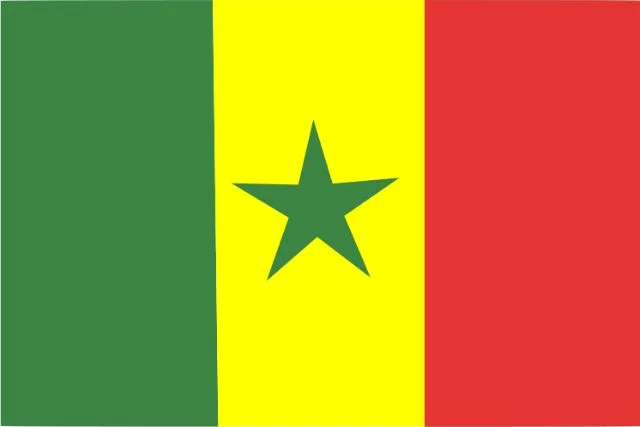
Senegal
🏙️ Capital city:
Dakar
📈 Country population:
19 million
🗺️ Country area:
196,722 km²
Core Facts / Infobox
Present this as a clean two-column table containing accurate and verified national facts. Include only fields with real data.
| Official Name | Republic of Senegal |
| Common Name | Senegal |
| Political Status | Sovereign unitary presidential republic |
| ISO Codes | SN, SEN, 686 |
| Internet TLD | .sn |
| Calling Code | +221 |
| Capital City | Dakar |
| Largest City | Dakar |
| Coordinates | 14.50° N, 14.45° W |
| Time Zone | UTC+0 (Greenwich Mean Time) |
| Population (2025 est.) | ~19 million |
| Area | 196,722 km² |
| Population Density | ~97 per km² |
| Languages | French (official); Wolof, Pulaar, Serer and others |
| Currency | West African CFA Franc (XOF) |
| Driving Side | Right |
| GDP (Nominal) | ~USD 32 billion |
| GDP Per Capita | ~USD 1,700 |
| HDI | Medium |
| Life Expectancy | ~67 years |
| Continent & Subregion | Africa — West Africa |
| National Day | Independence Day (4 April) |
| National Anthem | Pincez Tous vos Koras, Frappez les Balafons |
Geography & Environment
- Located on the Atlantic coast of West Africa.
- Borders Mauritania, Mali, Guinea, Guinea-Bissau, and The Gambia.
- Mostly flat terrain with savanna and Sahel landscapes.
- Major rivers include the Senegal and Casamance.
- Climate: tropical with wet and dry seasons.
Demographics
- Population: ~19 million.
- Major ethnic groups: Wolof, Pulaar, Serer, Mandinka.
- Highly urbanized around Dakar.
- Religions: Islam (majority), Christianity, traditional beliefs.
History
- Part of historic West African kingdoms and trade routes.
- Key center of French colonial administration in West Africa.
- Gained independence from France in 1960.
- Known for long-standing political stability.
- Peaceful democratic transitions since independence.
Government & Politics
- Political system: Presidential republic.
- Head of State & Government: President.
- Legislature: unicameral National Assembly.
- Administrative divisions: regions and departments.
Economy
- Lower-middle-income developing economy.
- Key sectors: services, agriculture, fishing, mining.
- Main exports: fish products, peanuts, phosphates, gold.
- Strengths: political stability, coastal access.
- Weaknesses: unemployment, climate risks.
Culture & Society
- Strong traditions in music, dance, and oral storytelling.
- Globally influential music styles such as mbalax.
- Teranga (hospitality) is a core national value.
Food & Cuisine
- Staple foods: rice, millet, fish.
- Traditional dishes: thieboudienne, yassa, maafé.
- Cuisine heavily features seafood and spices.
Education & Institutions
- Education system influenced by French model.
- Major institutions: Cheikh Anta Diop University.
Tourism
- Important cultural and coastal tourism destination.
- Top attractions: Gorée Island (UNESCO), Dakar, Saint-Louis.
- Known for music, beaches, and history.
Practical Information
- Emergency number: 17 (police).
- Plug type: C/E/K; Voltage: 230V.
- Good transport and telecom infrastructure in cities.
Sports, Entertainment & Notable People
- Popular sports: football, wrestling.
- Wrestling is a major national sport.
- Notable figures: Léopold Sédar Senghor, Sadio Mané.
Neighboring Countries of Senegal
Senegal is located in West Africa and borders five countries: The Gambia to the west, Guinea to the southeast, Guinea-Bissau to the northwest, Mali to the east, and Mauritania to the north. To the west, it is bordered by the Atlantic Ocean.
Famous For
- Political stability.
- Teranga hospitality.
- Thieboudienne cuisine.
- Music and wrestling culture.
Sources
- World Bank
- United Nations (UN Data)
- IMF
- CIA World Factbook
- National Agency of Statistics and Demography (Senegal)