
Random Country Generator 🌎
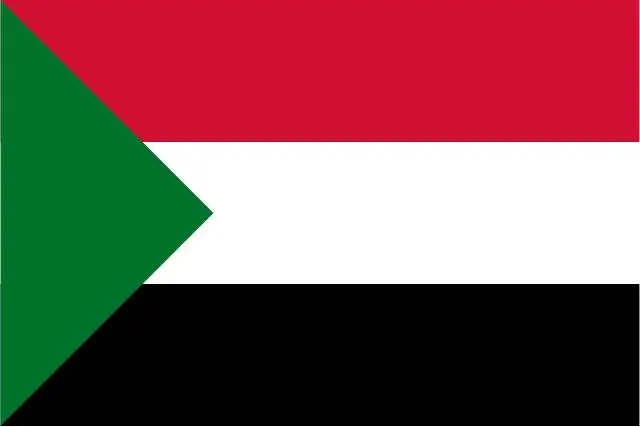
Sudan
🏙️ Capital city:
Khartoum
📈 Country population:
49 million
🗺️ Country area:
1,861,484 km²
Core Facts / Infobox
Present this as a clean two-column table containing accurate and verified national facts. Include only fields with real data.
| Official Name | Republic of the Sudan |
| Common Name | Sudan |
| Political Status | Sovereign republic (transitional / conflict-affected) |
| ISO Codes | SD, SDN, 729 |
| Internet TLD | .sd |
| Calling Code | +249 |
| Capital City | Khartoum |
| Largest City | Omdurman |
| Coordinates | 15.60° N, 32.53° E |
| Time Zone | UTC+2 (Central Africa Time) |
| Population (2025 est.) | ~49 million |
| Area | 1,861,484 km² |
| Population Density | ~26 per km² |
| Languages | Arabic, English (official) |
| Currency | Sudanese Pound (SDG) |
| Driving Side | Right |
| GDP (Nominal) | ~USD 40 billion |
| GDP Per Capita | ~USD 800 |
| HDI | Low |
| Life Expectancy | ~65 years |
| Continent & Subregion | Africa — North-East Africa |
| National Day | Independence Day (1 January) |
| National Anthem | We Are the Army of God and of Our Land |
Geography & Environment
- Located in northeastern Africa.
- Borders Egypt, Libya, Chad, Central African Republic, South Sudan, Ethiopia, and Eritrea.
- Dominated by arid and semi-arid landscapes.
- The Blue Nile and White Nile meet at Khartoum.
- Climate ranges from desert in the north to savanna in the south.
Demographics
- Population: ~49 million.
- Ethnically and culturally diverse.
- Major cities: Khartoum, Omdurman, Port Sudan.
- Religions: Islam (majority), Christianity and traditional beliefs.
History
- Home to ancient Nubian civilizations.
- Ruled by various empires including Egyptian, Ottoman, and British.
- Gained independence in 1956.
- South Sudan seceded in 2011.
- Recent history marked by political instability and armed conflict.
Government & Politics
- Political system: Republic under transitional authority.
- State institutions affected by ongoing conflict.
- Administrative divisions: states.
Economy
- Low-income developing economy.
- Key sectors: agriculture, gold mining, services.
- Main exports: gold, livestock, oil (limited after 2011).
- Strengths: agricultural potential.
- Weaknesses: conflict, inflation, infrastructure damage.
Culture & Society
- Blend of Arab and African cultural traditions.
- Strong oral storytelling and music heritage.
- Hospitality central to social life.
Food & Cuisine
- Staple foods: sorghum, millet, wheat.
- Traditional dishes: kisra, ful medames, aseeda.
- Cuisine influenced by Middle Eastern and African flavors.
Education & Institutions
- Education system under strain due to conflict.
- Major institutions: University of Khartoum.
Tourism
- Significant archaeological heritage.
- Sites include Nubian pyramids of Meroë.
- Tourism limited by security conditions.
Practical Information
- Emergency services availability varies by region.
- Plug type: C/D; Voltage: 230V.
- Infrastructure heavily impacted by conflict.
Sports, Entertainment & Notable People
- Popular sports: football.
- Strong community-level sporting culture.
- Notable figures: Tayeb Salih.
Neighboring Countries of Sudan
Sudan is located in northeastern Africa and borders seven countries: Central African Republic to the southwest, Chad to the west, Egypt to the north, Eritrea to the northeast, Ethiopia to the southeast, Libya to the northwest, and South Sudan to the south. To the northeast, it is bordered by the Red Sea.
Famous For
- Nubian pyramids and ancient civilizations.
- Confluence of the Blue and White Nile.
- Arab–African cultural identity.
Sources
- World Bank
- United Nations (UN Data)
- IMF
- CIA World Factbook
- Central Bureau of Statistics (Sudan)