Random Country Generator 🌎

India
🏙️ Capital city:
New Delhi
📈 Country population:
1.44 billion, ranks first globally.
🗺️ Country area:
3,287,263 km²
Core Facts / Infobox
Below is India’s verified national infobox containing the most authoritative and trusted key facts.
| Field | Details |
|---|---|
| Official Name | Republic of India |
| Common Name | India |
| ISO Codes | IN (ISO2), IND (ISO3) |
| Internet TLD | .in |
| Calling Code | +91 |
| Capital City | New Delhi |
| Largest City | Mumbai |
| Coordinates of Capital | 28.6139° N, 77.2090° E |
| Time Zone | IST (UTC+5:30) |
| Population (2024 est.) | ~1.44 billion |
| Area | 3,287,263 km² |
| Population Density | ~464/km² |
| Official Languages | Hindi and English (for official purposes) |
| Widely Spoken Languages | Hindi, Bengali, Telugu, Marathi, Tamil, Urdu, Gujarati, Kannada, Odia, Malayalam |
| Currency | Indian Rupee (INR) |
| Driving Side | Left |
| GDP (Nominal) | ~$3.9 Trillion |
| GDP (PPP) | ~$13 Trillion |
| GDP Per Capita | ~$2,700 |
| GDP Growth | ~6–7% |
| HDI (2023) | 0.644 |
| Literacy Rate | ~77% |
| Life Expectancy | ~70 years |
| Unemployment | ~4–6% |
| Inflation | ~5–6% |
| Current Leaders | President: Droupadi Murmu, Prime Minister: Narendra Modi |
| Continent & Subregion | Asia — South Asia |
| National Day | 26 January (Republic Day) |
| National Sport | Field Hockey (historic), Cricket (most popular) |
| National Dish | No official dish; Khichdi often symbolically referenced |
| National Anthem | “Jana Gana Mana” |
Geography & Environment
- India is located in South Asia, bordered by Pakistan, China, Nepal, Bhutan, Bangladesh, and Myanmar, with the Arabian Sea, Bay of Bengal, and Indian Ocean forming its coastline.
- It features the Himalayan mountain range in the north, the fertile Indo-Gangetic plains, the Thar Desert, the Western & Eastern Ghats, and the Deccan Plateau.
- Major rivers include the Ganges, Brahmaputra, Yamuna, Godavari, Narmada, and Krishna.
- Climate varies from tropical in the south to temperate in the north; the monsoon season (June–September) defines much of India’s rainfall.
- Best time to visit is typically October to March.
- India has diverse wildlife including tigers, elephants, rhinoceroses, leopards, and vast bird species.
- Environmental concerns include air pollution, water scarcity, deforestation, and climate-induced weather extremes.
Demographics
- India’s population exceeds 1.4 billion, making it the most populous country in the world.
- It has a young demographic with a median age around 29 years.
- Urbanization is increasing; major cities include Mumbai, Delhi, Bengaluru, Kolkata, Chennai, Hyderabad, and Pune.
- Ethnic composition is highly diverse, including Indo-Aryan, Dravidian, and numerous tribal groups.
- Hinduism is the majority religion, followed by Islam, Christianity, Sikhism, Buddhism, and Jainism.
- Literacy rate is approximately 77% with continuing improvements.
History
- India is home to the ancient Indus Valley Civilization, one of the oldest in the world.
- It witnessed major empires including the Maurya, Gupta, Mughal, and various South Indian kingdoms.
- European colonization began in the 1600s; India came under British rule in the 19th century.
- The independence movement was led by figures like Mahatma Gandhi, Jawaharlal Nehru, and Sardar Patel.
- India gained independence on 15 August 1947, becoming a republic in 1950.
- Modern history features economic liberalization (1991), technological modernization, and rapid growth in global influence.
Government & Politics
- India is a federal parliamentary democratic republic.
- The President is the ceremonial head of state, while the Prime Minister holds executive power.
- The Parliament consists of the Lok Sabha and Rajya Sabha.
- India is divided into 28 states and 8 union territories.
- It is a key member of organizations including the UN, G20, BRICS, SCO, and the Commonwealth.
- India maintains a large and powerful military force with nuclear capability.
Economy
- India has one of the world’s fastest-growing economies, driven by technology, manufacturing, agriculture, and services.
- Major exports include petroleum products, machinery, gems & jewelry, pharmaceuticals, textiles, and IT services.
- India is a global leader in IT & software services, pharmaceuticals, and space technology.
- Agriculture employs a large population, producing rice, wheat, sugarcane, cotton, tea, and spices.
- Challenges include unemployment, inflation, infrastructure gaps, and socioeconomic inequality.
- GDP sectors: ~52% services, ~25% industry, ~18% agriculture.
Culture & Society
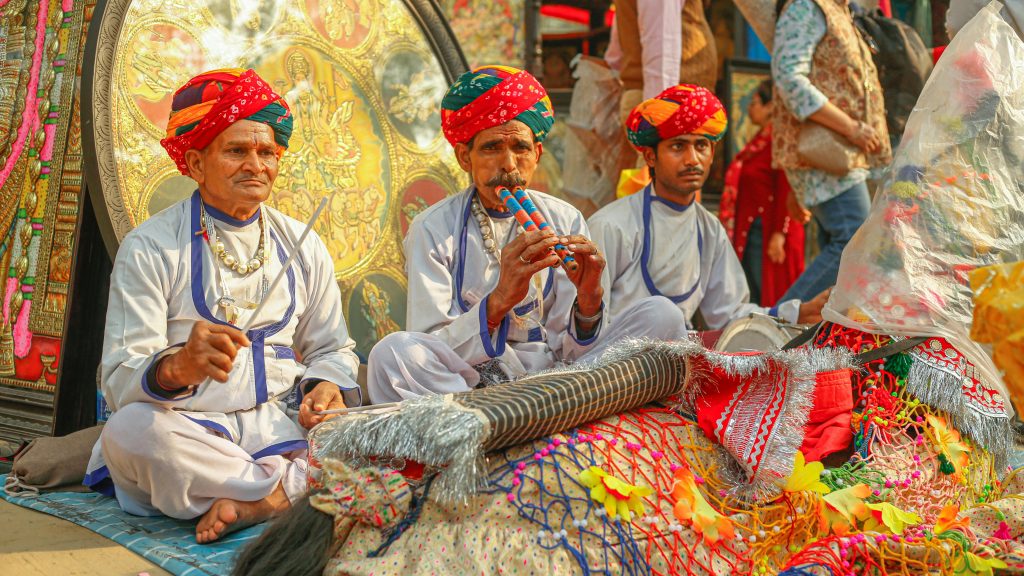
- India is known for its cultural richness, diversity, and ancient traditions.
- Major festivals include Diwali, Holi, Eid, Navratri, Dussehra, Pongal, and Onam.
- Traditional clothing includes saree, salwar kameez, and kurta.
- India has deep contributions in music, dance, art, literature, and cinema.
- Bollywood is one of the world’s largest film industries.
- Languages exceed 120+, with Hindi widely spoken and English used for administration.
Food & Cuisine
- India’s cuisine is globally renowned for its diversity and flavors.
- Symbolic national dish is Khichdi, though unofficial.
- Famous dishes include Biryani, Masala Dosa, Butter Chicken, Rogan Josh, Paneer Tikka, Thali, and Chole Bhature.
- Street food is a highlight, featuring pani puri, chaat, vada pav, and samosas.
- Popular drinks include chai, lassi, coconut water, and filter coffee.
Education & Institutions
- India has one of the world’s largest education systems.
- Medium of instruction varies: English, Hindi, and regional languages.
- Literacy rate is around 77%.
- Top universities include IITs, IIMs, AIIMS, Delhi University, JNU, and IISc Bengaluru.
- India is a global hub for engineering, medicine, and IT education.
Tourism
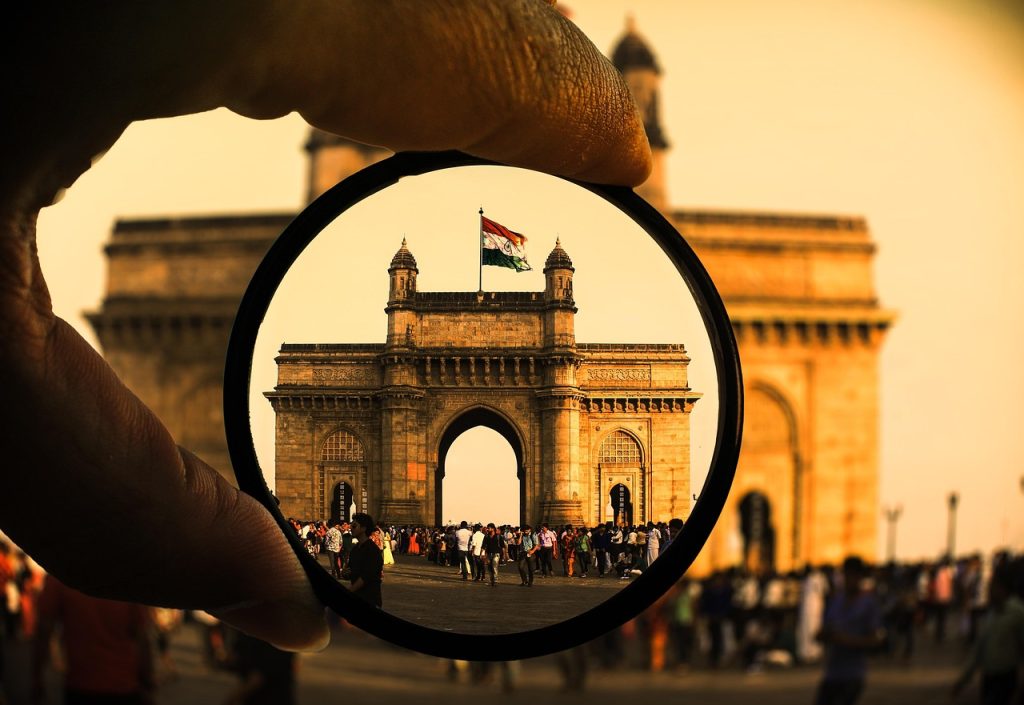
- Top attractions include the Taj Mahal, Jaipur, Goa, Kerala, Ladakh, Varanasi, Rajasthan forts, and Himalayan regions.
- UNESCO sites include Qutub Minar, Red Fort, Elephanta Caves, Hampi, Khajuraho Temples, and Sundarbans.
- Popular natural attractions: Himalayan landscapes, beaches, backwaters, deserts, and forests.
- Adventure tourism includes trekking, skiing, river rafting, and desert safaris.
- India offers eVisa for many nationalities.
- Transport options: domestic flights, railways, metro systems, buses, taxis, and ride-sharing.
Practical Information
- Safety varies, with major cities generally safe for tourists.
- Healthcare quality is strong in metropolitan hospitals.
- Emergency numbers: 112 (Universal), 100 (Police), 102 (Ambulance).
- Plug types: C, D, M; voltage: 230V.
- Internet speed is improving rapidly with 4G/5G expansion.
- Best time to visit: October to March.
- Budget: low ($20–40/day), mid ($40–120/day), luxury ($150+/day).
Sports, Entertainment & Notable People
- Cricket is the most popular sport; others include hockey, football, kabaddi, and badminton.
- Famous cricketers: Sachin Tendulkar, Virat Kohli, MS Dhoni.
- Renowned personalities: Mahatma Gandhi, APJ Abdul Kalam, Rabindranath Tagore, Amitabh Bachchan.
- Nobel laureates include Rabindranath Tagore, C.V. Raman, Amartya Sen, Kailash Satyarthi.
Neighboring Countries of India
India shares land borders with the following countries:
- 4,096 km with
Bangladesh - 578 km with
Bhutan - 3,488 km with
China - 1,643 km with
Myanmar - 1,752 km with
Nepal - 3,320 km with
Pakistan - 106 km with
Afghanistan
Famous For
- Taj Mahal
- Bollywood
- Yoga & Ayurveda
- Spices & Cuisine
- Himalayas
- IT & Software Powerhouse
- World’s Largest Democracy
- Cultural Diversity
Sources
- World Bank
- United Nations (UN Data)
- IMF
- CIA World Factbook
- National Statistical Office of India
- Government of India