
Random Country Generator 🌎
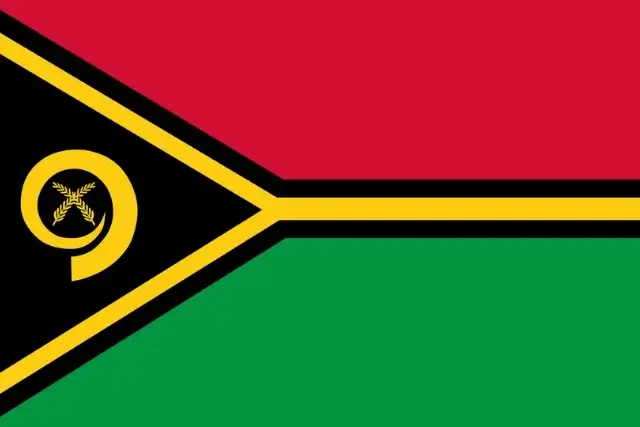
Vanuatu
🏙️ Capital city:
Port Vila
📈 Country population:
340,000
🗺️ Country area:
12,190 km²
Core Facts / Infobox
Present this as a clean two-column table containing accurate and verified national facts. Include only fields with real data.
| Official Name | Republic of Vanuatu |
| Common Name | Vanuatu |
| ISO Codes | VU, VUT, 548 |
| Internet TLD | .vu |
| Calling Code | +678 |
| Capital City | Port Vila |
| Largest City | Port Vila |
| Coordinates | 17.7° S, 168.3° E |
| Time Zone | UTC+11 |
| Population (2025 est.) | ~340,000 |
| Area | 12,190 km² |
| Population Density | ~28 per km² |
| Languages | Bislama, English, French |
| Currency | Vanuatu Vatu (VUV) |
| Driving Side | Right |
| GDP (Nominal) | ~USD 1 billion |
| GDP Per Capita | ~USD 3,000 |
| HDI | 0.603 (Medium) |
| Literacy Rate | ~85% |
| Life Expectancy | ~71 years |
| Continent & Subregion | Oceania — Melanesia |
| National Day | 30 July (Independence Day) |
| National Sport | Soccer |
| National Dish | Lap Lap |
| National Anthem | Yumi, Yumi, Yumi |
Geography & Environment
- Vanuatu is an archipelago of about 83 volcanic islands in the South Pacific, located east of Australia and north of New Caledonia.
- Geography includes rugged mountains, active volcanoes, coral reefs, blue holes, and tropical forests.
- Notable islands: Efate, Espiritu Santo, Tanna, Pentecost, Malekula.
- Climate: tropical and humid, with a hot wet season (November–April) and a cooler dry season (May–October).
- Best time to visit: May–October.
- Natural highlights: Mount Yasur (one of the world’s most active accessible volcanoes), Million Dollar Point, Champagne Beach.
- National parks: Vatthe Conservation Area, Malekula Cultural Reserves.
- Wildlife includes fruit bats, birds of paradise, dugongs, sea turtles, and rich marine life.
- Environmental challenges: cyclones, earthquakes, volcanic eruptions, rising sea levels.
Demographics
- Total population: ~340,000.
- Median age: ~23 years.
- Urban population: ~25%.
- Ethnic groups: predominantly Melanesian (Ni-Vanuatu), with Polynesian and European minorities.
- Religions: Christianity (majority), traditional beliefs.
- Literacy rate: ~85%.
- Major cities: Port Vila, Luganville.
History
- The earliest settlers arrived over 3,000 years ago, part of the Lapita cultural group.
- Europeans first arrived in the 17th century, later claiming the islands.
- In 1906, the UK and France established the unique joint colonial rule known as the “Condominium of the New Hebrides.”
- Vanuatu gained full independence on 30 July 1980.
- Modern history features democratic governance and cultural preservation efforts.
Government & Politics
- Government type: Parliamentary republic.
- Executive: President (ceremonial), Prime Minister (head of government).
- Legislature: unicameral Parliament.
- Judiciary: Supreme Court and Magistrates’ Courts.
- Administrative divisions: 6 provinces across the island groups.
- Key issues: climate resilience, economic development, infrastructure, disaster preparedness.
Economy
- A small but growing economy relying on agriculture, tourism, services, and offshore financial activities.
- Major industries: tourism, kava production, fishing, forestry, copra, cocoa.
- Main exports: kava, copra, beef, cocoa, timber, fish.
- Main imports: fuel, machinery, manufactured goods, food products.
- Strengths: tourism appeal, agricultural potential, natural beauty.
- Weaknesses: disaster vulnerability, geographic isolation, limited infrastructure.
- GDP sectors: Agriculture (~20%), Industry (~10%), Services (~70%).
Culture & Society
- Vanuatu has strong Melanesian cultural traditions, with more than 100 Indigenous languages.
- Custom (kastom) plays a major role in village life, including ceremonies, dance, and rituals.
- Festivals: Naghol (land diving in Pentecost), independence celebrations, cultural festivals.
- Traditional dress varies by island and occasion, often featuring grass skirts and body decorations.
- Music includes bamboo instruments, drums, and island reggae.
- Common languages: Bislama, English, French.
Food & Cuisine
- National dish: Lap Lap — grated root vegetables baked with coconut milk and meat or fish.
- Common foods: taro, yam, cassava, bananas, coconut dishes.
- Street foods: grilled fish, coconut bread, banana fritters.
- Beverages: kava, fresh juices, coconut water.
- Cuisine is organic and traditional, focusing on natural local ingredients.
Education & Institutions
- Medium of instruction: English and French; Bislama used widely in communication.
- Literacy rate: ~85%.
- Top institutions: University of the South Pacific (USP – Emalus Campus), Vanuatu Institute of Technology.
- Key fields: law, agriculture, tourism, environmental science.
Tourism
- Top destinations: Port Vila, Espiritu Santo, Tanna Island, Mystery Island, Pentecost Island.
- Natural attractions: Champagne Beach, Blue Holes of Santo, Mount Yasur volcano, coral reefs, caves.
- Adventure tourism: volcano trekking, scuba diving, snorkeling, zip-lining, land diving.
- Historical sites: WWII relics, cultural villages, museums.
- Visa: visa-free or visa-on-arrival for many nationalities.
- Transportation: domestic flights, ferries, buses, taxis.
Practical Information
- Safety: generally safe; caution during natural disasters.
- Healthcare: basic services in Port Vila; limited on outer islands.
- Emergency numbers: Police 22222, Fire 22333, Ambulance 115.
- Plug type: I; Voltage: 220–240V.
- Internet: improving; moderate speeds.
- Best time to visit: May–October.
- Budget: moderate; remote islands may cost more to access.
Sports, Entertainment & Notable People
- Popular sports: soccer, rugby, volleyball, cricket.
- Achievements: strong regional ranking in beach volleyball.
- Notable people: Marie-Lyne Carreau (athlete), Ralph Regenvanu (artist and politician).
- Cultural entertainment: kastom dances, storytelling, music festivals.
Neighboring Countries of Vanuatu
Vanuatu does not share any land borders. Its maritime neighbours include New Caledonia, Solomon Islands, Fiji, Australia, and New Zealand.
Famous For
- Mount Yasur — one of the world’s most active volcanoes.
- Land diving of Pentecost Island (inspiration for bungee jumping).
- Crystal-clear blue holes.
- Beautiful beaches and coral reefs.
- Strong Melanesian culture and kastom traditions.
- Adventure and eco-tourism.
Sources
- World Bank
- United Nations (UN Data)
- IMF
- CIA World Factbook
- Vanuatu National Statistics Office
- Government of Vanuatu Publications