
Random Country Generator 🌎
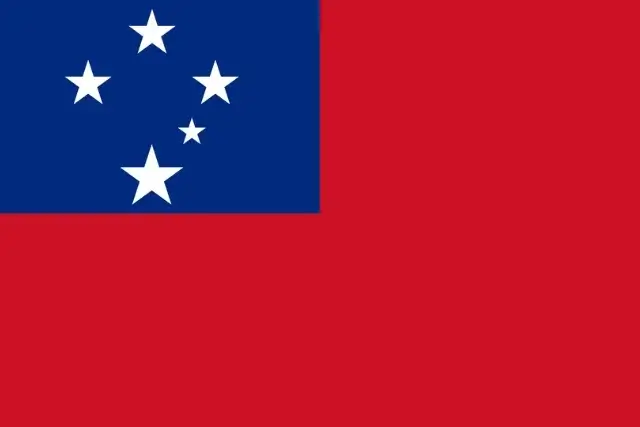
Samoa
🏙️ Capital city:
Apia
📈 Country population:
205,000
🗺️ Country area:
2,842 km²
Core Facts / Infobox
Present this as a clean two-column table containing accurate and verified national facts. Include only fields with real data.
| Official Name | Independent State of Samoa |
| Common Name | Samoa |
| ISO Codes | WS, WSM, 882 |
| Internet TLD | .ws |
| Calling Code | +685 |
| Capital City | Apia |
| Largest City | Apia |
| Coordinates | 13.8° S, 171.8° W |
| Time Zone | UTC+13 |
| Population (2025 est.) | ~205,000 |
| Area | 2,842 km² |
| Population Density | ~72 per km² |
| Languages | Samoan, English |
| Currency | Samoan Tālā (WST) |
| Driving Side | Left |
| GDP (Nominal) | ~USD 900 million |
| GDP Per Capita | ~USD 4,000–4,500 |
| HDI | 0.713 (High) |
| Literacy Rate | ~99% |
| Life Expectancy | ~74 years |
| Continent & Subregion | Oceania — Polynesia |
| National Day | 1 June (Independence Day) |
| National Sport | Rugby Union |
| National Dish | Palusami |
| National Anthem | O le Fu’a o le Sa’olotoga o Samoa |
Geography & Environment
- Samoa is a Polynesian island nation located in the central South Pacific, composed of two main islands (Upolu and Savai’i) and several smaller islands.
- Neighboring areas include American Samoa to the east and Tonga to the south.
- The landscape includes volcanic mountains, waterfalls, tropical rainforests, coral reefs, lava fields, and pristine coastlines.
- Climate: tropical rainforest with warm temperatures year-round; wet season runs from November–April.
- Best time to visit: May–October.
- Major natural attractions: To Sua Ocean Trench, Lalomanu Beach, Alofaaga Blowholes, O Le Pupu-Pue National Park.
- Wildlife includes fruit bats, reef fish, sea turtles, tropical birds, and unique marine biodiversity.
- Environmental challenges: cyclones, rising sea levels, coastal erosion, volcanic activity.
Demographics
- Total population: ~205,000.
- Median age: ~22 years.
- Urban population: ~20%.
- Ethnic groups: predominantly Samoan (Polynesian), with small European and mixed communities.
- Religions: Christianity (dominant — Congregational, Catholic, Methodist, Mormon).
- Literacy rate: ~99%.
- Major cities: Apia, Vaitele, Faleula, Siusega.
History
- Samoa has a long Polynesian history dating back over 3,000 years.
- European contact began in the 18th century with Dutch and later British explorers.
- Germany colonized Samoa in 1900; it was later taken over by New Zealand following WWI.
- Samoa gained independence from New Zealand on 1 January 1962, becoming the first Polynesian nation to do so.
- Post-independence, Samoa developed a stable political system rooted in traditional culture (fa’a Samoa).
Government & Politics
- Government type: Unitary parliamentary republic.
- Executive: Prime Minister (head of government) and ceremonial Head of State (O le Ao o le Malo).
- Legislature: unicameral Legislative Assembly (Fono).
- Judiciary: Supreme Court, Court of Appeal, District Courts.
- Administrative divisions: 11 political districts (itūmālō).
- Current issues: climate adaptation, economic diversification, infrastructure development.
Economy
- Samoa has a small, developing economy reliant on agriculture, remittances, tourism, and light manufacturing.
- Major industries: tourism, agriculture, fishing, food processing, handicrafts.
- Main exports: coconut products, fish, taro, nonu juice, beer.
- Main imports: machinery, vehicles, food, petroleum, manufactured goods.
- Strengths: strong remittance inflow, cultural tourism, fertile agricultural land.
- Weaknesses: vulnerability to cyclones, limited industry, dependence on imports.
- GDP sectors: Agriculture (~10%), Industry (~25%), Services (~65%).
Culture & Society
- Samoan culture (fa’a Samoa) emphasizes family, respect, hospitality, and tradition.
- Traditional activities include tattooing (tatau), fire dancing, weaving, and storytelling.
- Important festivals: Teuila Festival, Independence Celebrations, fiafia nights.
- Traditional dress includes lavalava, puletasi, and finely woven mats.
- Music and dance: siva dance, pese (songs), log drum rhythms.
- Languages: Samoan (primary) and English (official).
Food & Cuisine
- National dish: Palusami — taro leaves baked with coconut cream.
- Traditional dishes: Oka (raw fish in coconut milk), Sapasui (Samoan chop suey), Fa’apapa, Roast pig, Taro.
- Street foods: pani popo (coconut buns), grilled fish, barbecued meats.
- Beverages: coconut water, koko Samoa (cocoa drink), kava.
- Cuisine is rich in seafood, tropical fruits, and coconut-based dishes.
Education & Institutions
- Medium of instruction: English and Samoan.
- Literacy rate: ~99%.
- Top institutions: National University of Samoa, University of the South Pacific (Alafua Campus).
- Key academic fields: agriculture, business, culture studies, education.
Tourism
- Top destinations: To Sua Ocean Trench, Lalomanu Beach, Savai’i blowholes, Papase’ea sliding rocks, Apia waterfront.
- Natural attractions: coral reefs, waterfalls, volcanic craters, caves, beaches.
- Adventure tourism: snorkeling, diving, hiking, surfing, lava cave exploration.
- Cultural tourism includes traditional villages, tattoo ceremonies, dance performances.
- Visa: visa-free or visa-on-arrival for many nationalities.
- Transportation: buses, taxis, rental cars, inter-island ferries.
Practical Information
- Safety: generally safe; strong community culture.
- Healthcare: adequate in Apia; limited on outer islands.
- Emergency numbers: Police 995, Fire 994, Ambulance 999.
- Plug type: I; Voltage: 230V.
- Internet: available in urban centers; moderate speeds.
- Best time to visit: May–October.
- Budget: moderate; accommodations range from budget guesthouses to resorts.
Sports, Entertainment & Notable People
- National sport: rugby union; Samoa is known worldwide for its rugby talent.
- Famous athletes: Brian Lima, Tana Umaga (NZ All Blacks, Samoan heritage), David Tua (boxer).
- Entertainment: fiafia cultural nights, fire knife dancing, traditional music.
- Notable figures: Malietoa Tanumafili II, Albert Wendt (writer), Troy Polamalu (NFL star of Samoan descent).
Neighboring Countries of Samoa
Samoa does not share any land borders. Its maritime neighbours include American Samoa, Tonga, Fiji, Tuvalu, and Wallis and Futuna.
Famous For
- To Sua Ocean Trench.
- Strong Polynesian traditions and tattoo culture.
- Beautiful beaches and coral reefs.
- Rugby excellence.
- Volcanic landscapes and rainforests.
- Warm hospitality and fa’a Samoa lifestyle.
Sources
- World Bank
- United Nations (UN Data)
- IMF
- CIA World Factbook
- Samoa Bureau of Statistics
- Official Government Publications