
Random Country Generator 🌎
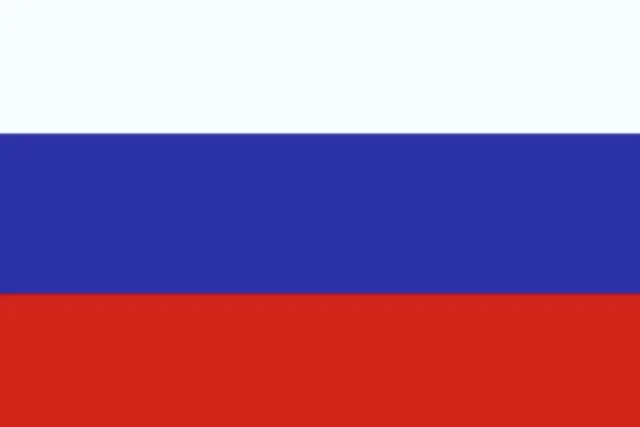
Russia
🏙️ Capital city:
Moscow
📈 Country population:
146 million
🗺️ Country area:
17,098,246 km²
Core Facts / Infobox
Present this as a clean two-column table containing accurate and verified national facts. Include only fields with real data.
| Official Name | Russian Federation |
| Common Name | Russia |
| Political Status | Sovereign federal republic |
| ISO Codes | RU, RUS, 643 |
| Internet TLD | .ru, .рф |
| Calling Code | +7 |
| Capital City | Moscow |
| Largest City | Moscow |
| Coordinates | 55.75° N, 37.62° E |
| Time Zone | UTC+2 to UTC+12 (11 time zones) |
| Population (2025 est.) | ~146 million |
| Area | 17,098,246 km² |
| Population Density | ~9 per km² |
| Languages | Russian (official); many regional languages |
| Currency | Russian Ruble (RUB) |
| Driving Side | Right |
| GDP (Nominal) | ~USD 2.2 trillion |
| GDP Per Capita | ~USD 15,000 |
| HDI | Very High |
| Life Expectancy | ~72 years |
| Continent & Subregion | Eastern Europe & Northern Asia |
| National Day | Russia Day (12 June) |
| National Anthem | State Anthem of the Russian Federation |
Geography & Environment
- Largest country in the world by land area.
- Extends across Eastern Europe and northern Asia.
- Borders 14 countries and three oceans (Arctic, Pacific, Atlantic).
- Major geographic features: Siberian plains, Ural Mountains, Caucasus Mountains.
- Longest river: Volga; deepest lake: Lake Baikal.
- Climate ranges from Arctic to continental and subtropical.
- Large natural resources: oil, gas, coal, timber, minerals.
Demographics
- Population: ~146 million.
- Urban population exceeds 70%.
- Ethnic groups: predominantly ethnic Russians, with many minority groups.
- Religions: Orthodox Christianity, Islam, Buddhism, Judaism, others.
- Major cities: Moscow, Saint Petersburg, Novosibirsk, Yekaterinburg.
History
- Origins in Kievan Rus (9th century).
- Became the Tsardom of Russia in 1547.
- Russian Empire expanded across Eurasia.
- 1917 Russian Revolution led to the Soviet Union.
- Soviet Union dissolved in 1991.
- Modern Russian Federation established thereafter.
Government & Politics
- Political system: Federal semi-presidential republic.
- Head of State: President of the Russian Federation.
- Head of Government: Prime Minister.
- Legislature: Federal Assembly (State Duma and Federation Council).
- Administrative divisions: federal subjects (republics, oblasts, krais, cities).
Economy
- Upper-middle to high-income economy.
- Major industries: energy, mining, manufacturing, defense, agriculture.
- One of the world’s largest producers of oil and natural gas.
- Main exports: energy products, metals, chemicals, grain.
- Main imports: machinery, electronics, pharmaceuticals.
- Strengths: natural resources, industrial base.
- Weaknesses: demographic challenges, external economic pressures.
Culture & Society
- Rich literary, musical, and artistic traditions.
- Famous writers: Tolstoy, Dostoevsky, Chekhov.
- Strong traditions in ballet, classical music, and theater.
- Distinct regional cultures across its vast territory.
Food & Cuisine
- Traditional dishes: borscht, pelmeni, blini.
- Staples include bread, potatoes, grains, dairy.
- Tea is a central cultural beverage.
- Cuisine influenced by Slavic, Central Asian, and Caucasian traditions.
Education & Institutions
- High literacy rate.
- Strong emphasis on science, engineering, and mathematics.
- Major universities: Lomonosov Moscow State University.
- Education system publicly funded.
Tourism
- Major destinations: Moscow, Saint Petersburg, Golden Ring cities.
- Attractions: Kremlin, Red Square, Hermitage Museum.
- Natural tourism: Lake Baikal, Kamchatka volcanoes.
- Trans-Siberian Railway is a major attraction.
Practical Information
- Emergency number: 112.
- Plug type: C/F; Voltage: 220V.
- Extensive rail and metro systems in major cities.
- Climate varies significantly by region.
Sports, Entertainment & Notable People
- Popular sports: football, ice hockey, athletics.
- Strong Olympic and international sports presence.
- Notable figures: Peter the Great, Yuri Gagarin, Leo Tolstoy.
Famous For
- Largest country in the world.
- Rich literary and cultural heritage.
- Cold climates and vast wilderness.
- Major global energy producer.
Sources
- World Bank
- United Nations (UN Data)
- IMF
- CIA World Factbook
- Rosstat