
Random Country Generator 🌎
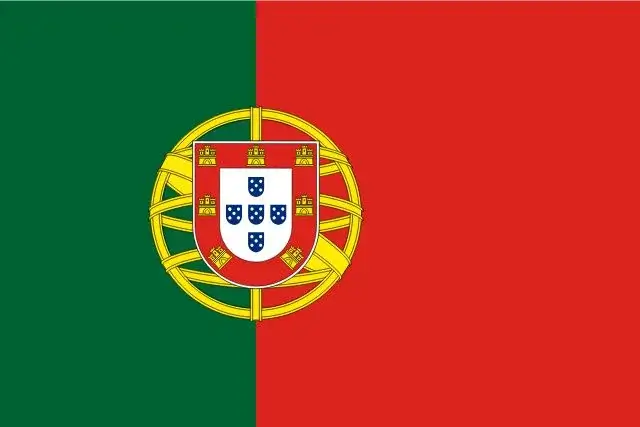
Portugal
🏙️ Capital city:
Lisbon
📈 Country population:
10.4 million
🗺️ Country area:
92,212 km²
Core Facts / Infobox
Present this as a clean two-column table containing accurate and verified national facts. Include only fields with real data.
| Official Name | Portuguese Republic |
| Common Name | Portugal |
| Political Status | Sovereign unitary semi-presidential republic |
| ISO Codes | PT, PRT, 620 |
| Internet TLD | .pt |
| Calling Code | +351 |
| Capital City | Lisbon |
| Largest City | Lisbon |
| Coordinates | 38.72° N, 9.14° W |
| Time Zone | UTC±0 (WET), UTC+1 (WEST) |
| Population (2025 est.) | ~10.4 million |
| Area | 92,212 km² |
| Population Density | ~113 per km² |
| Languages | Portuguese (official) |
| Currency | Euro (EUR) |
| Driving Side | Right |
| GDP (Nominal) | ~USD 290 billion |
| GDP Per Capita | ~USD 28,000 |
| HDI | Very High |
| Life Expectancy | ~82 years |
| Continent & Subregion | Europe — Southern Europe (Iberian Peninsula) |
| National Day | Portugal Day (10 June) |
| National Anthem | A Portuguesa |
Geography & Environment
- Located in Southwestern Europe on the Iberian Peninsula.
- Borders Spain to the east and north; Atlantic Ocean to the west and south.
- Includes the autonomous regions of the Azores and Madeira.
- Major rivers: Tagus (Tejo), Douro, Guadiana.
- Climate: Mediterranean with Atlantic influence.
Demographics
- Population: ~10.4 million.
- Highly urbanized along the coast.
- Major cities: Lisbon, Porto, Braga, Coimbra.
- Ethnic composition: predominantly Portuguese with immigrant communities.
- Religion: Christianity (mainly Roman Catholic), unaffiliated, others.
History
- Established as a kingdom in 1139.
- Pioneer of global maritime exploration in the 15th–16th centuries.
- Built one of the world’s earliest global empires.
- Republic established in 1910.
- Democracy restored after the Carnation Revolution in 1974.
- Member of the European Union since 1986.
Government & Politics
- Political system: Semi-presidential republic.
- Head of State: President of the Republic.
- Head of Government: Prime Minister.
- Legislature: unicameral Assembly of the Republic.
- Administrative divisions: districts and autonomous regions.
Economy
- High-income developed economy.
- Key sectors: services, tourism, manufacturing, renewable energy.
- Major industries: automotive components, cork, textiles, footwear.
- Main exports: vehicles, machinery, paper products, wine.
- Strengths: tourism, renewable energy, stable institutions.
- Weaknesses: public debt, aging population.
Culture & Society
- Distinct Iberian and Atlantic cultural identity.
- Fado music recognized as UNESCO Intangible Heritage.
- Famous figures: Luís de Camões, Fernando Pessoa, Vasco da Gama.
Food & Cuisine
- Traditional dishes: bacalhau, caldo verde, pastéis de nata.
- Seafood-rich cuisine with Mediterranean influence.
- Renowned wine regions including Port and Vinho Verde.
Education & Institutions
- Public education system with universal access.
- Historic universities such as the University of Coimbra.
- Growing emphasis on science, technology, and innovation.
Tourism
- Major European tourist destination.
- Top attractions: Lisbon, Porto, Algarve coast, Madeira.
- Tourism includes culture, beaches, gastronomy, and wine.
Practical Information
- Emergency number: 112.
- Plug type: C/F; Voltage: 230V.
- Modern road and rail infrastructure.
Sports, Entertainment & Notable People
- Popular sports: football, futsal, surfing.
- International football success.
- Notable figures: Cristiano Ronaldo, José Mourinho.
Neighboring Countries of Portugal
Portugal shares a land border with
Spain
1,214 km (754 mi).
Famous For
- Age of Discovery and maritime history.
- Atlantic coastline and Algarve beaches.
- Wine, cork production, and cuisine.
- Historic cities and relaxed lifestyle.
Sources
- World Bank
- United Nations (UN Data)
- IMF
- CIA World Factbook
- Statistics Portugal (INE)