Random Country Generator 🌎

Nicaragua
🏙️ Capital city:
Managua
📈 Country population:
6.9 million
🗺️ Country area:
130,375 km²
Core Facts / Infobox
Present this as a clean two-column table containing accurate and verified national facts. Include only fields with real data.
| Official Name | Republic of Nicaragua |
| Common Name | Nicaragua |
| ISO Codes | NI, NIC, 558 |
| Internet TLD | .ni |
| Calling Code | +505 |
| Capital City | Managua |
| Largest City | Managua |
| Coordinates | 12.1° N, 86.3° W |
| Time Zone | UTC−6 |
| Population (2025 est.) | ~6.9 million |
| Area | 130,375 km² |
| Population Density | ~53 per km² |
| Languages | Spanish (official); Miskito, Mayangna, Garífuna |
| Currency | Nicaraguan Córdoba (NIO) |
| Driving Side | Right |
| GDP (Nominal) | ~USD 16 billion |
| GDP (PPP) | ~USD 40 billion |
| GDP Per Capita | ~USD 2,300 (PPP ~6,000) |
| HDI | 0.660 (Medium) |
| Literacy Rate | ~83% |
| Life Expectancy | ~75 years |
| Unemployment | ~5–6% |
| Inflation | ~5–6% |
| Leaders | President; Vice President |
| Continent & Subregion | North America — Central America |
| National Day | September 15 (Independence Day) |
| National Sport | Baseball |
| National Dish | Gallo Pinto |
| National Anthem | Salve a ti, Nicaragua |
Geography & Environment
- Located in Central America, bordered by Honduras, Costa Rica, the Pacific Ocean, and the Caribbean Sea.
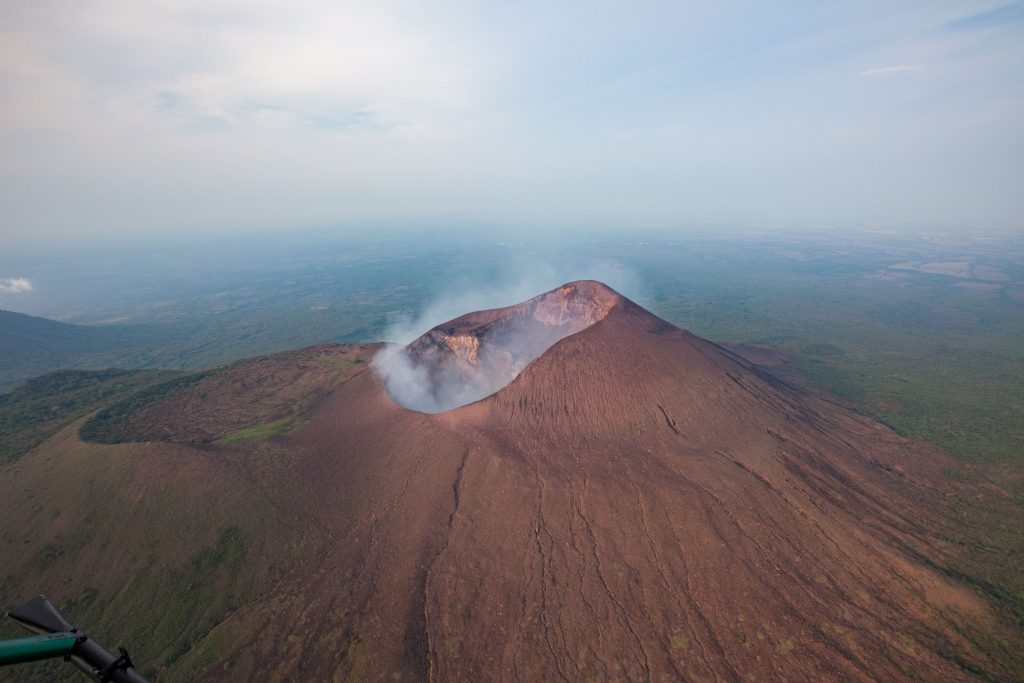
- Known for its volcanic chain, large lakes, rainforests, and tropical coastlines.
- Home to Lake Nicaragua, the largest freshwater lake in Central America.
- Climate varies from tropical on the coasts to cooler highland climates inland.
- Best time to visit: December–April (dry season).
- National parks: Bosawás Biosphere Reserve, Mombacho Volcano Reserve, Masaya Volcano National Park.
- Biodiversity includes jaguars, tapirs, monkeys, parrots, turtles, and rich marine life.
- Environmental challenges: deforestation, volcanic eruptions, hurricanes, deforestation.
Demographics
- Population ~6.9 million.
- Median age ~26 years.
- Ethnic groups: Mestizo (majority), Indigenous groups, Afro-descendant Creoles and Garífuna.
- Religion: predominantly Roman Catholic and Protestant.
- Urban population ~60%.
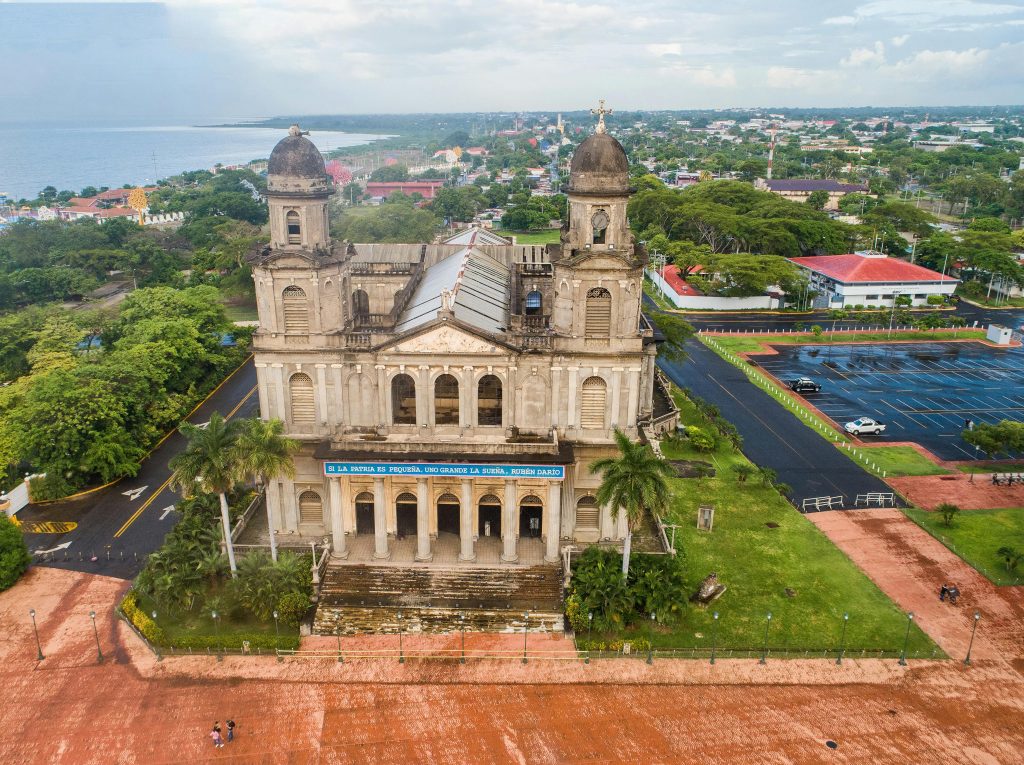
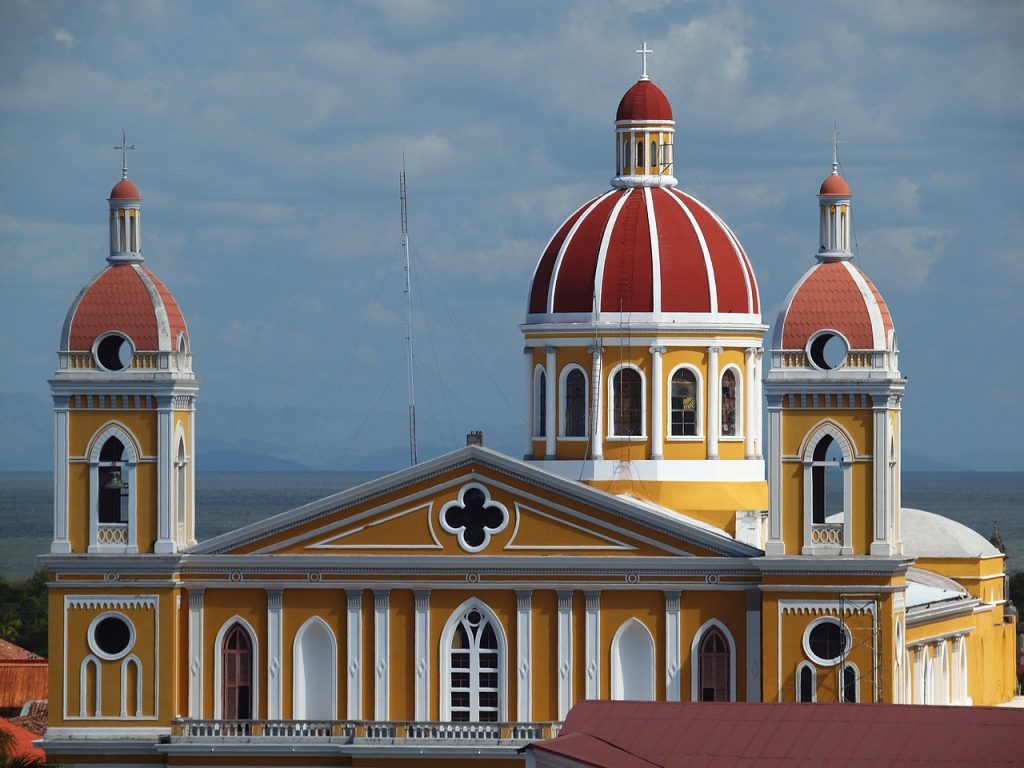
- Major cities: Managua, León, Masaya, Granada, Estelí.
History
- Originally inhabited by Indigenous groups including the Chorotega and Nicarao peoples.
- Colonized by Spain in the 16th century.
- Gained independence from Spain on September 15, 1821.
- Experienced political instability during the 19th and 20th centuries.
- Sandinista Revolution (1979) overthrew the Somoza dictatorship.
- Civil conflict continued throughout the 1980s.
- Modern politics remain influenced by Sandinista leadership.
Government & Politics
- Government type: Presidential republic.
- Executive: President.
- Legislature: unicameral National Assembly.
- Judiciary: Supreme Court of Justice.
- Divided into 15 departments and 2 autonomous regions.
- Key political issues: governance, democracy concerns, economic inequality.
Economy
- One of the lower-income economies in Central America but growing gradually.
- Major industries: agriculture, textiles, mining, energy, tourism.
- Main exports: coffee, beef, gold, sugar, peanuts, tobacco, seafood.
- Main imports: fuel, machinery, vehicles, food products.
- Strengths: fertile land, natural resources, growing tourism sector.
- Weaknesses: natural disaster risks, reliance on agriculture, political issues.
- GDP sectors: Services (~55%), Industry (~30%), Agriculture (~15%).
Culture & Society
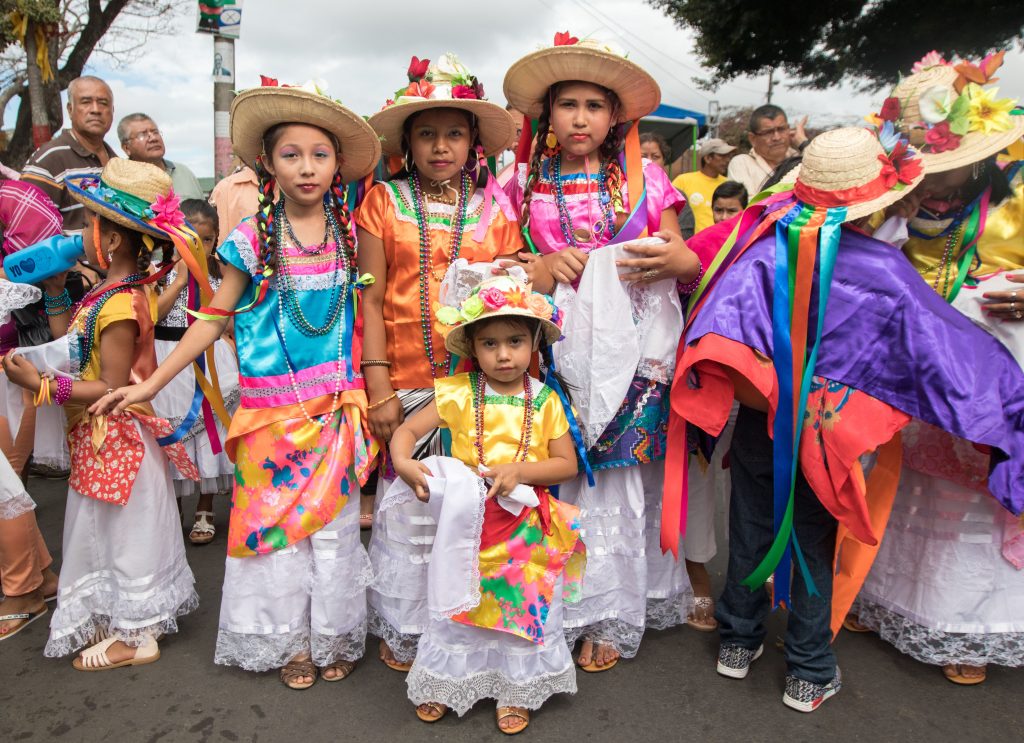
- A rich blend of Indigenous, Spanish, and Afro-Caribbean influences.
- Major festivals: La Purísima, Palo de Mayo, Independence celebrations.
- Traditional clothing includes colorful folkloric dresses and Caribbean-inspired garments.
- Music styles: marimba, palo de mayo, son nica, Latin pop.
- Languages: Spanish dominant; Indigenous and Creole languages preserved in coastal areas.
- Strong family and community values.
Food & Cuisine
- National dish: Gallo Pinto — rice and beans.
- Other iconic dishes: Nacatamales, Indio Viejo, Quesillo, Baho.
- Street foods: fritangas, vigorón, enchiladas (Nicaraguan style).
- Beverages: cacao drink, pinolillo, chicha, rum (Flor de Caña).
Education & Institutions
- Medium of instruction: Spanish.
- Literacy rate: ~83%.
- Top universities: National Autonomous University of Nicaragua, Central American University (UCA).
- Key academic strengths in medicine, agriculture, social sciences.
Tourism
- Top destinations: Ometepe Island, Granada, León, San Juan del Sur, Corn Islands.
- UNESCO sites: León Cathedral.
- Natural attractions: volcanoes, lakes, beaches, jungles, underwater reefs.
- Adventure tourism: volcano boarding, surfing, diving, hiking.
- Visa: visa-free or visa-on-arrival for many nationalities.
- Transportation: buses, taxis, ferries, domestic flights.
Practical Information
- Safety varies by region; tourist areas generally calm.
- Healthcare: good private services in cities; limited rural access.
- Emergency number: 118 (police), 128 (ambulance), 115 (fire).
- Plug type: A/B; Voltage: 120V.
- Internet: widely available; improving in tourist regions.
- Best time to visit: December–April.
- Budget: affordable for travelers.
Sports, Entertainment & Notable People
- National and most popular sport: baseball.
- Other popular sports: football, boxing.
- Notable figures: Alexis Argüello (boxing legend), Rubén Darío (world-renowned poet).
- Artists: Armando Morales, Rodrigo Peñalba.
Neighboring Countries of Nicaragua
Nicaragua shares land borders with the following countries:
- 309 km with Costa Rica
- 922 km with Honduras
Famous For
- Volcano boarding in León.
- Colonial cities (Granada and León).
- Lake Nicaragua and Ometepe Island.
- Corn Islands’ Caribbean beaches.
- Flor de Caña rum.
- Rich poetry heritage.
Sources
- World Bank
- United Nations (UN Data)
- IMF
- CIA World Factbook
- Nicaragua National Institute of Development Information (INIDE)
- Government of Nicaragua