
Random Country Generator 🌎
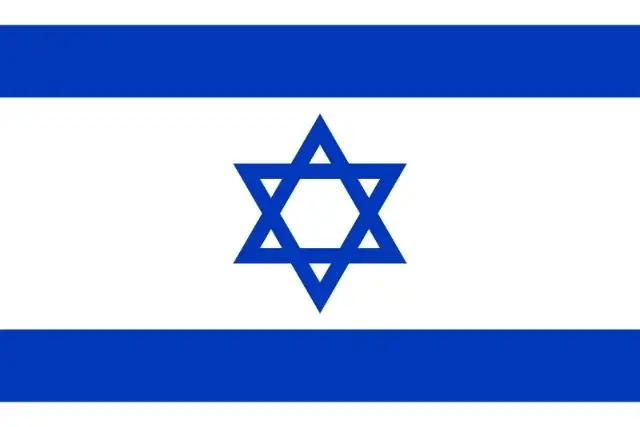
Israel
🏙️ Capital city:
Jerusalem
📈 Country population:
9.8 million
🗺️ Country area:
22,145 km²
Core Facts / Infobox
Present this as a clean two-column table containing accurate and verified national facts. Include only fields with real data.
| Official Name | State of Israel |
| Common Name | Israel |
| ISO Codes | IL, ISR, 376 |
| Internet TLD | .il |
| Calling Code | +972 |
| Capital City | Jerusalem (disputed internationally) |
| Largest City | Jerusalem |
| Coordinates | 31.5° N, 34.8° E |
| Time Zone | UTC+2 (UTC+3 in summer) |
| Population (2025 est.) | ~9.8 million |
| Area | 22,145 km² |
| Population Density | ~450 per km² |
| Languages | Hebrew (official), Arabic (recognized) |
| Currency | Israeli New Shekel (ILS) |
| Driving Side | Right |
| GDP (Nominal) | ~USD 550+ billion |
| GDP (PPP) | ~USD 560+ billion |
| GDP Per Capita | ~USD 55,000+ |
| GDP Growth | ~2–3% |
| HDI | 0.919 (Very High) |
| Literacy Rate | ~98% |
| Life Expectancy | ~83 years |
| Unemployment | ~4–5% |
| Inflation | ~3–4% |
| Leaders | President & Prime Minister (names omitted for longevity) |
| Continent & Subregion | Asia — Middle East |
| National Day | 14 May (Independence Day, Yom Ha’atzmaut) |
| National Sport | Association Football (soccer) |
| National Dish | Falafel |
| National Anthem | Hatikvah |
Geography & Environment
- Israel is located on the eastern Mediterranean, bordered by Lebanon, Syria, Jordan, Egypt, and the Palestinian territories.
- Features include coastal plains, mountains, the Negev Desert, and the Jordan Rift Valley.
- The Dead Sea, shared with Jordan, is the lowest point on Earth.
- Major water bodies: Jordan River, Sea of Galilee (Lake Kinneret), Dead Sea.
- Climate ranges from Mediterranean to desert.
- Best time to visit: March–June and September–November.
- National parks: Masada, Ein Gedi, Timna Park, Caesarea National Park.
- Wildlife includes gazelles, ibex, foxes, migratory birds, and desert reptiles.
- Environmental challenges: water scarcity, desertification, coastal pollution.
- Unique features: Dead Sea, Red Sea coral reefs, Ramon Crater, ancient archaeological sites.
Demographics
- Total population: ~9.8 million.
- Median age: ~30 years.
- Urban vs rural: ~92% urban.
- Ethnic groups: Jewish (majority), Arab Muslims, Arab Christians, Druze.
- Religions: Judaism (majority), Islam, Christianity, Druze faith.
- Literacy rate: ~98%.
- Major cities: Jerusalem, Tel Aviv, Haifa, Rishon LeZion, Beersheba.
History
- Israel’s history spans thousands of years, central to Judaism, Christianity, and significant in Islam.
- Ancient kingdoms of Israel and Judah existed in the region.
- Region saw Roman, Byzantine, Islamic, Ottoman, and British control.
- Modern Israel was established on 14 May 1948.
- Historical conflicts include the Arab–Israeli wars and ongoing regional tensions.
- Israel has developed into a technologically advanced, diversified society.
Government & Politics
- Government type: Parliamentary democracy.
- Executive: President (ceremonial) and Prime Minister (head of government).
- Legislature: unicameral Knesset.
- Judiciary: independent courts including the Supreme Court.
- Administrative divisions: 6 main districts.
- Political topics: security, regional diplomacy, economic innovation.
Economy
- Israel has one of the most technologically advanced economies in the world.
- Major industries: high-tech, cybersecurity, pharmaceuticals, manufacturing, diamonds, agriculture.
- Main exports: technology products, software, chemicals, medical equipment.
- Main imports: machinery, vehicles, electronics, fuel, raw materials.
- Strengths: innovation, research, advanced technology sector.
- Weaknesses: regional instability, high cost of living.
- GDP sectors: Services (~68%), Industry (~30%), Agriculture (~2%).
- Israel is known as the “Startup Nation.”
Culture & Society
- Israel’s culture blends Jewish traditions, Middle Eastern heritage, and global influences.
- Values emphasize community, innovation, education, and cultural identity.
- Major festivals: Passover, Rosh Hashanah, Yom Kippur, Hanukkah, Eid, Christmas.
- Traditional dress: varies by religious and ethnic community.
- Arts: Hebrew literature, film, classical and modern music, dance, theater.
- Languages: Hebrew, Arabic, Russian widely spoken, English common.
Food & Cuisine
- National dish: Falafel.
- Iconic foods: Hummus, Shakshuka, Sabich, Shawarma, Challah.
- Street foods: falafel wraps, bourekas, pita sandwiches.
- Desserts: halva, rugelach, kanafeh.
- Beverages: mint tea, pomegranate juice, Israeli wines.
- Cuisine reflects Middle Eastern, Mediterranean, and Jewish diasporic influences.
Education & Institutions
- Israel has a highly developed education system with global research recognition.
- Medium of instruction: Hebrew; Arabic and English widely used in education.
- Literacy rate: ~98%.
- Top universities: Hebrew University of Jerusalem, Tel Aviv University, Technion – Israel Institute of Technology.
- Strong fields: science, engineering, medicine, computer science, agriculture.
Tourism
- Top destinations: Jerusalem Old City, Tel Aviv beaches, Dead Sea, Nazareth, Eilat, Haifa.
- UNESCO sites: Masada, Old City of Jerusalem, Bahá’í Gardens, Megiddo, Beth She’arim.
- Natural attractions: Ramon Crater, Red Sea coral reefs, Dead Sea salt beaches.
- Historical landmarks: Western Wall, Dome of the Rock (surroundings), Church of the Holy Sepulchre.
- Adventure tourism: desert trekking, snorkeling, hiking.
- Visa: varies by nationality; many countries visa-exempt.
- Transportation: trains, buses, light rail, highways.
Practical Information
- Safety: generally safe; security measures are visible.
- Healthcare: excellent standard.
- Emergency numbers: Police 100, Ambulance 101, Fire 102.
- Plug type: H (unique); Voltage: 230V.
- Internet: fast and widely available.
- Best time to visit: spring and autumn.
- Budget: mid to high; Tel Aviv is relatively expensive.
Sports, Entertainment & Notable People
- National sport: Football.
- Popular sports: basketball, judo, tennis, swimming.
- Notable athletes: Arik Zeevi (judo), Dudi Sela (tennis).
- Famous cultural figures: Amos Oz (writer), Idan Raichel (musician), Gal Gadot (actress).
- Nobel laureates: several in chemistry and economics.
Neighboring Countries of Israel
Israel shares land borders with the following neighboring territories and countries:
- 266 km with Egypt
- 51 km with Gaza Strip (State of Palestine)
- 238 km with Jordan
- 79 km with Lebanon
- 76 km with Syria
- 307 km with West Bank (State of Palestine)
Famous For
- Jerusalem’s religious significance.
- Dead Sea (lowest point on Earth).
- High-tech innovation (“Startup Nation”).
- Falafel, hummus, Mediterranean cuisine.
- Beautiful beaches of Tel Aviv.
- Historical and biblical heritage.
- Vibrant arts and cultural diversity.
Sources
- World Bank
- United Nations (UN Data)
- IMF
- CIA World Factbook
- Israel Central Bureau of Statistics
- Official Government Publications