
Random Country Generator 🌎
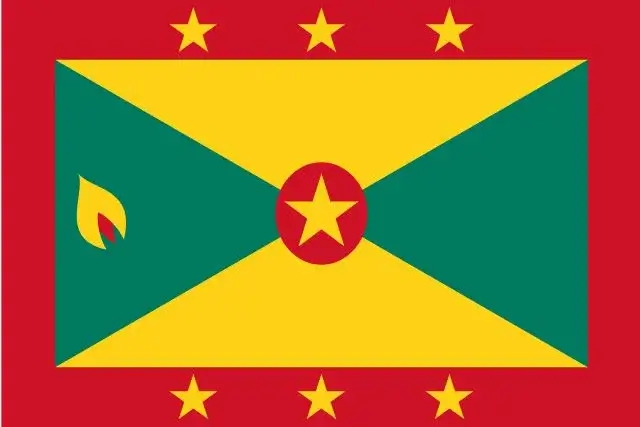
Grenada
🏙️ Capital city:
St. George's
📈 Country population:
127,000
🗺️ Country area:
344 km²
Core Facts / Infobox
Present this as a clean two-column table containing accurate and verified national facts. Include only fields with real data.
| Official Name | Grenada |
| Common Name | Grenada |
| ISO Codes | GD, GRD, 308 |
| Internet TLD | .gd |
| Calling Code | +1-473 |
| Capital City | St. George’s |
| Largest City | St. George’s |
| Coordinates | 12.05° N, 61.75° W |
| Time Zone | UTC−4 |
| Population (2025 est.) | ~127,000 |
| Area | 344 km² |
| Population Density | ~370 per km² |
| Languages | English (official), Grenadian Creole English, Grenadian Creole French |
| Currency | Eastern Caribbean Dollar (XCD) |
| Driving Side | Left |
| GDP (Nominal) | ~USD 1.5 billion |
| GDP Per Capita | ~USD 12,000 |
| HDI | 0.795 (High) |
| Literacy Rate | ~98% |
| Life Expectancy | ~74 years |
| Unemployment | ~16% |
| Inflation | ~2–3% |
| Continent & Subregion | North America — Caribbean (Windward Islands) |
| National Day | 7 February (Independence Day) |
| National Sport | Cricket |
| National Dish | Oil Down |
| National Anthem | Hail Grenada |
Geography & Environment
- Grenada is located in the southeastern Caribbean Sea, north of Trinidad and Tobago and south of Saint Vincent and the Grenadines.
- The country includes the main island of Grenada and the smaller islands of Carriacou and Petite Martinique.
- Natural features: volcanic mountains, lush rainforests, waterfalls, crater lakes, and coral reefs.
- Climate: tropical with a rainy season from June–November.
- Best time to visit: December–April.
- Major natural areas: Grand Etang National Park, Levera National Park, Underwater Sculpture Park.
- Biodiversity: monkeys, armadillos, tropical birds, leatherback turtles, reef ecosystems.
- Environmental challenges: hurricanes, deforestation, coral reef degradation.
Demographics
- Population: ~127,000.
- Median age: ~32 years.
- Urban population: ~36%.
- Ethnic groups: African descent majority, mixed heritage, East Indian, European minorities.
- Religions: predominantly Christian (Catholic, Anglican, Pentecostal).
- Major towns: St. George’s, Grenville, Gouyave, Sauteurs.
History
- Originally inhabited by the indigenous Kalinago people.
- Colonized by the French in the 17th century and later by the British (1763).
- Known for historic plantations, nutmeg trade, and colonial conflicts.
- Gained independence on 7 February 1974.
- Major events: 1979 revolution, 1983 U.S.-led intervention, modern democratic reforms.
Government & Politics
- Type: Parliamentary democracy under a constitutional monarchy.
- Head of State: King Charles III (represented by a Governor-General).
- Head of Government: Prime Minister.
- Legislature: bicameral Parliament (Senate + House of Representatives).
- Divisions: 6 parishes + Carriacou and Petite Martinique dependency.
- International alliances: CARICOM, OECS, Commonwealth of Nations, UN.
Economy
- Major sectors: tourism, agriculture, education services, construction, manufacturing.
- Main exports: nutmeg, mace, cocoa, bananas, fish.
- Main imports: machinery, fuel, food, manufactured goods.
- Strengths: tourism growth, stable political climate, fertile agricultural land.
- Weaknesses: hurricane vulnerability, small market size, dependence on imports.
- GDP sectors: Services (~70%), Industry (~20%), Agriculture (~10%).
Culture & Society
- Culture deeply influenced by African, French, and British heritage.
- Major festivals: Spicemas (Carnival), Carriacou Maroon & String Band Festival.
- Music: soca, calypso, reggae, steelpan.
- Traditional craft: basket weaving, pottery, spice-based products.
- Languages: English and Creole languages used in daily life.
Food & Cuisine
- National dish: Oil Down — a hearty one-pot meal of breadfruit, coconut milk, turmeric, and saltfish.
- Popular dishes: callaloo soup, fried bake & saltfish, pelau, roti.
- Street foods: fish cakes, jerk chicken, BBQ, aloo pies.
- Beverages: rum punch, cocoa tea, local bush teas.
Education & Institutions
- Education system modeled on the British system.
- Medium of instruction: English.
- Literacy rate: ~98%.
- Key institutions: St. George’s University (major international medical school), T.A. Marryshow Community College.
- Popular fields: medicine, nursing, agriculture, tourism, social sciences.
Tourism
- Main attractions: Grand Anse Beach, St. George’s, Carriacou, Underwater Sculpture Park, Annandale Falls.
- Nature attractions: rainforests, waterfalls, coral reefs, volcanic lakes.
- Adventure tourism: diving, snorkeling, hiking, sailing.
- Visa: visa-free for many nationalities; others require travel authorization.
- Transportation: buses, taxis, car rentals, ferries to Carriacou.
Practical Information
- Generally safe; normal travel precautions recommended.
- Healthcare: hospitals in St. George’s; smaller clinics in rural areas.
- Emergency number: 911.
- Plug type: G; Voltage: 230V.
- Internet: good in urban regions; moderate elsewhere.
- Best time to visit: December–April.
- Budget: mid-range; higher in resort areas.
Sports, Entertainment & Notable People
- Popular sports: cricket, athletics, football, sailing.
- Notable athletes: Kirani James (Olympic gold medalist), Anderson Peters (world champion javelin thrower).
- Entertainment culture: Carnival music, steelpan bands, folk storytelling.
Neighboring Countries of Grenada
Grenada does not share any land borders. As an island nation in the southeastern Caribbean Sea and the southernmost of the Windward Islands, its maritime neighbours include Saint Vincent and the Grenadines to the north, Trinidad and Tobago to the south, Venezuela to the southwest at approximately 160 km, and Barbados to the northeast.
Famous For
- Nicknamed the “Island of Spice.”
- Nutmeg and mace production.
- Grand Anse Beach.
- Underwater Sculpture Park.
- St. George’s picturesque harbor.
- Warm Caribbean culture.
Sources
- World Bank
- United Nations (UN Data)
- IMF
- CIA World Factbook
- Government of Grenada
- Caribbean Tourism Organization