
Random Country Generator 🌎
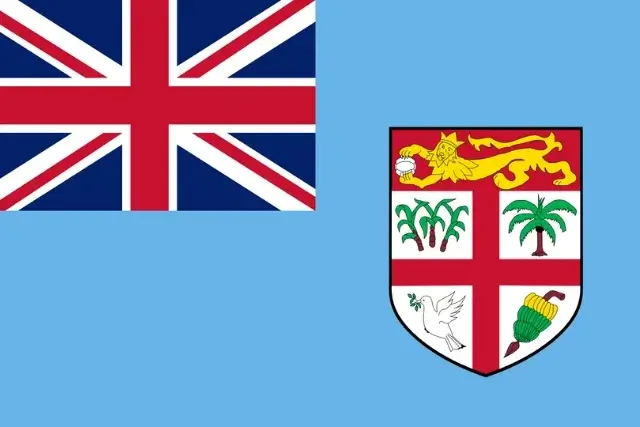
Fiji
🏙️ Capital city:
Suva
📈 Country population:
940,000
🗺️ Country area:
18,274 km²
Core Facts / Infobox
Present this as a clean two-column table containing accurate and verified national facts. Include only fields with real data.
| Official Name | Republic of Fiji |
| Common Name | Fiji |
| ISO Codes | FJ, FJI, 242 |
| Internet TLD | .fj |
| Calling Code | +679 |
| Capital City | Suva |
| Largest City | Suva |
| Coordinates | 18.1° S, 178.4° E |
| Time Zone | UTC+12 (UTC+13 in DST) |
| Population (2025 est.) | ~940,000 |
| Area | 18,274 km² |
| Population Density | ~51 per km² |
| Languages | Fijian, English, Fiji Hindi |
| Currency | Fijian Dollar (FJD) |
| Driving Side | Left |
| GDP (Nominal) | ~USD 5+ billion |
| GDP (PPP) | ~USD 11+ billion |
| GDP Per Capita | ~USD 5,000+ |
| GDP Growth | ~3–4% |
| HDI | 0.741 (High) |
| Literacy Rate | ~99% |
| Life Expectancy | ~67 years |
| Continent & Subregion | Oceania — Melanesia |
| National Day | 10 October (Fiji Day) |
| National Sport | Rugby Sevens |
| National Dish | Kokoda |
| National Anthem | God Bless Fiji |
Geography & Environment
- Fiji is an archipelago of over 330 islands in the South Pacific Ocean, located northeast of New Zealand and east of Australia.
- Major islands include Viti Levu and Vanua Levu, which host most of the population.
- Geography includes volcanic mountains, rainforests, waterfalls, coral reefs, and pristine beaches.
- Climate: tropical marine climate, warm year-round with a wet season (November–April) and dry season (May–October).
- Best time to visit: May–October.
- National parks: Bouma National Heritage Park, Koroyanitu National Heritage Park, Colo-I-Suva Forest Park.
- Wildlife includes fruit bats, rare birds, sea turtles, sharks, and diverse marine life.
- Environmental challenges: cyclones, rising sea levels, coral bleaching, deforestation.
- Unique features: world-famous coral reefs and clear lagoons ideal for diving.
Demographics
- Total population: ~940,000.
- Median age: ~28 years.
- Urban population: ~56%.
- Ethnic groups: Indigenous iTaukei (majority), Indo-Fijians, Rotumans, other Pacific and European communities.
- Religions: Christianity (dominant), Hinduism, Islam.
- Literacy rate: ~99%.
- Major cities: Suva, Lautoka, Nadi, Labasa.
History
- Indigenous Fijians settled the islands over 3,000 years ago.
- European contact began in the 17th century.
- Fiji became a British colony in 1874.
- Achieved independence on 10 October 1970.
- Modern history includes political changes, coups, and democratic reforms.
- Today, Fiji is a stable republic with growing industries and strong regional influence.
Government & Politics
- Government type: Parliamentary representative democratic republic.
- Executive: President (ceremonial), Prime Minister (head of government).
- Legislature: unicameral Parliament.
- Judiciary: Supreme Court, Court of Appeal, High Court.
- Administrative divisions: 4 main divisions and 14 provinces.
- Political priorities: climate resilience, infrastructure, tourism development.
Economy
- Fiji has a mixed economy driven by tourism, agriculture, and services.
- Major industries: tourism, sugar production, mining, fishing, garment manufacturing, bottled water.
- Main exports: sugar, gold, fish, garments, Fiji Water, coconut products.
- Main imports: machinery, fuel, food, chemicals, manufactured goods.
- Strengths: world-renowned tourism, strategic Pacific location, natural resources.
- Weaknesses: vulnerability to cyclones, reliance on tourism, limited manufacturing.
- GDP sectors: Services (~70%), Industry (~18%), Agriculture (~12%).
- Tourism is the largest contributor to foreign exchange earnings.
Culture & Society
- Fijian culture blends Indigenous traditions with Indo-Fijian influences.
- Important values: community, respect, hospitality, and tradition.
- Festivals: Hibiscus Festival, Diwali, Holi, Bula Festival, Fiji Day celebrations.
- Traditional dress: sulu (sarong-like clothing) for men and women.
- Meke (traditional dance) and Fijian chants are central to cultural expression.
- Languages: Fijian, English, and Fiji Hindi widely spoken.
Food & Cuisine
- National dish: Kokoda — raw fish marinated in coconut cream and lime.
- Popular dishes: Lovo (earth oven feast), Pula, Rourou, Cassava dishes.
- Influences: Indigenous, Indian, Chinese, and Pacific cuisines.
- Street foods: roti, curry snacks, cassava chips, seafood grills.
- Beverages: yaqona (kava), coconut water, tropical fruit juices.
Education & Institutions
- Medium of instruction: English (primary), Fijian and Hindi taught as subjects.
- Literacy rate: ~99%.
- Top universities: University of the South Pacific (USP), Fiji National University, University of Fiji.
- Key fields: marine studies, tourism, agriculture, business, environmental science.
Tourism
- Top destinations: Coral Coast, Denarau Island, Mamanuca Islands, Yasawa Islands, Suva, Taveuni (Garden Island).
- Natural attractions: coral reefs, white sand beaches, rainforests, waterfalls, volcanic mountains.
- Adventure tourism: diving, snorkeling, surfing, river rafting, hiking, sailing.
- Historical landmarks: Fiji Museum, Levuka (UNESCO site), colonial-era buildings.
- Visa: visa-free or visa-on-arrival for many nationalities.
- Transportation: domestic flights, ferries, buses, taxis, rental cars.
Practical Information
- Safety: generally safe; standard precautions recommended.
- Healthcare: adequate in Suva and Nadi; limited in remote islands.
- Emergency numbers: Police 917, Fire 910, Ambulance 911.
- Plug type: I; Voltage: 240V.
- Internet: improving; good in tourist regions.
- Best time to visit: May–October.
- Budget: moderate to high; island resorts can be expensive.
Sports, Entertainment & Notable People
- National sport: rugby sevens — Fiji is a global powerhouse.
- Major achievements: Olympic gold medals in rugby sevens (2016, 2020).
- Famous athletes: Waisale Serevi, Jerry Tuwai.
- Entertainment: traditional Fijian dances, music, fire shows, festivals.
- Notable people: Vijay Singh (golf legend), Ratu Sir Kamisese Mara (founding father).
Neighboring Countries of Fiji
Fiji does not share any land borders. Its maritime neighbours include Vanuatu, Tonga, Samoa, New Caledonia, and New Zealand.
Famous For
- World-class beaches and islands.
- Rugby sevens dominance.
- Coral reefs and top diving spots.
- Warm hospitality and “Bula” culture.
- Kava ceremonies.
- Tropical landscapes and waterfalls.
Sources
- World Bank
- United Nations (UN Data)
- IMF
- CIA World Factbook
- Fiji Bureau of Statistics
- Official Government Publications