Random Country Generator 🌎

El Salvador
🏙️ Capital city:
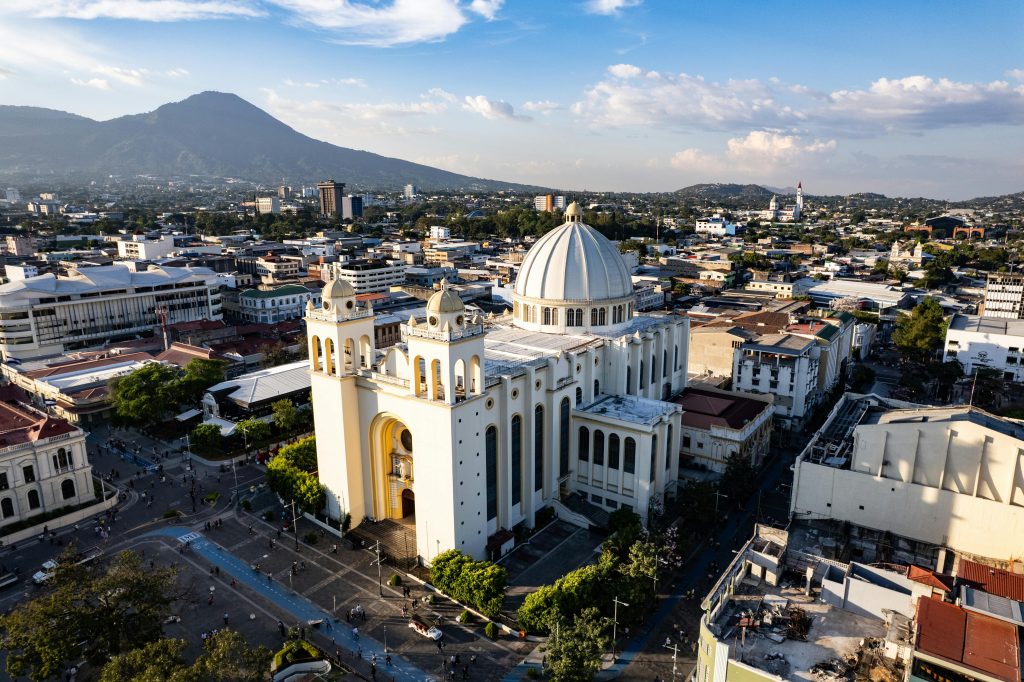
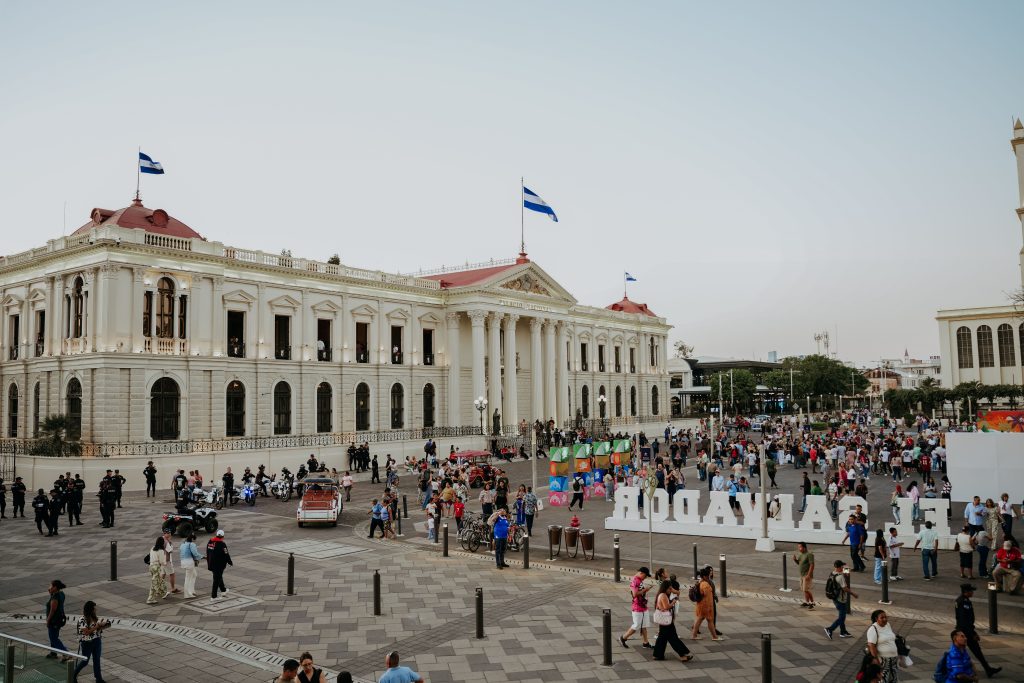
San Salvador
📈 Country population:
6.5 million
🗺️ Country area:
21,041 km²
Core Facts / Infobox
Present this as a clean two-column table containing accurate and verified national facts. Include only fields with real data.
| Official Name | Republic of El Salvador |
| Common Name | El Salvador |
| ISO Codes | SV, SLV, 222 |
| Internet TLD | .sv |
| Calling Code | +503 |
| Capital City | San Salvador |
| Largest City | San Salvador |
| Coordinates | 13.7° N, 89.2° W |
| Time Zone | UTC−6 |
| Population (2025 est.) | ~6.5 million |
| Area | 21,041 km² |
| Population Density | ~309 per km² |
| Languages | Spanish (official), Indigenous languages (Nawat, small usage) |
| Currency | United States Dollar (USD), Bitcoin (legal tender) |
| Driving Side | Right |
| GDP (Nominal) | ~USD 36 billion |
| GDP (PPP) | ~USD 70 billion |
| GDP Per Capita | ~USD 5,700 (PPP ~11,000) |
| HDI | 0.675 (Medium) |
| Literacy Rate | ~89% |
| Life Expectancy | ~75 years |
| Unemployment | ~6–7% |
| Inflation | ~3–4% |
| Leaders | President; Vice President |
| Continent & Subregion | North America — Central America |
| National Day | September 15 (Independence Day) |
| National Sport | Football (Soccer) |
| National Dish | Pupusas |
| National Anthem | Himno Nacional de El Salvador |
Geography & Environment
- El Salvador is the smallest country in Central America, bordered by Guatemala, Honduras, and the Pacific Ocean.
- Known as the “Land of Volcanoes” due to its high concentration of active and dormant volcanoes.
- Geography includes volcanic mountains, fertile valleys, black-sand beaches, and large lakes.
- Climate: tropical with wet and dry seasons; cooler temperatures in highlands.
- Best time to visit: November–April (dry season).
- National parks: El Imposible, Cerro Verde, Montecristo National Park.
- Rich biodiversity including toucans, jaguars, sea turtles, and tropical flora.
- Environmental challenges: earthquakes, volcanic eruptions, deforestation, hurricanes.
Demographics
- Population ~6.5 million.
- Median age ~30 years.
- Ethnic groups: Mestizo majority; smaller Indigenous and European-descendant populations.
- Religion: mostly Roman Catholic and Protestant Christian.
- Urban population ~73%.
- Major cities: San Salvador, Santa Ana, San Miguel, Soyapango.
History
- Originally inhabited by Pipil, Lenca, and Maya-speaking peoples.
- Colonized by Spain in the 16th century.
- Gained independence from Spain on September 15, 1821.
- Became fully independent from the Central American Federation in 1841.
- Experienced a civil war from 1980 to 1992, ending with the Peace Accords.
- Recent history includes significant crime reduction and economic changes.
Government & Politics
- Government type: Presidential republic.
- Executive: President.
- Legislature: unicameral Legislative Assembly.
- Judiciary: Supreme Court of Justice.
- Administrative divisions: 14 departments.
- Recent reforms include enhanced security measures and digital economy initiatives.
Economy
- Upper-lower-middle-income economy focused on services and remittances.
- Major industries: textiles, services, agriculture, technology, tourism.
- Main exports: coffee, sugar, textiles, electrical components, seafood.
- Main imports: fuel, machinery, agricultural products, manufactured goods.
- Strengths: dollarized economy, growing tourism, expanding tech sector.
- Weaknesses: vulnerability to natural disasters, reliance on remittances.
- GDP sectors: Services (~65%), Industry (~25%), Agriculture (~10%).
Culture & Society
- A blend of Indigenous, Spanish, and modern influences.
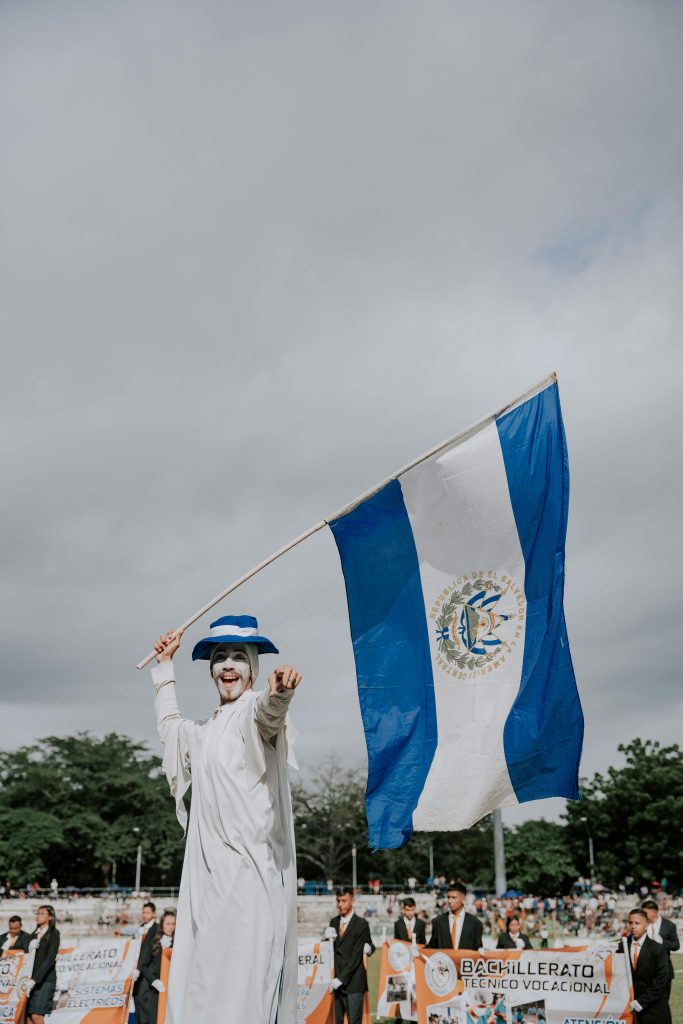
- Major celebrations include Independence Day, Holy Week, and August Festivals.
- Traditional clothing includes colorful Indigenous garments used mainly in rural areas.
- Music styles: cumbia, marimba, Salvadoran folk, reggaeton.
- Languages: Spanish is dominant; Nawat is still spoken by some communities.
- Family culture is central, with strong community ties.
Food & Cuisine
- National dish: Pupusas — stuffed corn tortillas with cheese, beans, pork, or squash.
- Other iconic foods: Yuca frita, Sopa de gallina india, Tamales, Pan con pollo.
- Street foods: pastelitos, elotes locos, riguas.
- Beverages: horchata, atol de elote, tamarindo juice, Salvadoran coffee.
Education & Institutions
- Medium of instruction: Spanish.
- Literacy rate: ~89%.
- Top universities: University of El Salvador, Central American University (UCA), Technological University of El Salvador.
- Key fields: medicine, engineering, business, social sciences.
Tourism
- Top destinations: Ruta de las Flores, San Salvador, Santa Ana Volcano, Surf City beaches, Suchitoto.
- UNESCO sites: Joya de Cerén Archaeological Site.
- Natural attractions: volcanoes, beaches, lakes, coffee plantations.
- Adventure tourism: surfing (world-class waves), hiking, volcano treks, paragliding.
- Visa: visa-free for many nationalities; simple entry procedures.
- Transportation: buses, taxis, ride-sharing, domestic flights.
Practical Information
- Safety has improved significantly due to new security policies.
- Healthcare: modern private hospitals in major cities; limited rural services.
- Emergency number: 911.
- Plug type: A/B; Voltage: 120V.
- Internet: widely available; excellent in urban areas.
- Best time to visit: November–April.
- Budget: affordable to mid-range for most travelers.
Sports, Entertainment & Notable People
- Popular sports: football, basketball, surfing.
- Famous athletes: Jorge “El Mágico” González (football legend).
- Artists: Fernando Llort, Noé Canjura.
- Writers: Claudia Lars, Manlio Argueta.
- Entertainment figures: Álvaro Torres (singer).
Neighboring Countries of El Salvador
El Salvador shares land borders with the following countries:
Famous For
- Pupusas.
- Surf City — world-class surfing.
- Volcanoes and natural landscapes.
- Mayan ruins like Joya de Cerén.
- Colorful festivals and traditions.
- Warm, welcoming culture.
Sources
- World Bank
- United Nations (UN Data)
- IMF
- CIA World Factbook
- El Salvador Ministry of Economy
- Government of El Salvador