Random Country Generator 🌎

Cyprus
🏙️ Capital city:
Nicosia
📈 Country population:
1.3 million
🗺️ Country area:
9,251 km²
Core Facts / Infobox
Present this as a clean two-column table containing accurate and verified national facts. Include only fields with real data.
| Official Name | Republic of Cyprus |
| Common Name | Cyprus |
| ISO Codes | CY, CYP, 196 |
| Internet TLD | .cy |
| Calling Code | +357 |
| Capital City | Nicosia |
| Largest City | Nicosia |
| Coordinates | 35.1° N, 33.3° E |
| Time Zone | UTC+2 (UTC+3 in summer) |
| Population (2025 est.) | ~1.3 million |
| Area | 9,251 km² |
| Population Density | ~140 per km² |
| Languages | Greek, Turkish; English widely spoken |
| Currency | Euro (EUR) |
| Driving Side | Left |
| GDP (Nominal) | ~USD 33+ billion |
| GDP (PPP) | ~USD 55+ billion |
| GDP Per Capita | ~USD 27,000+ |
| GDP Growth | ~2–3% |
| HDI | 0.896 (Very High) |
| Literacy Rate | ~99% |
| Life Expectancy | ~81 years |
| Unemployment | ~6% |
| Inflation | ~2–3% |
| Leaders | President (name omitted for longevity) |
| Continent & Subregion | Europe — Eastern Mediterranean |
| National Day | 1 October (Independence Day) |
| National Sport | Football |
| National Dish | Halloumi / Souvla |
| National Anthem | Hymn to Liberty |
Geography & Environment
- Cyprus is an island nation in the Eastern Mediterranean, south of Turkey and west of Syria and Lebanon.
- It features coastal plains, fertile valleys, and two major mountain ranges: the Troodos Mountains and the Kyrenia Range.
- Climate: Mediterranean with hot, dry summers and mild, rainy winters.
- Best time to visit: April–June and September–November.
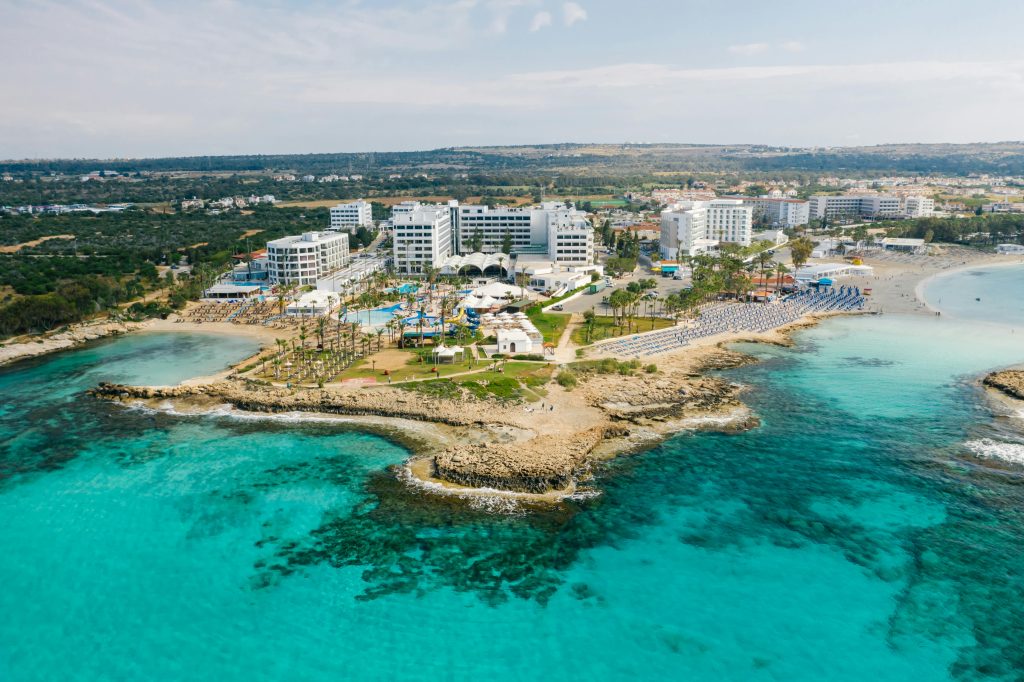
- Major natural attractions: Troodos Mountains, Akamas Peninsula, Lara Beach, Cape Greco.
- Biodiversity includes sea turtles, mouflon sheep, orchids, and rich marine life.
- Environmental challenges: water scarcity, coastal development, forest fires.
- Unique features: some of Europe’s cleanest beaches and ancient wine-producing regions.
Demographics
- Population: ~1.3 million.
- Median age: ~38 years.
- Urban vs rural: around 67% urban population.
- Ethnic groups: Greek Cypriots, Turkish Cypriots, Maronites, Armenians, expatriates.
- Religions: Greek Orthodox (majority), Islam, Maronite Christianity, Armenian Christianity.
- Literacy rate: ~99%.
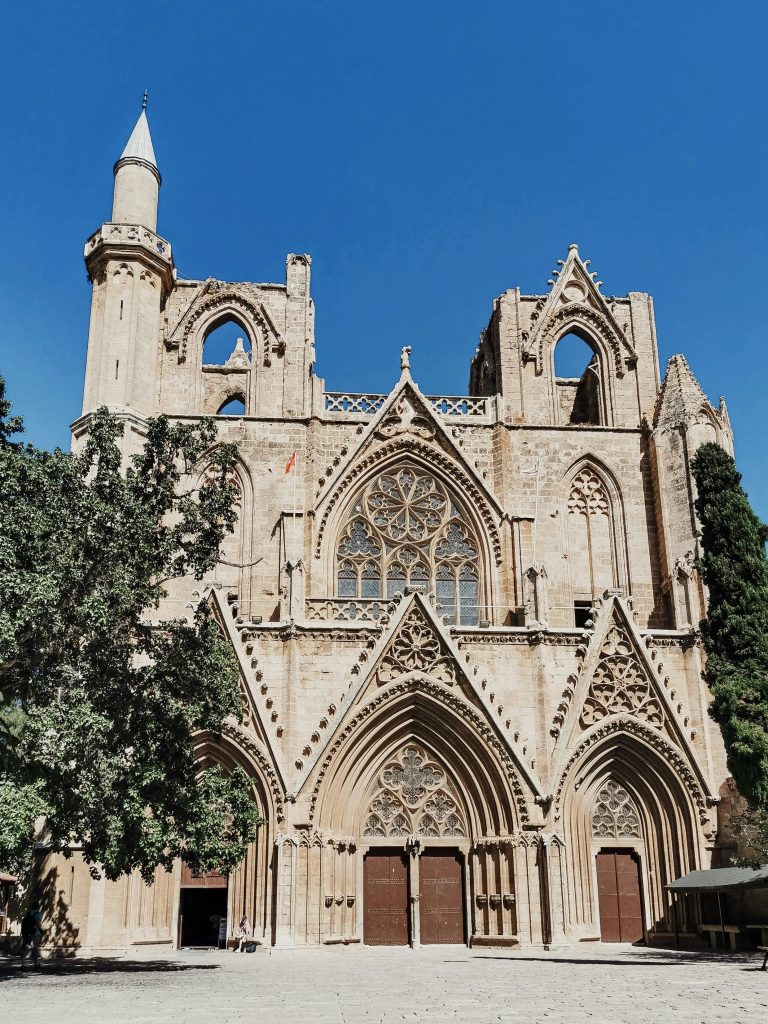
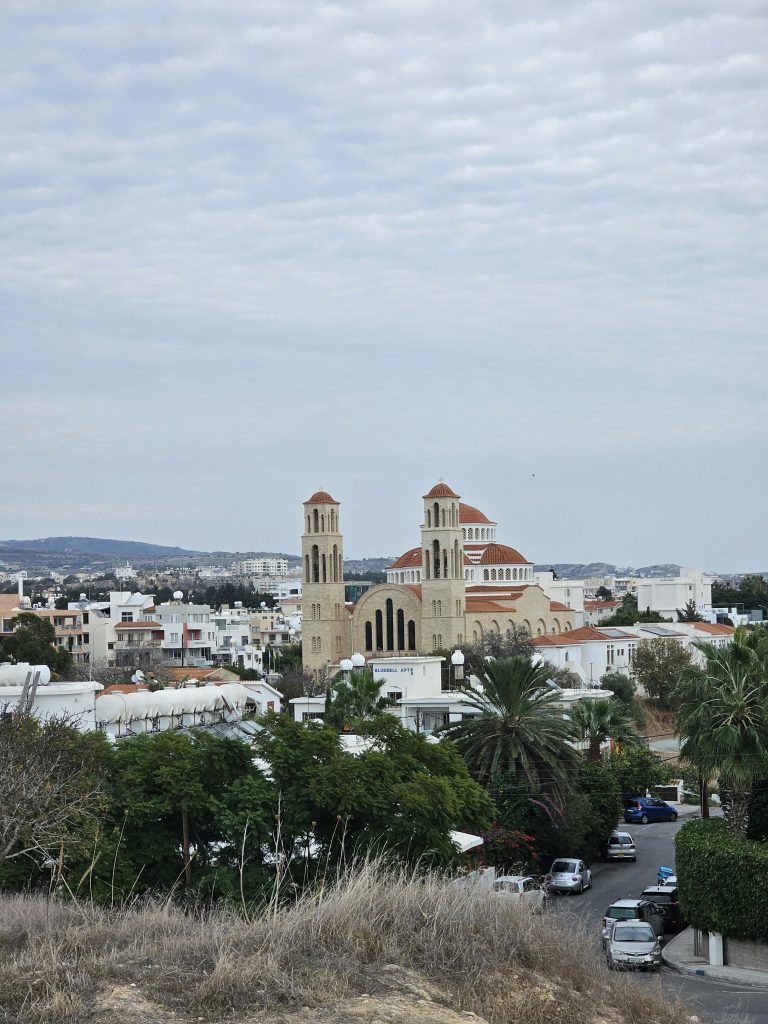
- Major cities: Nicosia, Limassol, Larnaca, Paphos, Famagusta.
History
- Cyprus has a long history dating back to the Neolithic period and ancient Greek settlements.
- Ruled by empires including Assyrians, Persians, Romans, Byzantines, Lusignans, Venetians, and Ottomans.
- Became a British colony in the 19th century.
- Gained independence on 1 October 1960.
- Divided in 1974 following conflict; northern part is administered by Turkish Cypriots.
- Joined the European Union in 2004.
- Today, Cyprus is a modern, high-income EU nation.
Government & Politics
- Government type: Unitary presidential republic.
- Executive: President (head of state and government).
- Legislature: unicameral House of Representatives.
- Judiciary: Supreme Court and district courts.
- Administrative divisions: 6 districts (Nicosia, Limassol, Larnaca, Paphos, Famagusta, Kyrenia).
- EU membership plays a significant role in governance and modernization.
Economy
- Cyprus has a high-income, service-based economy.
- Major industries: tourism, shipping, financial services, real estate, agriculture, wine.
- Main exports: pharmaceuticals, citrus fruits, potatoes, wine, cement.
- Main imports: fuel, machinery, food products, chemicals.
- Strengths: EU membership, strategic location, strong tourism sector.
- Weaknesses: dependence on services, geopolitical division, limited natural resources.
- GDP sectors: Services (~80%), Industry (~16%), Agriculture (~4%).
- Economic reforms focus on digitalization and green energy.
Culture & Society
- Cypriot culture blends Greek, Middle Eastern, and European influences.
- Family values and hospitality are central to society.
- Major festivals: Easter, Kataklysmos Festival, Carnival of Limassol.
- Traditional dress includes embroidered garments used during festivals.
- Arts: Byzantine art, folk music, poetry, modern sculpture.
- Languages: Greek and Turkish; English widely spoken.
Food & Cuisine
- National dishes: Halloumi cheese and Souvla (grilled meat).
- Popular foods: Kleftiko, Sheftalia, Moussaka, Meze.
- Seafood is common along the coast.
- Desserts: loukoumades, baklava, ravani.
- Beverages: Cypriot wine, zivania, Cypriot coffee.
- Street foods include souvlaki, gyros, and pastries.
Education & Institutions
- Cyprus has a strong education system with very high literacy.
- Medium of instruction: Greek and English in private schools.
- Literacy rate: ~99%.
- Top universities: University of Cyprus, Cyprus University of Technology, European University Cyprus.
- Key fields: business, tourism, medicine, engineering, maritime studies.
Tourism
- Top destinations: Paphos, Ayia Napa, Limassol, Larnaca, Troodos Mountains.
- UNESCO World Heritage Sites: Painted Churches of Troodos, Paphos Archaeological Sites.
- Natural attractions: beaches, mountains, Cape Greco, Akamas Peninsula.
- Historical landmarks: Tombs of the Kings, Kolossi Castle, Kourion ruins.
- Adventure tourism: hiking, diving, mountain biking, sailing.
- Visa: EU entry rules apply; visa-free for many countries.
- Transportation: buses, taxis, rental cars; left-hand driving.
Practical Information
- Safety: one of the safest countries in Europe.
- Healthcare: high quality, modern medical facilities.
- Emergency numbers: 112 (EU-wide), 199.
- Plug type: G; Voltage: 230V.
- Internet: fast broadband and wide 4G/5G coverage.
- Best time to visit: April–June and September–November.
- Budget: moderate; plenty of luxury and budget options.
Sports, Entertainment & Notable People
- National sport: football.
- Popular sports: basketball, tennis, sailing.
- Cyprus hosts international sailing and rally events.
- Notable figures: poets, musicians, actors, and athletes from both Greek- and Turkish-Cypriot communities.
- Strong cultural identity in music, dance, and theater.
Neighboring Countries of Cyprus
Cyprus is an island nation with no land borders, but it shares a land boundary with Akrotiri and Dhekelia (United Kingdom), which is approximately 152 km long.
Famous For
- Beautiful Mediterranean beaches.
- Ancient archaeological sites.
- Troodos mountain villages.
- Halloumi cheese.
- Mythological birthplace of Aphrodite.
- Wine history dating back thousands of years.
- Vibrant nightlife in Ayia Napa.
Sources
- World Bank
- United Nations (UN Data)
- IMF
- CIA World Factbook
- Statistical Service of Cyprus
- Official Government Publications