
Random Country Generator 🌎
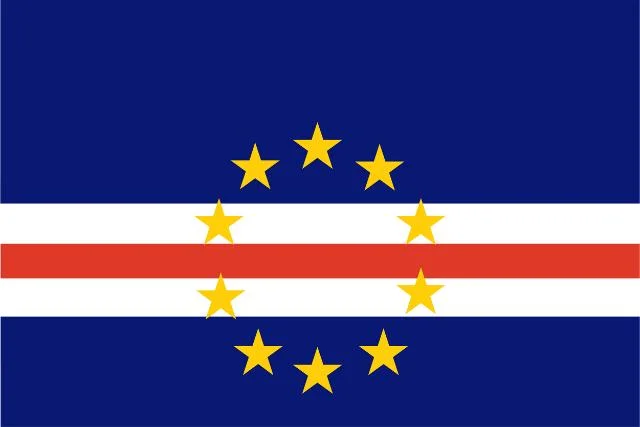
Cape Verde
🏙️ Capital city:
Praia
📈 Country population:
600,000
🗺️ Country area:
4,033 km²
Core Facts / Infobox
Present this as a clean two-column table containing accurate and verified national facts. Include only fields with real data.
| Official Name | Republic of Cabo Verde |
| Common Name | Cape Verde (Cabo Verde) |
| Political Status | Sovereign parliamentary republic |
| ISO Codes | CV, CPV, 132 |
| Internet TLD | .cv |
| Calling Code | +238 |
| Capital City | Praia |
| Largest City | Praia |
| Coordinates | 16.00° N, 24.00° W |
| Time Zone | UTC−1 (Cape Verde Time) |
| Population (2025 est.) | ~600,000 |
| Area | 4,033 km² |
| Population Density | ~149 per km² |
| Languages | Portuguese (official); Cape Verdean Creole widely spoken |
| Currency | Cape Verdean Escudo (CVE) |
| Driving Side | Right |
| GDP (Nominal) | ~USD 2.6 billion |
| GDP Per Capita | ~USD 4,300 |
| HDI | Medium–High |
| Life Expectancy | ~74 years |
| Continent & Subregion | Africa — West Africa (Atlantic Ocean) |
| National Day | Independence Day (5 July) |
| National Anthem | Cântico da Liberdade |
Geography & Environment
- Archipelago of 10 volcanic islands in the Atlantic Ocean.
- Located west of Senegal.
- Divided into Windward (Barlavento) and Leeward (Sotavento) islands.
- Terrain is mostly mountainous and arid.
- Climate: dry tropical with limited rainfall.
Demographics
- Population: ~600,000.
- Ethnically mixed population of African and European descent.
- Significant diaspora population abroad.
- Religion: Christianity (Roman Catholic majority).
History
- Uninhabited prior to Portuguese discovery in the 15th century.
- Developed as a major Atlantic trading hub.
- Colonized by Portugal for over 500 years.
- Gained independence in 1975.
- Known for political stability since the 1990s.
Government & Politics
- Political system: Parliamentary republic.
- Head of State: President.
- Head of Government: Prime Minister.
- Legislature: unicameral National Assembly.
- Administrative divisions: municipalities.
Economy
- Lower-middle-income, service-oriented economy.
- Key sectors: tourism, services, remittances.
- Main exports: fish, apparel.
- Strengths: political stability, human development.
- Weaknesses: limited natural resources, water scarcity.
Culture & Society
- Strong Creole identity.
- Music styles include morna, coladeira, and funaná.
- Known for poet-musicians like Cesária Évora.
Food & Cuisine
- Staple foods: corn, beans, fish.
- Traditional dishes: cachupa, grilled tuna, corn stew.
- Cuisine reflects Portuguese and African influences.
Education & Institutions
- High literacy rate by African standards.
- Major institution: University of Cabo Verde.
Tourism
- Major Atlantic island tourism destination.
- Popular islands: Sal, Boa Vista, Santiago.
- Known for beaches, windsurfing, and cultural tourism.
Practical Information
- Emergency number: 132.
- Plug type: C/F; Voltage: 220V.
- Well-developed air links for island travel.
Sports, Entertainment & Notable People
- Popular sports: football.
- Strong international music presence.
- Notable figures: Amílcar Cabral, Cesária Évora.
Neighboring Countries of Cape Verde
Cape Verde is an island nation in the Atlantic Ocean and does not share any land borders. Its maritime neighbors include
Senegal,
Mauritania,
The Gambia, and
Guinea-Bissau.
The archipelago is located approximately 570 km west of the African continent.
Famous For
- Morna music.
- Volcanic islands.
- Political stability.
- Atlantic island culture.
Sources
- World Bank
- United Nations (UN Data)
- IMF
- CIA World Factbook
- National Institute of Statistics (Cabo Verde)