
Random Country Generator 🌎
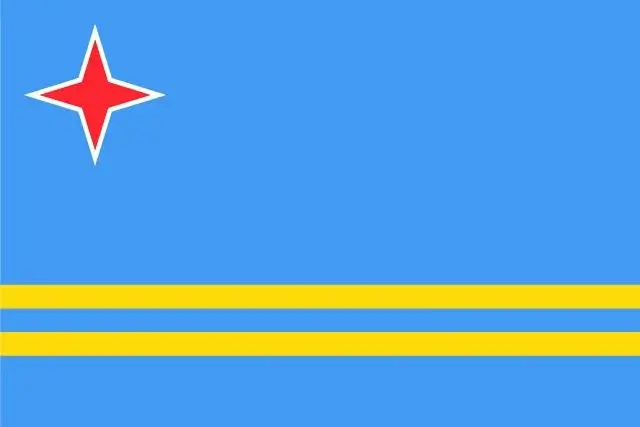
Aruba
🏙️ Capital city:
Oranjestad
📈 Country population:
112,000
🗺️ Country area:
180 km²
Core Facts / Infobox
Present this as a clean two-column table containing accurate and verified national facts. Include only fields with real data.
| Official Name | Country of Aruba |
| Common Name | Aruba |
| ISO Codes | AW, ABW, 533 |
| Internet TLD | .aw |
| Calling Code | +297 |
| Capital City | Oranjestad |
| Largest City | Oranjestad |
| Coordinates | 12.52° N, 70.03° W |
| Time Zone | UTC−4 |
| Population (2025 est.) | ~112,000 |
| Area | 180 km² |
| Population Density | ~620 per km² |
| Languages | Papiamento, Dutch, English, Spanish |
| Currency | Aruban Florin (AWG) |
| Driving Side | Right |
| GDP (Nominal) | ~USD 3.3 billion |
| GDP Per Capita | ~USD 29,000 |
| HDI | Very High (comparable to the Netherlands Caribbean) |
| Life Expectancy | ~76 years |
| Continent & Subregion | South America — Caribbean (Leeward Antilles) |
| National Day | 18 March (National Anthem & Flag Day) |
| National Sport | Baseball |
| National Dish | Keshi Yena |
| National Anthem | Aruba Dushi Tera |
Geography & Environment
- Aruba lies in the southern Caribbean Sea, just off the coast of Venezuela.
- Famous for white-sand beaches, turquoise waters, cacti-filled landscapes, and limestone cliffs.
- Climate: dry, sunny, and warm year-round with very little rainfall.
- Best time to visit: all year; peak season December–April.
- Major natural sites: Arikok National Park (covers ~20% of the island), Natural Pool, California Lighthouse.
- Wildlife includes iguanas, burrowing owls, sea turtles, and diverse marine species.
- Environmental challenges: coral reef decline, freshwater scarcity, coastal development pressures.
Demographics
- Total population: ~112,000.
- Median age: ~42 years.
- Urban population: ~48%.
- Ethnic groups: primarily mixed European, African, and indigenous heritage.
- Religions: mainly Roman Catholic, with Protestant, Jewish, and other communities.
- Major towns: Oranjestad, San Nicolas, Noord, Santa Cruz.
History
- Originally inhabited by the Caquetío indigenous people.
- Colonized by Spain in the 16th century; later taken by the Dutch in 1636.
- Historically known for aloe production, gold mining, and oil refining.
- In 1986, Aruba gained autonomy within the Kingdom of the Netherlands (Status Aparte).
- Modern history marked by tourism-driven economic growth.
Government & Politics
- Constituent country within the Kingdom of the Netherlands.
- Head of State: King of the Netherlands (represented by a Governor).
- Head of Government: Prime Minister.
- Legislature: unicameral Parliament (21 seats).
- Political focus: tourism development, environmental protection, economic diversification.
- No administrative divisions; island-wide governance.
Economy
- Highly tourism-driven economy (over 70% of GDP).
- Major industries: tourism, aloe production, offshore banking, logistics, oil storage.
- Main exports: refined petroleum products, aloe goods, beverages.
- Main imports: food, machinery, fuel, building materials.
- Strengths: stable governance, strong tourism sector, multilingual workforce.
- Weaknesses: reliance on imports, climate vulnerability, limited natural resources.
- GDP sectors: Services (~85%), Industry (~14%), Agriculture (~1%).
Culture & Society
- Culture blends Dutch, Caribbean, African, and Latin American influences.
- Major festivals: Carnival, Dande Festival, Betico Croes Day.
- Music: tumba, soca, reggae, steelpan.
- Well-known for colorful Dutch-colonial architecture.
- Languages: Papiamento (creole language), Dutch, English, and Spanish widely spoken.
Food & Cuisine
- National dish: Keshi Yena — stuffed cheese casserole with chicken or beef.
- Popular dishes: stoba (stew), pan bati, sopi mondongo, fresh seafood.
- Street foods: pastechi (stuffed pastries), empanadas, fried fish.
- Beverages: Aruba Ariba cocktail, Balashi beer, tropical fruit drinks.
Education & Institutions
- Medium of instruction: Dutch and Papiamento; English widely used.
- High literacy rate and strong education infrastructure.
- Key institutions: University of Aruba, Xavier University School of Medicine.
- Popular study areas: law, business, tourism management, medicine.
Tourism
- Main attractions: Eagle Beach, Palm Beach, Arikok National Park, Baby Beach, California Lighthouse.
- Natural attractions: caves, natural bridges, coral reefs.
- Adventure tourism: snorkeling, diving, ATV tours, hiking.
- Visa: many nationalities enjoy visa-free access; others require Schengen-compliant visa.
- Transportation: buses, taxis, car rentals, excellent road networks.
Practical Information
- Very safe travel destination with low crime rates.
- Healthcare: modern hospitals and clinics; good overall quality.
- Emergency number: 911.
- Plug type: A/B/F; Voltage: 120V and 220V depending on building.
- Internet: fast and widely available.
- Best time to visit: year-round; peak season December–April.
- Budget: mid-range to luxury depending on resort area.
Sports, Entertainment & Notable People
- Popular sports: baseball, football, volleyball, water sports.
- Notable athletes: Xander Bogaerts (MLB), Sidney Ponson (MLB).
- Entertainment: Carnival parades, music festivals, cultural dance shows.
- Local art features Caribbean colors, ceramics, and Dutch-Caribbean fusion styles.
Neighboring Countries of Aruba
Aruba does not share any land borders. Located in the southern Caribbean Sea, it has close maritime and geographic ties with Venezuela to the south and Curaçao to the east.
Famous For
- White-sand beaches like Eagle Beach (world-famous).
- Year-round sunshine and dry climate.
- Colorful Dutch-inspired architecture.
- Arikok National Park.
- Luxury resorts and nightlife.
- Multilingual culture and friendly locals.
- Aloe vera products.
Sources
- World Bank
- United Nations (UN Data)
- IMF
- CIA World Factbook
- Government of Aruba
- Central Bureau of Statistics Aruba