
Random Country Generator 🌎
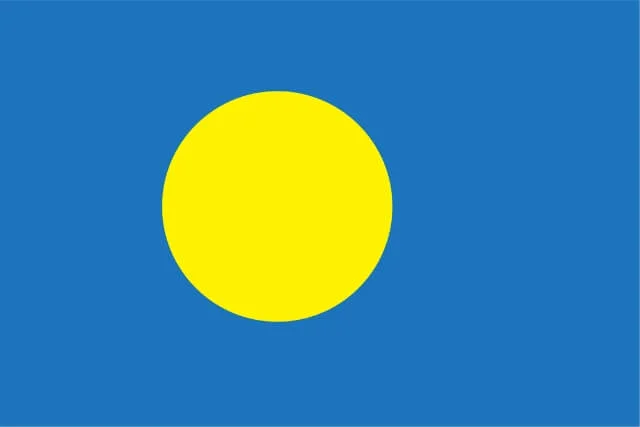
Palau
🏙️ Capital city:
Ngerulmud
📈 Country population:
18,000
🗺️ Country area:
459 km²
Core Facts / Infobox
Present this as a clean two-column table containing accurate and verified national facts. Include only fields with real data.
| Official Name | Republic of Palau |
| Common Name | Palau |
| ISO Codes | PW, PLW, 585 |
| Internet TLD | .pw |
| Calling Code | +680 |
| Capital City | Ngerulmud |
| Largest City | Koror |
| Coordinates | 7.5° N, 134.6° E |
| Time Zone | UTC+9 |
| Population (2025 est.) | ~18,000 |
| Area | 459 km² |
| Population Density | ~39 per km² |
| Languages | Palauan, English |
| Currency | US Dollar (USD) |
| Driving Side | Right |
| GDP (Nominal) | ~USD 300 million |
| GDP Per Capita | ~USD 16,000–18,000 |
| HDI | 0.826 (Very High) |
| Literacy Rate | ~96% |
| Life Expectancy | ~74 years |
| Continent & Subregion | Oceania — Micronesia |
| National Day | 9 July (Constitution Day) |
| National Sport | Baseball |
| National Dish | Fruit Bat Soup, Tinola |
| National Anthem | Belau rekid (Our Palau) |
Geography & Environment
- Palau is an island nation in the western Pacific Ocean consisting of over 500 islands.
- The main islands form the northern part of the Caroline Islands archipelago.
- Neighboring regions include the Philippines to the west and Micronesia to the east.
- Geography includes limestone rock islands, volcanic islands, coral reefs, jungles, and turquoise lagoons.
- Climate: tropical and humid with rainfall year-round.
- Best time to visit: December–April (dry season).
- Palau is a global ecological hotspot with manta rays, sharks, turtles, and vibrant corals.
- Key natural attractions: Rock Islands, Jellyfish Lake, Blue Corner dive site.
- Environmental challenges: coral bleaching, rising sea levels, typhoons, ecosystem preservation.
Demographics
- Total population: ~18,000.
- Median age: ~35 years.
- Urban concentration primarily in Koror.
- Ethnic groups: Palauan, Filipino, Chinese, Micronesian, American.
- Religions: Christianity (Roman Catholic & Protestant), Modekngei (traditional Palauan faith).
- Literacy rate: ~96%.
- Major towns: Koror, Airai, Ngerulmud.
History
- Palau was settled by Micronesian navigators over 3,000 years ago.
- Colonized by Spain, then sold to Germany, later controlled by Japan after WWI.
- Became a U.S.-administered trust territory after WWII.
- Gained independence on 1 October 1994 under the Compact of Free Association with the U.S.
- Today, Palau is known for environmental leadership and marine conservation.
Government & Politics
- Government type: Presidential republic.
- Executive: President is head of state and government.
- Legislature: bicameral National Congress (Olbiil era Kelulau).
- Judiciary: Supreme Court and lower courts.
- Administrative divisions: 16 states.
- Key issues: climate adaptation, tourism management, foreign relations.
Economy
- Economy relies heavily on tourism, fishing, and U.S. financial assistance.
- Major industries: eco-tourism, diving, fishing, agriculture, services.
- Main exports: fish (especially tuna), shellfish, handicrafts.
- Main imports: food, machinery, fuel, manufactured goods.
- Strengths: world-class diving sites, rich marine life, stable U.S. partnership.
- Weaknesses: tourism dependency, remote location, climate vulnerability.
- GDP sectors: Services (~70%), Industry (~15%), Agriculture (~15%).
Culture & Society
- Palauan culture emphasizes respect, family, and community traditions.
- Traditional village structures, bai meeting houses, and matrilineal heritage remain important.
- Festivals include Constitution Day, Independence Day, and local island celebrations.
- Traditional arts: storyboards (wood carvings), weaving, dance, and music.
- Languages: Palauan widely spoken, with English for government and education.
Food & Cuisine
- National dishes include Fruit Bat Soup and Tinola (chicken soup).
- Common foods: taro, cassava, fresh fish, coconut-based dishes.
- Street foods: grilled fish, fried bananas, BBQ plates.
- Beverages: coconut water, imported drinks, local fruit juices.
Education & Institutions
- Medium of instruction: English, with Palauan used culturally.
- Literacy rate: ~96%.
- Top institutions: Palau Community College, Pacific academic centers.
- Key academic fields: marine biology, environmental studies, tourism, agriculture.
Tourism
- Top destinations: Jellyfish Lake, Rock Islands, Blue Corner, Ngardmau Waterfall, Koror.
- Natural attractions: coral reefs, tropical forests, marine sanctuaries.
- Adventure tourism: diving, snorkeling, kayaking, boating, hiking.
- Cultural tourism: bai houses, traditional villages, museums.
- Visa: many nationalities receive visa-free entry; others require approval.
- Transportation: taxis, rental cars, boats, domestic flights.
Practical Information
- Safety: very safe; low crime rates.
- Healthcare: hospitals in Koror; limited facilities in outer islands.
- Emergency numbers: Police 911; Fire 488-2111.
- Plug type: A & B (U.S. standard); Voltage: 120V.
- Internet: widely available; strong in urban areas.
- Best time to visit: December–April.
- Budget: moderate to high; tourism-driven economy.
Sports, Entertainment & Notable People
- Popular sports: baseball, basketball, diving, outrigger canoeing.
- Notable athletes: Jesse Tamangrow (Olympian), Palauan baseball players in regional leagues.
- Cultural entertainment: traditional dances, storyboards, festivals.
- Famous figures: President Thomas Remengesau Jr. (known for environmental work).
Neighboring Countries of Palau
Palau does not share any land borders. Its maritime neighbours include Federated States of Micronesia, Indonesia, and Philippines.
Famous For
- Rock Islands and world-class diving.
- Jellyfish Lake.
- Strong marine conservation policies.
- Crystal-clear lagoons and coral reefs.
- Traditional Palauan culture and storyboards.
- Pristine natural beauty.
Sources
- World Bank
- United Nations (UN Data)
- IMF
- CIA World Factbook
- Palau National Government
- Palau Bureau of Statistics