Random Country Generator 🌎
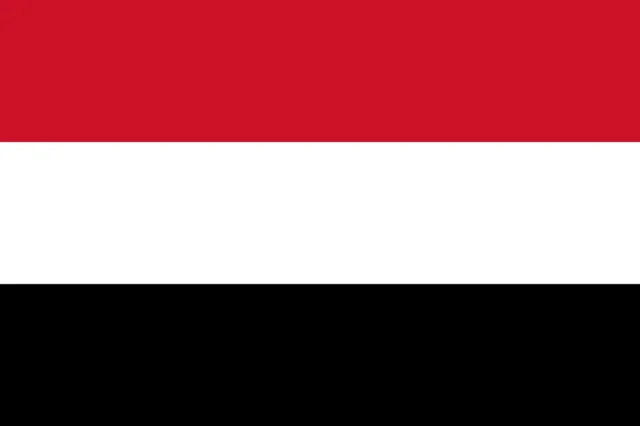
Yemen
🏙️ Capital city:
Sana'a (de jure)
📈 Country population:
34 million
🗺️ Country area:
527,968 km²
Core Facts / Infobox
Present this as a clean two-column table containing accurate and verified national facts. Include only fields with real data.
| Official Name | Republic of Yemen |
| Common Name | Yemen |
| ISO Codes | YE, YEM, 887 |
| Internet TLD | .ye |
| Calling Code | +967 |
| Capital City | Sana’a (de jure) |
| Largest City | Sana’a |
| Coordinates | 15° N, 48° E |
| Time Zone | UTC+3 |
| Population (2025 est.) | ~34 million |
| Area | 527,968 km² |
| Population Density | ~65 per km² |
| Languages | Arabic (official) |
| Currency | Yemeni Rial (YER) |
| Driving Side | Right |
| GDP (Nominal) | ~USD 18–22 billion |
| GDP (PPP) | ~USD 80–90 billion |
| GDP Per Capita | ~USD 500–600 |
| GDP Growth | Highly variable due to conflict |
| HDI | 0.455 (Low) |
| Literacy Rate | ~70% |
| Life Expectancy | ~66 years |
| Unemployment | ~17–20% |
| Inflation | Varies; often high due to instability |
| Leaders | Political control split (no stable long-term listing) |
| Continent & Subregion | Asia — Middle East (Arabian Peninsula) |
| National Day | 22 May (Unification Day) |
| National Sport | Football |
| National Dish | Saltah |
| National Anthem | United Republican Anthem |
Geography & Environment
- Yemen is located at the southern end of the Arabian Peninsula, bordered by Saudi Arabia and Oman, with coastlines along the Red Sea, Gulf of Aden, and Arabian Sea.
- Geographical regions include coastal plains (Tihama), highlands, deserts, and fertile valleys.
- The island of Socotra is globally famous for its unique biodiversity and Dragon’s Blood trees.
- Climate varies from arid desert to subtropical coastal weather and temperate highland climate.
- Best time to visit: October–April.
- National parks include Socotra Biosphere Reserve and Jabal Bura’ protected area.
- Wildlife: Arabian leopards, hyenas, ibex, rare birds, and endemic Socotra species.
- Environmental issues: water scarcity, desertification, habitat loss, food insecurity.
- Unique natural features: Socotra Island, Haraz Mountains, and the Hadhramaut valleys.
Demographics
- Total population: ~34 million.
- Median age: ~20 years.
- Urban vs rural: ~65% rural, ~35% urban.
- Ethnic groups: predominantly Arab, with small Afro-Arab and South Asian communities.
- Religion: Islam (majority).
- Literacy rate: ~70%.
- Major cities: Sana’a, Aden, Taiz, Hodeidah, Mukalla.
History
- Ancient Yemen was home to kingdoms such as Saba, Himyar, and Qataban, known for incense trade.
- Islam arrived in the 7th century, integrating Yemen into the early Islamic world.
- North and South Yemen had separate historical paths, influenced by Ottomans and British rule.
- Yemen unified on 22 May 1990, forming the Republic of Yemen.
- Recent decades have seen conflict, political transitions, and humanitarian challenges.
Government & Politics
- Government type: Republic (de jure), but de facto political authority is fragmented.
- Administrative divisions: 22 governorates including Sana’a and the island of Socotra.
- Key political themes: security, humanitarian response, peace negotiations, regional influence.
Economy
- Yemen’s economy is fragile, heavily impacted by ongoing conflict.
- Major industries: agriculture, fishing, oil (limited), trade, small manufacturing.
- Main exports: coffee, honey, fish, modest oil products.
- Main imports: food, fuel, machinery, manufactured goods.
- Strengths: fertile highlands, maritime location, natural biodiversity.
- Weaknesses: instability, poverty, low industrial capacity, water shortages.
- GDP sectors: Services (~50%), Agriculture (~20%), Industry (~30%).
Culture & Society
- Yemen has a rich Arab heritage with strong tribal traditions.
- Hospitality, family honor, and community relationships are core cultural values.
- Major festivals: Eid al-Fitr, Eid al-Adha, Mawlid celebrations.
- Traditional dress includes thawbs for men and abayas for women; unique jambiya daggers symbolize Yemeni identity.
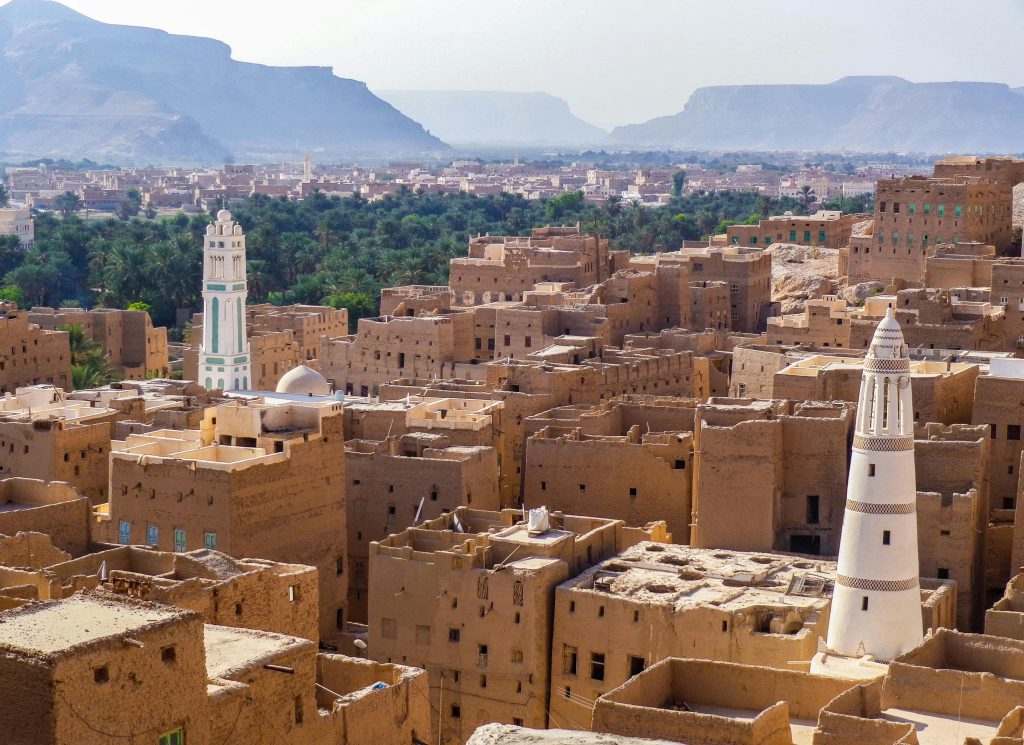
- Arts include traditional music, poetry, intricate architecture (mudbrick towers of Sana’a), and silver jewelry.
- Main language: Arabic.
Food & Cuisine
- National dish: Saltah — a stew served with meat, vegetables, and fenugreek foam.
- Other iconic dishes: Mandi, Fahsa, Zurbian, Bint al-Sahn (honey cake).
- Street foods: sambusas, bread with beans, grilled meats.
- Beverages: Yemeni coffee, black tea with spices.
- Yemen is famous for high-quality arabica coffee (e.g., Mokha coffee).
Education & Institutions
- Education system faces significant challenges due to conflict.
- Medium of instruction: Arabic; English used in some higher education.
- Literacy rate: ~70%.
- Major universities: Sana’a University, Aden University, Hadhramout University.
- Key fields: Islamic studies, humanities, business, agriculture.
Tourism
- Top destinations (when safe): Old Sana’a, Socotra Island, Shibam, Aden, Taiz.
- UNESCO sites: Old City of Sana’a, Historic Town of Zabid, Old Walled City of Shibam (Manhattan of the Desert).
- Natural attractions: Socotra’s unique flora and fauna, beaches, mountains, wadis.
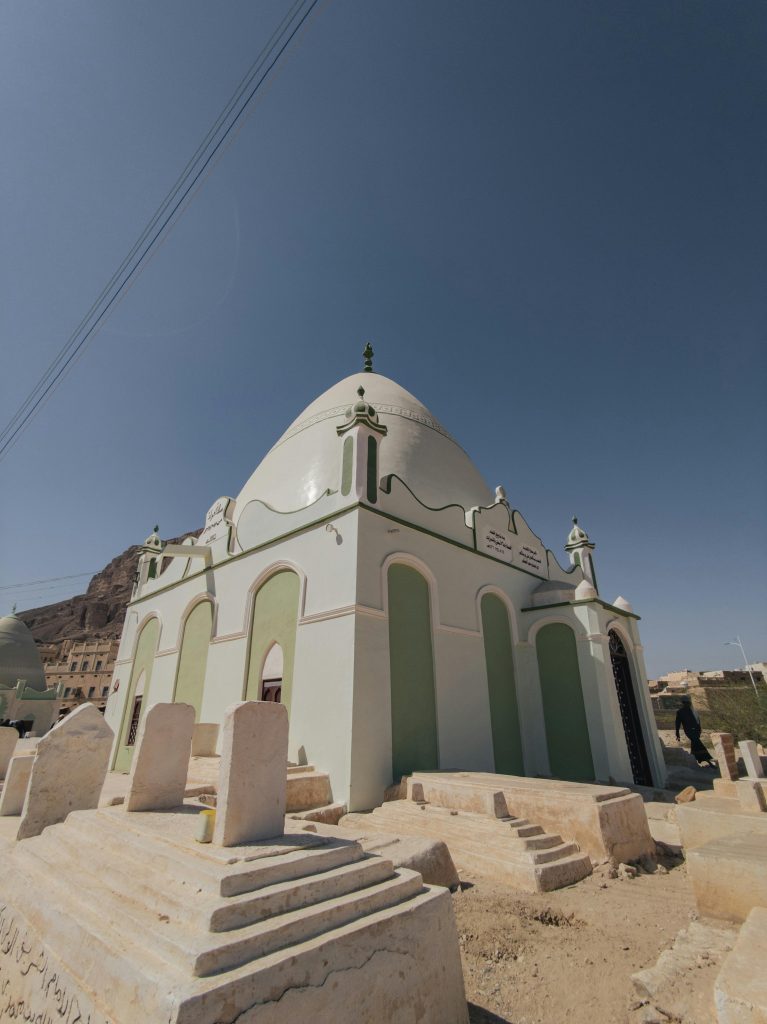
- Historical landmarks: ancient mosques, palaces, mudbrick buildings.
- Adventure tourism: limited due to safety but includes hiking and nature exploration.
- Visa: varies by nationality and current conditions.
- Transportation: roads, limited flights, taxis; conditions vary.
Practical Information
- Safety: unstable; many regions unsafe for travel.
- Healthcare: limited and uneven.
- Emergency numbers: vary by region.
- Plug type: A, D, G; Voltage: 230V.
- Internet: limited availability; better in main cities.
- Best time to visit: October–April (subject to safety).
- Budget: affordable but limited amenities due to economic situation.
Sports, Entertainment & Notable People
- National sport: Football.
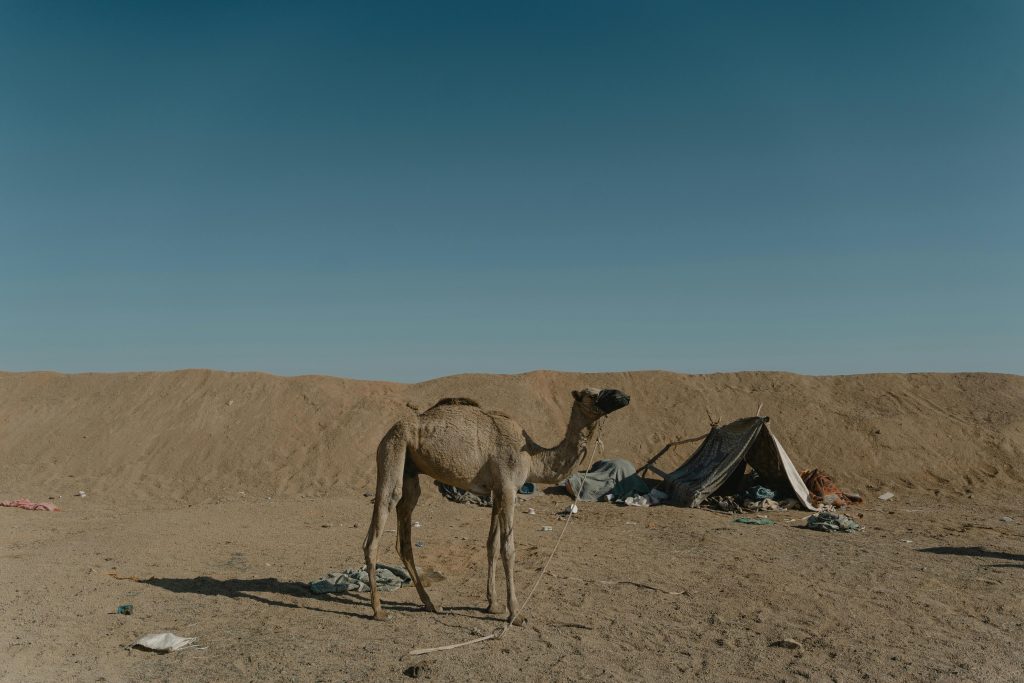
- Other popular sports: camel racing, athletics, traditional dance.
- Notable personalities: Mohammed Al-Bahr (poet), Abood Khawaja (singer), Bader Al-Shujaa (athlete).
- Yemen is known for poetry, storytelling, and traditional music.
Neighboring Countries of Yemen
Yemen shares land borders with the following countries:
- 288 km with Oman
- 1,458 km with Saudi Arabia
Famous For
- Old City of Sana’a.
- Socotra Island’s unique biodiversity.
- Mokha coffee (origin of “mocha”).
- Mudbrick skyscrapers of Shibam.
- Spices and traditional Yemeni cuisine.
- Ancient Arab kingdoms and caravan trade routes.
- Distinctive architecture and cultural heritage.
Sources
- World Bank
- United Nations (UN Data)
- IMF
- CIA World Factbook
- Yemen Central Statistical Organization
- Official Publications