
Random Country Generator 🌎
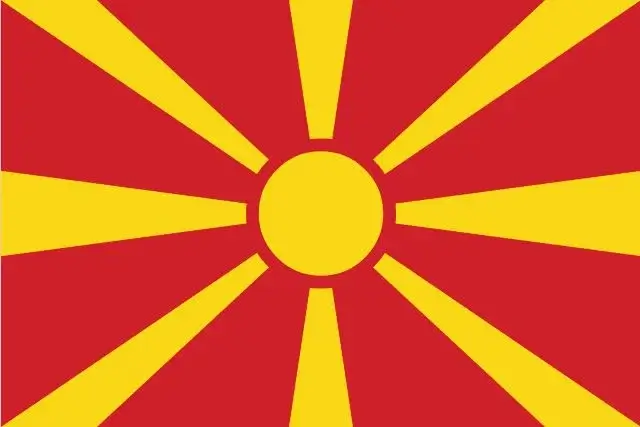
North Macedonia
🏙️ Capital city:
Skopje
📈 Country population:
1.8 million
🗺️ Country area:
25,713 km²
Core Facts / Infobox
Present this as a clean two-column table containing accurate and verified national facts. Include only fields with real data.
| Official Name | Republic of North Macedonia |
| Common Name | North Macedonia |
| Political Status | Sovereign unitary parliamentary republic |
| ISO Codes | MK, MKD, 807 |
| Internet TLD | .mk |
| Calling Code | +389 |
| Capital City | Skopje |
| Largest City | Skopje |
| Coordinates | 41.99° N, 21.43° E |
| Time Zone | UTC+1 (CET), UTC+2 (CEST) |
| Population (2025 est.) | ~1.8 million |
| Area | 25,713 km² |
| Population Density | ~70 per km² |
| Languages | Macedonian (official), Albanian (co-official) |
| Currency | Macedonian Denar (MKD) |
| Driving Side | Right |
| GDP (Nominal) | ~USD 15 billion |
| GDP Per Capita | ~USD 8,000 |
| HDI | High |
| Life Expectancy | ~76 years |
| Continent & Subregion | Europe — Southeastern Europe (Balkans) |
| National Day | Independence Day (8 September) |
| National Anthem | Denes nad Makedonija |
Geography & Environment
- Landlocked country in the central Balkan Peninsula.
- Borders Kosovo, Serbia, Bulgaria, Greece, and Albania.
- Mountainous terrain with valleys and basins.
- Major rivers: Vardar.
- Major lakes: Lake Ohrid, Lake Prespa, Lake Dojran.
- Climate: continental with Mediterranean influences.
Demographics
- Population: ~1.8 million.
- Urban population centered in Skopje.
- Major cities: Skopje, Bitola, Kumanovo, Prilep, Tetovo.
- Ethnic groups: Macedonians, Albanians, Turks, Roma, Serbs.
- Religions: Eastern Orthodox Christianity, Islam.
History
- Region inhabited since antiquity, part of ancient Macedonia.
- Later ruled by Roman, Byzantine, and Ottoman Empires.
- Part of Yugoslavia after World War II.
- Peacefully declared independence in 1991.
- Officially renamed North Macedonia in 2019.
- NATO member since 2020.
Government & Politics
- Political system: Parliamentary republic.
- Head of State: President of North Macedonia.
- Head of Government: Prime Minister.
- Legislature: unicameral Assembly (Sobranie).
- Administrative divisions: municipalities.
Economy
- Upper-middle-income economy.
- Key sectors: manufacturing, services, agriculture.
- Main industries: automotive components, textiles, food processing.
- Main exports: machinery, chemicals, iron and steel products.
- Strengths: strategic location, industrial zones.
- Weaknesses: emigration, limited domestic market.
Culture & Society
- Blend of Slavic, Ottoman, and Balkan cultural influences.
- Rich traditions in folk music and dance.
- UNESCO-listed heritage at Lake Ohrid.
Food & Cuisine
- Traditional dishes: tavče gravče, ajvar, šopska salad.
- Cuisine influenced by Balkan and Mediterranean traditions.
- Strong use of peppers, beans, and dairy.
Education & Institutions
- High literacy rate.
- Public universities in Skopje, Bitola, and Tetovo.
- Education system aligned with European standards.
Tourism
- Growing cultural and nature tourism.
- Top attractions: Lake Ohrid, Skopje Old Bazaar, Matka Canyon.
- UNESCO World Heritage Site at Ohrid.
Practical Information
- Emergency number: 112.
- Plug type: C/F; Voltage: 230V.
- Improving road and rail infrastructure.
Sports, Entertainment & Notable People
- Popular sports: football, basketball, handball.
- Growing international sports participation.
- Notable figures: Goran Pandev, Toše Proeski.
Neighboring Countries of North Macedonia
North Macedonia shares land borders with Albania 151 km, Bulgaria 148 km, Greece 246 km, Kosovo 159 km, and Serbia 62 km.
Famous For
- Lake Ohrid and ancient churches.
- Rich Balkan cultural heritage.
- Traditional pepper-based cuisine.
- Historic crossroads of civilizations.
Sources
- World Bank
- United Nations (UN Data)
- IMF
- CIA World Factbook
- State Statistical Office of North Macedonia