
Random Country Generator 🌎
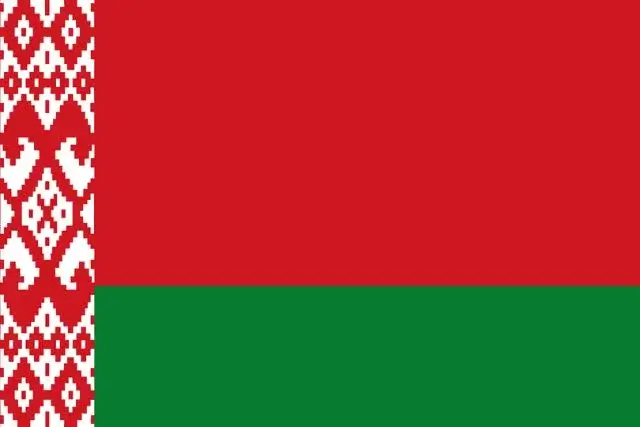
Belarus
🏙️ Capital city:
Minsk
📈 Country population:
9.2 million
🗺️ Country area:
207,600 km²
Core Facts / Infobox
Present this as a clean two-column table containing accurate and verified national facts. Include only fields with real data.
| Official Name | Republic of Belarus |
| Common Name | Belarus |
| Political Status | Sovereign unitary presidential republic |
| ISO Codes | BY, BLR, 112 |
| Internet TLD | .by |
| Calling Code | +375 |
| Capital City | Minsk |
| Largest City | Minsk |
| Coordinates | 53.90° N, 27.56° E |
| Time Zone | UTC+3 (MSK) |
| Population (2025 est.) | ~9.2 million |
| Area | 207,600 km² |
| Population Density | ~44 per km² |
| Languages | Belarusian, Russian (official) |
| Currency | Belarusian Ruble (BYN) |
| Driving Side | Right |
| GDP (Nominal) | ~USD 75 billion |
| GDP Per Capita | ~USD 8,000 |
| HDI | High |
| Life Expectancy | ~74 years |
| Continent & Subregion | Europe — Eastern Europe |
| National Day | Independence Day (3 July) |
| National Anthem | My Belarusy |
Geography & Environment
- Landlocked country in Eastern Europe.
- Borders Russia, Ukraine, Poland, Lithuania, and Latvia.
- Landscape dominated by flat plains, forests, and wetlands.
- Major rivers: Dnieper, Neman, Western Dvina, Pripyat.
- Climate: temperate continental with cold winters and mild summers.
Demographics
- Population: ~9.2 million.
- Highly urbanized, with a large concentration in Minsk.
- Major cities: Minsk, Gomel, Mogilev, Vitebsk, Grodno.
- Ethnic groups: predominantly ethnic Belarusian, with Russian, Polish, and Ukrainian minorities.
- Religions: Eastern Orthodox Christianity (majority), Roman Catholicism, others.
History
- Historic lands of Kievan Rus and the Grand Duchy of Lithuania.
- Later part of the Polish–Lithuanian Commonwealth.
- Incorporated into the Russian Empire in the 18th century.
- Part of the Soviet Union from 1922 to 1991.
- Declared independence in 1991.
Government & Politics
- Political system: Presidential republic.
- Head of State and Government: President of Belarus.
- Legislature: bicameral National Assembly.
- Administrative divisions: regions (voblasts) and capital city.
Economy
- Upper-middle-income economy with significant state involvement.
- Key sectors: manufacturing, petrochemicals, agriculture, IT services.
- Major industries: machinery, fertilizers, refined petroleum.
- Main exports: petroleum products, potash fertilizers, machinery.
- Strengths: industrial base, educated workforce.
- Weaknesses: limited diversification, external economic dependence.
Culture & Society
- Eastern Slavic cultural traditions.
- Strong folk heritage in music, crafts, and literature.
- Influences from Russian, Polish, and Lithuanian cultures.
Food & Cuisine
- Traditional dishes: draniki, machanka, borshch.
- Cuisine based on potatoes, grains, meats, and dairy.
- Hearty, rural culinary traditions.
Education & Institutions
- High literacy rate.
- Strong emphasis on technical and scientific education.
- Major universities located in Minsk.
Tourism
- Historic castles, Orthodox churches, and national parks.
- Notable sites: Mir Castle, Nesvizh Castle (UNESCO).
- Ecotourism focused on forests and wetlands.
Practical Information
- Emergency number: 112.
- Plug type: C/F; Voltage: 220V.
- Well-developed rail network.
Sports, Entertainment & Notable People
- Popular sports: ice hockey, football, athletics.
- Strong traditions in ice hockey.
- Notable figures: Marc Chagall, Victoria Azarenka.
Neighboring Countries of Belarus
Belarus is located in Eastern Europe and borders five countries:
Latvia 141 km,
Lithuania 502 km,
Poland 407 km,
Russia 959 km, and
Ukraine 891 km.
Famous For
- Forests and flat landscapes.
- Soviet-era architecture in Minsk.
- Potato-based cuisine.
- Strategic location in Eastern Europe.
Sources
- World Bank
- United Nations (UN Data)
- IMF
- CIA World Factbook
- National Statistical Committee of Belarus