
Random Country Generator 🌎
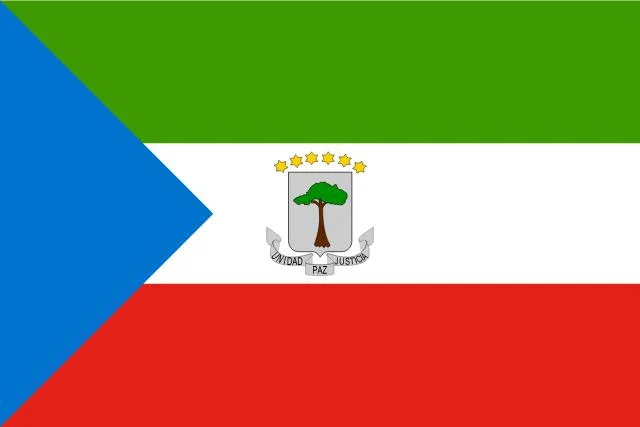
Equatorial Guinea
🏙️ Capital city:
Malabo
📈 Country population:
1.7 million
🗺️ Country area:
28,051 km²
Core Facts / Infobox
Present this as a clean two-column table containing accurate and verified national facts. Include only fields with real data.
| Official Name | Republic of Equatorial Guinea |
| Common Name | Equatorial Guinea |
| Political Status | Sovereign presidential republic |
| ISO Codes | GQ, GNQ, 226 |
| Internet TLD | .gq |
| Calling Code | +240 |
| Capital City | Malabo |
| Largest City | Bata |
| Coordinates | 1.65° N, 10.27° E |
| Time Zone | UTC+1 (West Africa Time) |
| Population (2025 est.) | ~1.7 million |
| Area | 28,051 km² |
| Population Density | ~61 per km² |
| Languages | Spanish, French, Portuguese (official); Fang, Bubi |
| Currency | Central African CFA Franc (XAF) |
| Driving Side | Right |
| GDP (Nominal) | ~USD 14 billion |
| GDP Per Capita | ~USD 8,200 |
| HDI | Medium |
| Life Expectancy | ~63 years |
| Continent & Subregion | Africa — Central Africa |
| National Day | Independence Day (12 October) |
| National Anthem | Caminemos pisando las sendas de nuestra inmensa felicidad |
Geography & Environment
- Located in Central Africa, consisting of a mainland region (Río Muni) and several islands.
- Main islands include Bioko (where Malabo is located) and Annobón.
- Borders Cameroon and Gabon on the mainland.
- Dense rainforests, volcanic landscapes, and coastal plains.
- Climate: equatorial, hot and humid with heavy rainfall.
Demographics
- Population: ~1.7 million.
- Major ethnic groups: Fang (majority), Bubi, Ndowe, Annobonese.
- Urban population concentrated in Malabo and Bata.
- Religions: Christianity (majority), traditional beliefs.
History
- Inhabited by Bantu-speaking peoples for centuries.
- Colonized by Spain in the 18th and 19th centuries.
- Gained independence in 1968.
- Experienced authoritarian rule since 1979.
- Oil discovery in the 1990s transformed the economy.
Government & Politics
- Political system: Presidential republic.
- Head of State & Government: President.
- Legislature: bicameral Parliament.
- Administrative divisions: provinces and districts.
Economy
- Upper-middle-income, oil-dependent economy.
- Among Africa’s largest oil producers per capita.
- Main exports: crude oil, natural gas, timber.
- Strengths: hydrocarbon resources.
- Weaknesses: inequality, limited diversification.
Culture & Society
- Blend of African traditions and Spanish colonial influence.
- Music, dance, and oral traditions remain central.
- Spanish widely used in education and media.
Food & Cuisine
- Staple foods: cassava, plantains, rice, fish.
- Traditional dishes: succotash, pepe-soup, fish stews.
- Palm oil and seafood commonly used.
Education & Institutions
- Education access improving but uneven.
- Major institution: National University of Equatorial Guinea.
Tourism
- Tourism sector very limited.
- Natural attractions include volcanic peaks and rainforests.
- Potential for eco- and island tourism.
Practical Information
- Emergency services limited.
- Plug type: C/E; Voltage: 220V.
- Infrastructure strongest in Malabo and Bata.
Sports, Entertainment & Notable People
- Popular sport: football.
- National team known as Nzalang Nacional.
- Notable figures: Teodoro Obiang Nguema Mbasogo.
Neighboring Countries of Equatorial Guinea
Equatorial Guinea is located in Central Africa and borders two countries:
Cameroon to the north and
Gabon to the east and south.
It also has a coastline along the Atlantic Ocean to the west.
Famous For
- Oil and gas production.
- Spanish-speaking African nation.
- Bioko Island.
- Rainforests and biodiversity.
Sources
- World Bank
- United Nations (UN Data)
- IMF
- CIA World Factbook
- National Institute of Statistics (Equatorial Guinea)