
Random Country Generator 🌎
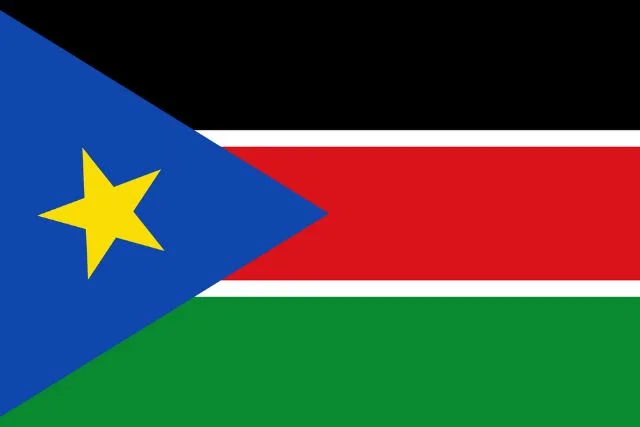
South Sudan
🏙️ Capital city:
Juba
📈 Country population:
12 million
🗺️ Country area:
619,745 km²
Core Facts / Infobox
Present this as a clean two-column table containing accurate and verified national facts. Include only fields with real data.
| Official Name | Republic of South Sudan |
| Common Name | South Sudan |
| Political Status | Sovereign republic (transitional government) |
| ISO Codes | SS, SSD, 728 |
| Internet TLD | .ss |
| Calling Code | +211 |
| Capital City | Juba |
| Largest City | Juba |
| Coordinates | 7.30° N, 30.73° E |
| Time Zone | UTC+2 (Central Africa Time) |
| Population (2025 est.) | ~12 million |
| Area | 619,745 km² |
| Population Density | ~19 per km² |
| Languages | English (official); Dinka, Nuer, Bari and others |
| Currency | South Sudanese Pound (SSP) |
| Driving Side | Right |
| GDP (Nominal) | ~USD 6 billion |
| GDP Per Capita | ~USD 500 |
| HDI | Low |
| Life Expectancy | ~55 years |
| Continent & Subregion | Africa — East-Central Africa |
| National Day | Independence Day (9 July) |
| National Anthem | South Sudan Oyee! |
Geography & Environment
- Landlocked country in northeastern Africa.
- Borders Sudan, Ethiopia, Kenya, Uganda, DR Congo, and Central African Republic.
- Dominated by the Nile River system and vast wetlands.
- The Sudd is one of the world’s largest freshwater wetlands.
- Climate: tropical with wet and dry seasons.
Demographics
- Population: ~12 million.
- Highly rural population.
- Major ethnic groups: Dinka, Nuer, Shilluk.
- Religions: Christianity, traditional beliefs, Islam.
History
- Part of Sudan until independence in 2011.
- Decades-long civil wars preceded independence.
- Became the world’s newest country on 9 July 2011.
- Experienced internal conflict starting in 2013.
- Ongoing peace and state-building efforts.
Government & Politics
- Political system: Republic under transitional unity government.
- Head of State & Government: President.
- Legislature: Transitional National Legislative Assembly.
- Administrative divisions: states and administrative areas.
Economy
- Low-income, fragile economy.
- Highly dependent on oil production.
- Main exports: crude oil.
- Strengths: oil reserves, fertile land.
- Weaknesses: conflict impact, inflation, food insecurity.
Culture & Society
- Strong clan and tribal social structures.
- Music, dance, and oral traditions central to culture.
- Cattle play a major cultural and economic role.
Food & Cuisine
- Staple foods: sorghum, millet, maize.
- Traditional dishes: kisra, asida, stews with greens.
- Diets vary by region and season.
Education & Institutions
- Education system still developing.
- Low literacy rates compared to global averages.
- Major institution: University of Juba.
Tourism
- Tourism sector is minimal.
- Natural attractions include wildlife migrations and wetlands.
- Tourism limited by infrastructure and security.
Practical Information
- Emergency services availability limited.
- Plug type: C/D; Voltage: 230V.
- Basic infrastructure concentrated in major towns.
Sports, Entertainment & Notable People
- Popular sports: football, basketball.
- Basketball gaining international attention.
- Notable figures: Salva Kiir Mayardit, Luol Deng.
Neighboring Countries of South Sudan
South Sudan is located in northeastern Africa and borders six countries: Central African Republic to the west, Democratic Republic of the Congo to the southwest, Ethiopia to the east, Kenya to the southeast, Sudan to the north, and Uganda to the south.
Famous For
- World’s newest country.
- The Sudd wetlands.
- Oil resources.
- Rich cultural diversity.
Sources
- World Bank
- United Nations (UN Data)
- IMF
- CIA World Factbook
- National Bureau of Statistics (South Sudan)